Tell us about the job
Takes about a minute. No obligation.
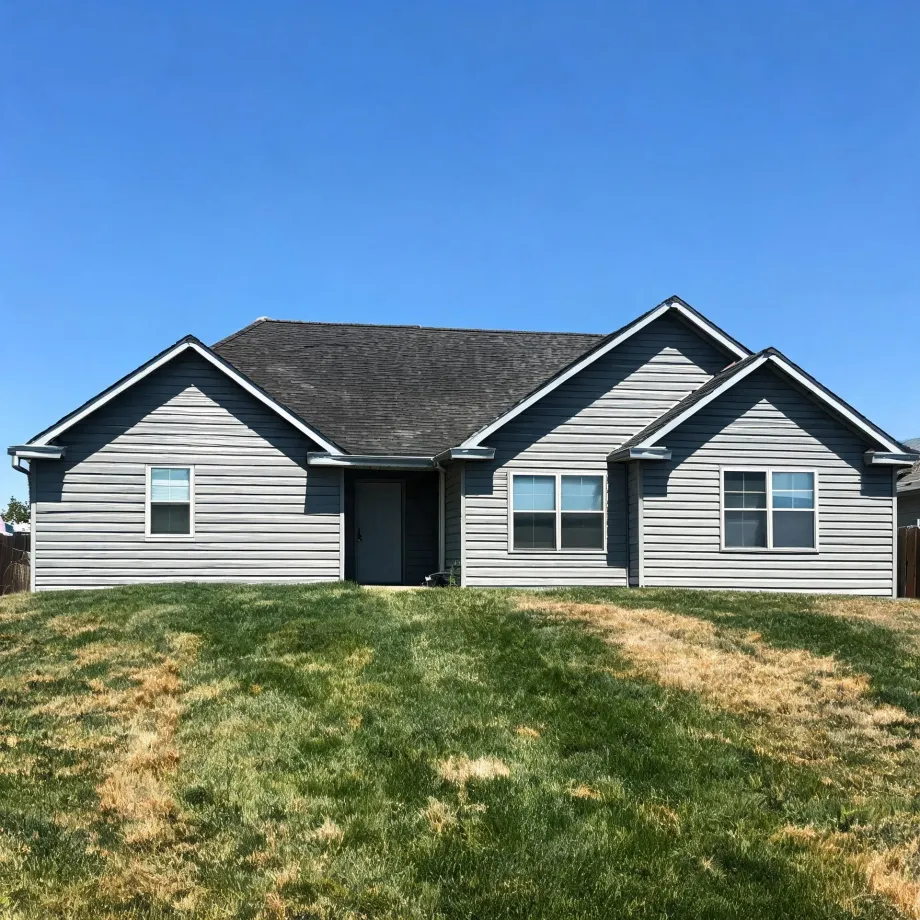
Sizing a central AC system for this area starts with what the compressor is actually asked to do each year. Homes in Gregory County, SD run cooling about three months a year, from June through August. The compressor, the condenser fan, and the contactor each start and stop repeatedly across those weeks, then sit idle through fall, winter, and spring. Long idle periods let small faults hide. A refrigerant charge that is slightly off, a contactor that is beginning to pit, a coil that was not seated cleanly at install: none of these announce themselves until the first genuinely hot day, which is also when every other homeowner is calling. That is why a contractor quotes this job around peak-load sizing and clean installation rather than assuming the system will self-correct across a long season of use.
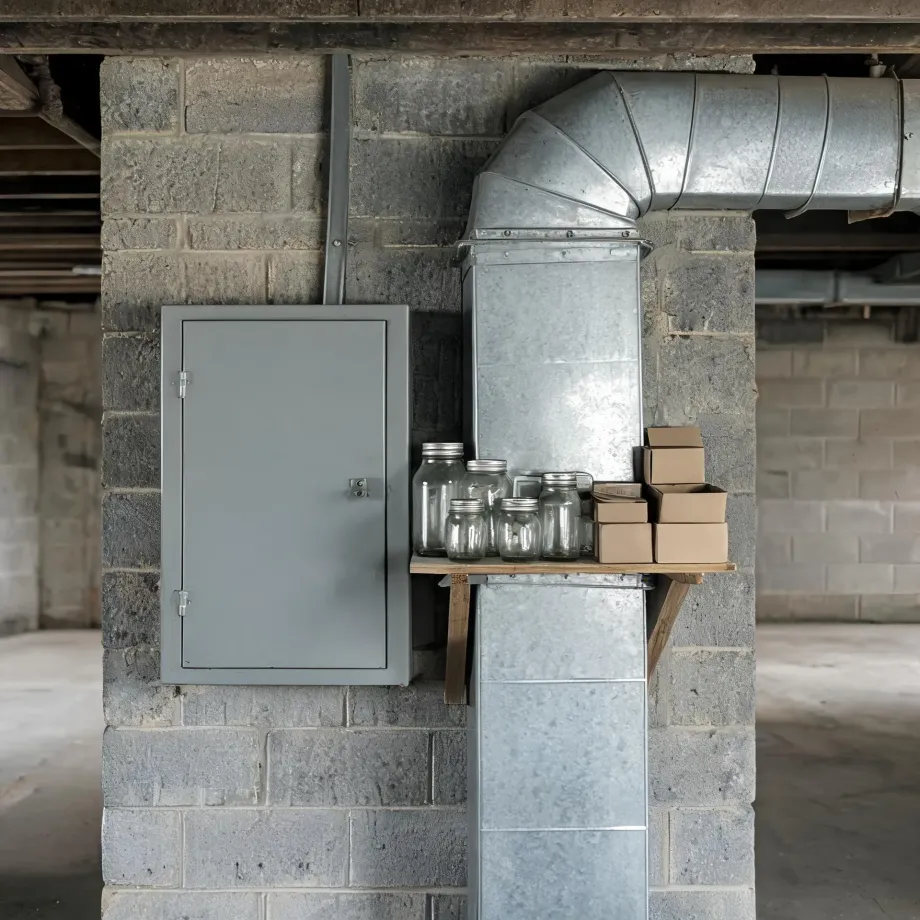
Ductwork laid down for a furnace and nothing else was sized for a different job than central air asks of it. A contractor installing central AC has to assess whether those runs can carry the airflow a new cooling system needs, and whether the electrical service can support the added draw. Half the homes in Gregory County, South Dakota were built in 1963 or earlier (2020-2024 ACS 5-year). That vintage of ductwork was built around heating loads, which move air differently than a split cooling system does, so the contractor's evaluation of what is already in the walls and ceiling matters more to the final scope than the equipment selection does.
The Parts of a Central AC System and What Gets Installed
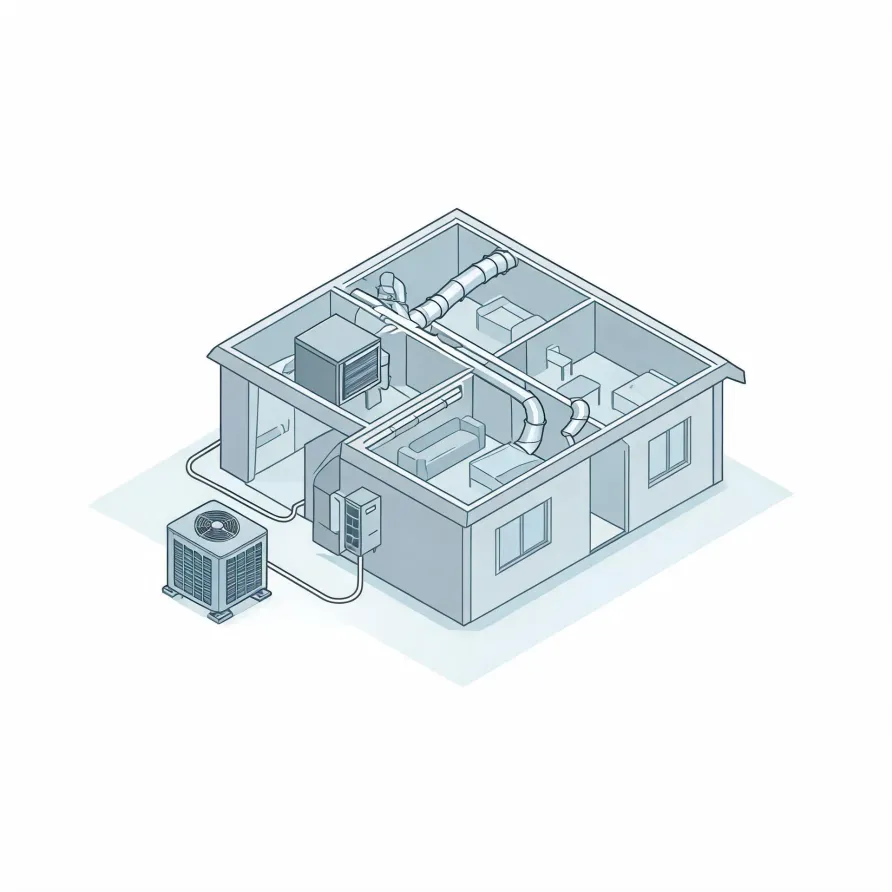
The outdoor condenser unit sits outside the house, usually on a concrete pad at ground level, and houses the compressor and condenser coil. Inside the house, the air handler holds the evaporator coil and blower, and is mounted in a utility closet, attic, or basement depending on the home's layout.
The refrigerant lines run between the two units, carrying refrigerant back and forth, while the thermostat on an interior wall serves as the control point for the whole system. A condensate drain line routes the moisture the evaporator coil pulls from the air out of the house.
The drawing shows a typical layout, and a licensed contractor determines what applies to this particular home.
Find a contractor in Gregory CountyGregory County, by the numbers
170 severe weather events were recorded in Gregory County, South Dakota between 2015 and 2024.
NOAA National Centers for Environmental Information, Storm Events Database, bulk CSV export, events 2015-01-01 through 2024-12-31.Half the homes in Gregory County, South Dakota were built in 1963 or earlier (2020-2024 ACS 5-year).
U.S. Census Bureau, 2020-2024 American Community Survey 5-Year EstimatesGregory County, South Dakota holds 2,188 housing units (2020-2024 ACS 5-year).
U.S. Census Bureau, 2020-2024 American Community Survey 5-Year EstimatesOwners occupy 76.7% of the occupied homes in Gregory County, South Dakota (2020-2024 ACS 5-year).
U.S. Census Bureau, 2020-2024 American Community Survey 5-Year EstimatesCodes & Standards Governing Central AC Installation in Gregory County, South Dakota8 sourced rules and standards
What happens once a contractor comes out
Split-system central air conditioners rated below 45,000 Btu/h manufactured on or after January 1, 2023 must meet a federal minimum of 13.4 SEER2.
Split-system central air conditioners rated at or above 45,000 Btu/h manufactured on or after January 1, 2023 must meet a federal minimum of 13.4 SEER2.
Split-system central air conditioners manufactured between January 1, 2015 and December 31, 2022 had to meet 13 SEER, the metric that preceded SEER2.
Single-package central air conditioners manufactured on or after January 1, 2023 must meet a federal minimum of 13.4 SEER2.
Space-constrained central air conditioners manufactured on or after January 1, 2023 must meet a federal minimum of 11.7 SEER2.
Federal efficiency standards for split-system central air conditioners and heat pumps are set on each certified combination of outdoor unit and indoor coil rather than on the outdoor unit alone.
Residential and light commercial air conditioning and heat pump systems assembled in the field, including mini-splits and unitary systems, may not be installed on or after January 1, 2025 using a refrigerant with a global warming potential above 700.
A field-assembled system whose specified components were all manufactured or imported before January 1, 2025 carries no installation compliance date under the refrigerant restrictions and may still be installed.
Severe Weather Events in Gregory County
Extreme weather puts real demands on cooling equipment: heat loads spike, systems run longer, and components wear faster than they would in a milder climate. Knowing what this area actually sees gives a contractor the right starting point for sizing and specifying a central AC installation.
170 severe weather events, 2015–2024. Source: NOAA National Centers for Environmental Information, Storm Events Database.