Tell us about the job
Takes about a minute. No obligation.
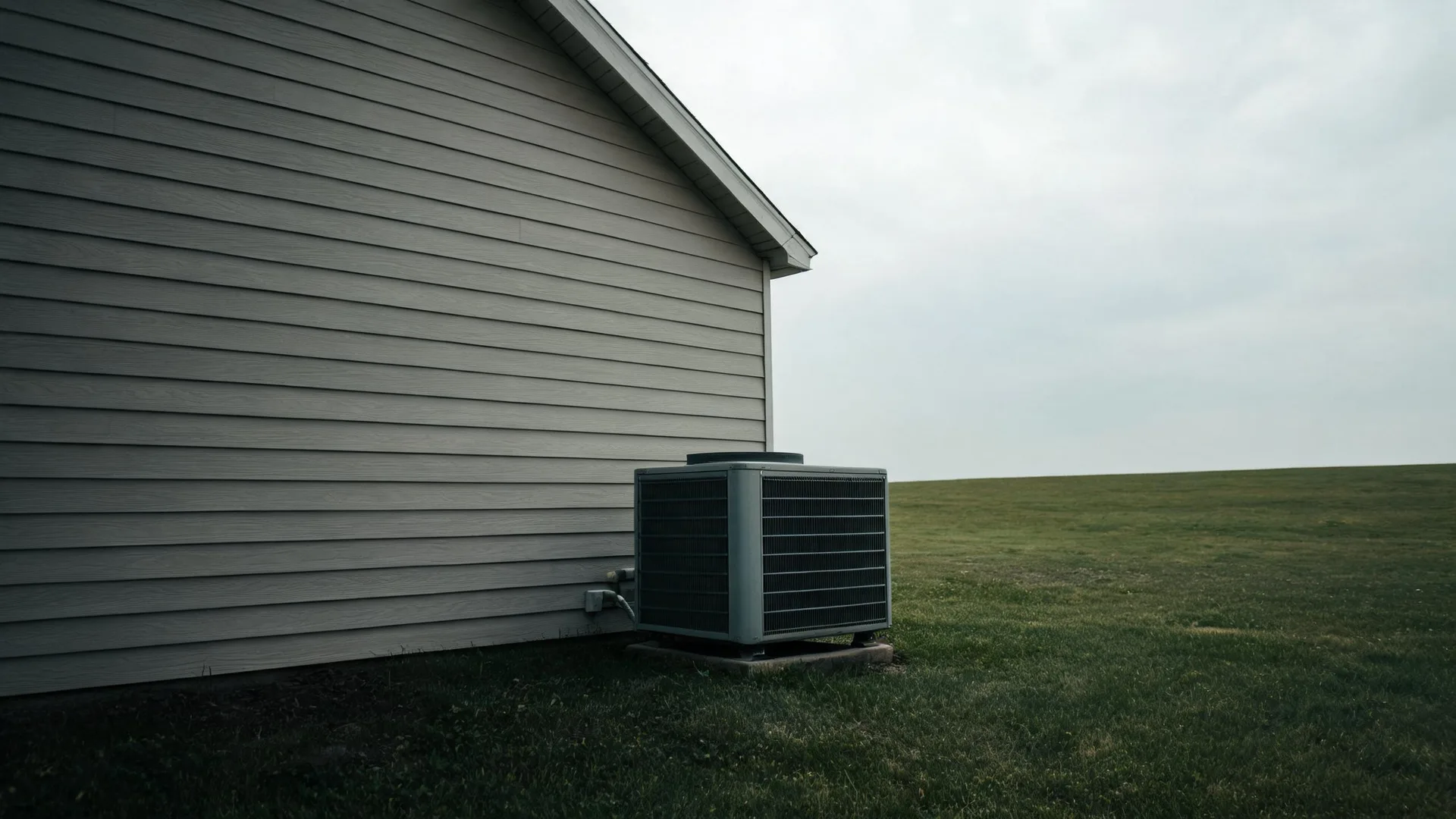
A central AC compressor that has stood idle since September faces a different set of failure points than one that has been running hard for half the year. Homes in Lyman County, SD run cooling about three months a year, from June through August. Contactors corrode, refrigerant migrates, and capacitors weaken during long off periods, so the first call of summer often lands on a system that failed during storage rather than under load. A contractor quoting a new installation here has to size for that cold-start demand, not just for peak afternoon heat, because the equipment will spend most of its life off and will need to perform immediately when switched back on.
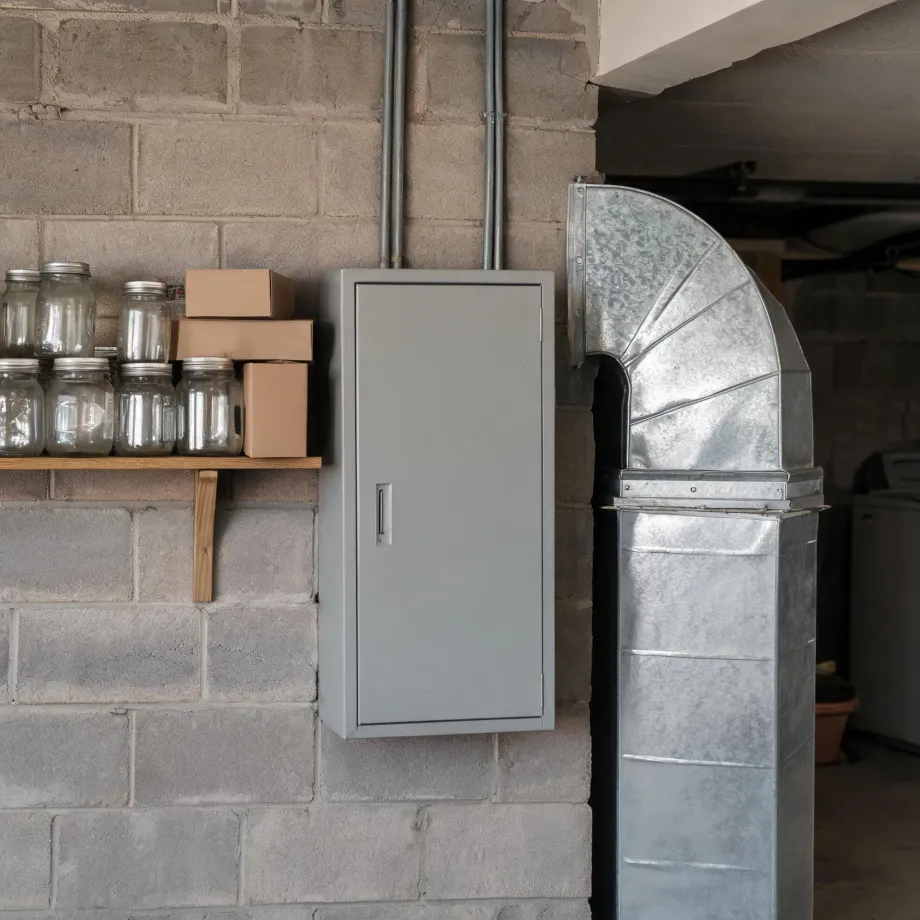
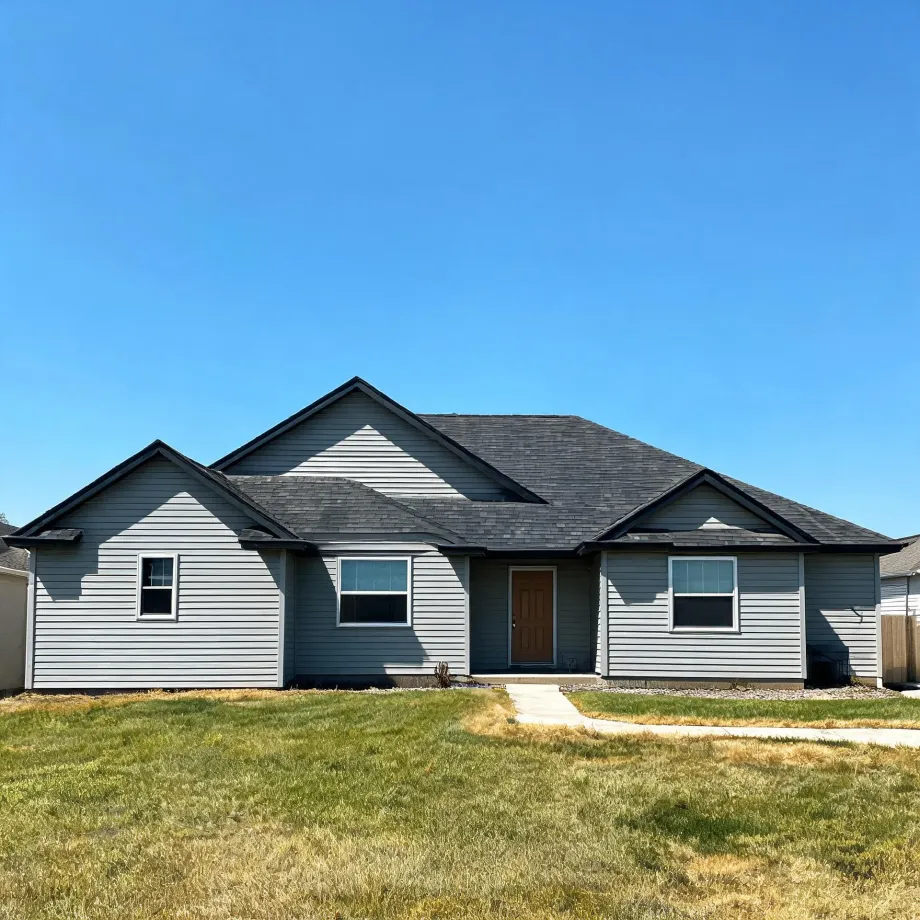
Ductwork and electrical service are the two things a contractor has to price before the equipment choice means much in Lyman County. Half the homes in Lyman County, South Dakota were built in 1976 or earlier (2020-2024 ACS 5-year). That generation of construction was ducted and wired for whatever was running then, and what runs in a house now draws differently and moves air differently than what those systems were built around. A contractor sizing a new central AC unit here pulls the panel and walks the duct runs before anything else, because those are the variables that change the scope and the bill.
The Central AC Equipment a Contractor Works With
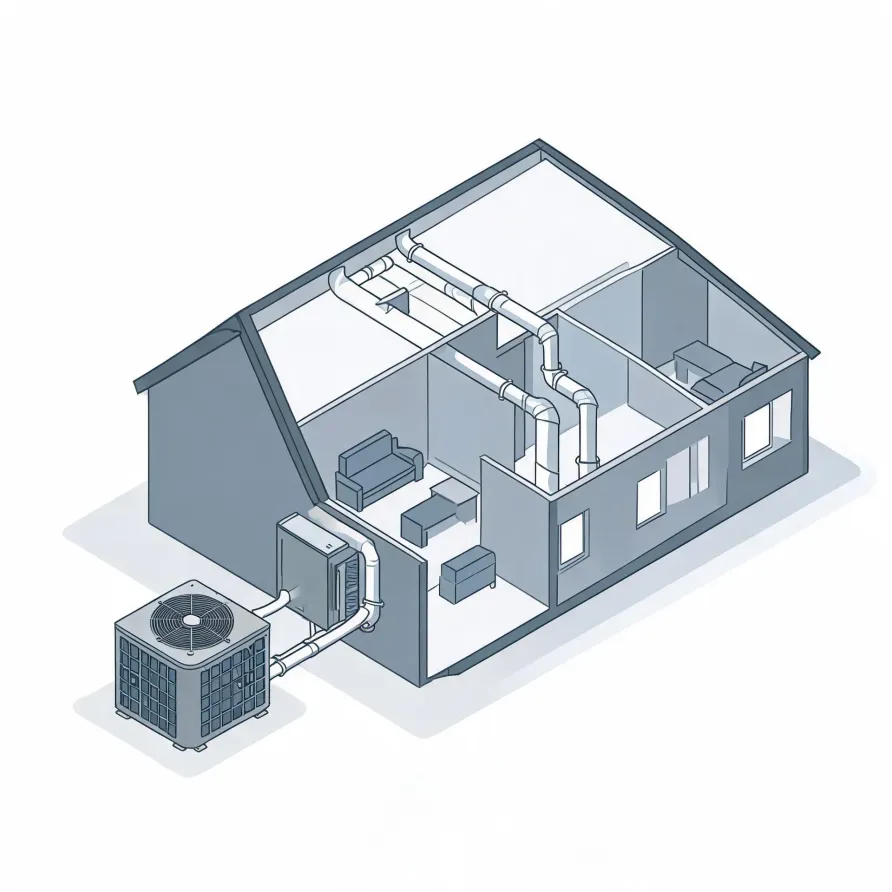
The outdoor condenser unit sits outside the house, usually on a concrete pad at ground level, and houses the compressor and the condenser coil. Inside, the air handler or furnace-mounted evaporator coil sits in a utility space, basement, or closet and is the indoor half of the system. A contractor assesses both units together, because they have to be matched to function as a single system.
The refrigerant line set runs between the two units, carrying refrigerant through insulated copper tubing. The thermostat mounts on an interior wall and is the control point for the whole system. A contractor also accounts for the condensate drain line, which carries moisture pulled from the air out of the house.
The drawing shows a typical layout, and a licensed contractor determines exactly what applies to this house and its existing setup.
Find a contractor in Lyman CountyLyman County, by the numbers
285 severe weather events were recorded in Lyman County, South Dakota between 2015 and 2024.
NOAA National Centers for Environmental Information, Storm Events Database, bulk CSV export, events 2015-01-01 through 2024-12-31.Half the homes in Lyman County, South Dakota were built in 1976 or earlier (2020-2024 ACS 5-year).
U.S. Census Bureau, 2020-2024 American Community Survey 5-Year EstimatesLyman County, South Dakota holds 1,553 housing units (2020-2024 ACS 5-year).
U.S. Census Bureau, 2020-2024 American Community Survey 5-Year EstimatesOwners occupy 69.9% of the occupied homes in Lyman County, South Dakota (2020-2024 ACS 5-year).
U.S. Census Bureau, 2020-2024 American Community Survey 5-Year EstimatesRules and Standards for Central AC Installation in Lyman County, South Dakota8 sourced rules and standards
What the installation actually looks like
Split-system central air conditioners rated below 45,000 Btu/h manufactured on or after January 1, 2023 must meet a federal minimum of 13.4 SEER2.
Split-system central air conditioners rated at or above 45,000 Btu/h manufactured on or after January 1, 2023 must meet a federal minimum of 13.4 SEER2.
Split-system central air conditioners manufactured between January 1, 2015 and December 31, 2022 had to meet 13 SEER, the metric that preceded SEER2.
Single-package central air conditioners manufactured on or after January 1, 2023 must meet a federal minimum of 13.4 SEER2.
Space-constrained central air conditioners manufactured on or after January 1, 2023 must meet a federal minimum of 11.7 SEER2.
Federal efficiency standards for split-system central air conditioners and heat pumps are set on each certified combination of outdoor unit and indoor coil rather than on the outdoor unit alone.
Residential and light commercial air conditioning and heat pump systems assembled in the field, including mini-splits and unitary systems, may not be installed on or after January 1, 2025 using a refrigerant with a global warming potential above 700.
A field-assembled system whose specified components were all manufactured or imported before January 1, 2025 carries no installation compliance date under the refrigerant restrictions and may still be installed.
Severe Weather History in Lyman County
Weather swings put real demands on cooling equipment, affecting how hard a system works and how long it lasts. Knowing what this area has seen gives a contractor a clearer picture of what to spec for a home here.
285 severe weather events, 2015–2024. Source: NOAA National Centers for Environmental Information, Storm Events Database.