
Why your upstairs stays hot in South Dakota summers

Step 1 of 3: Equipment

Why does my upstairs stay so hot in the summer?

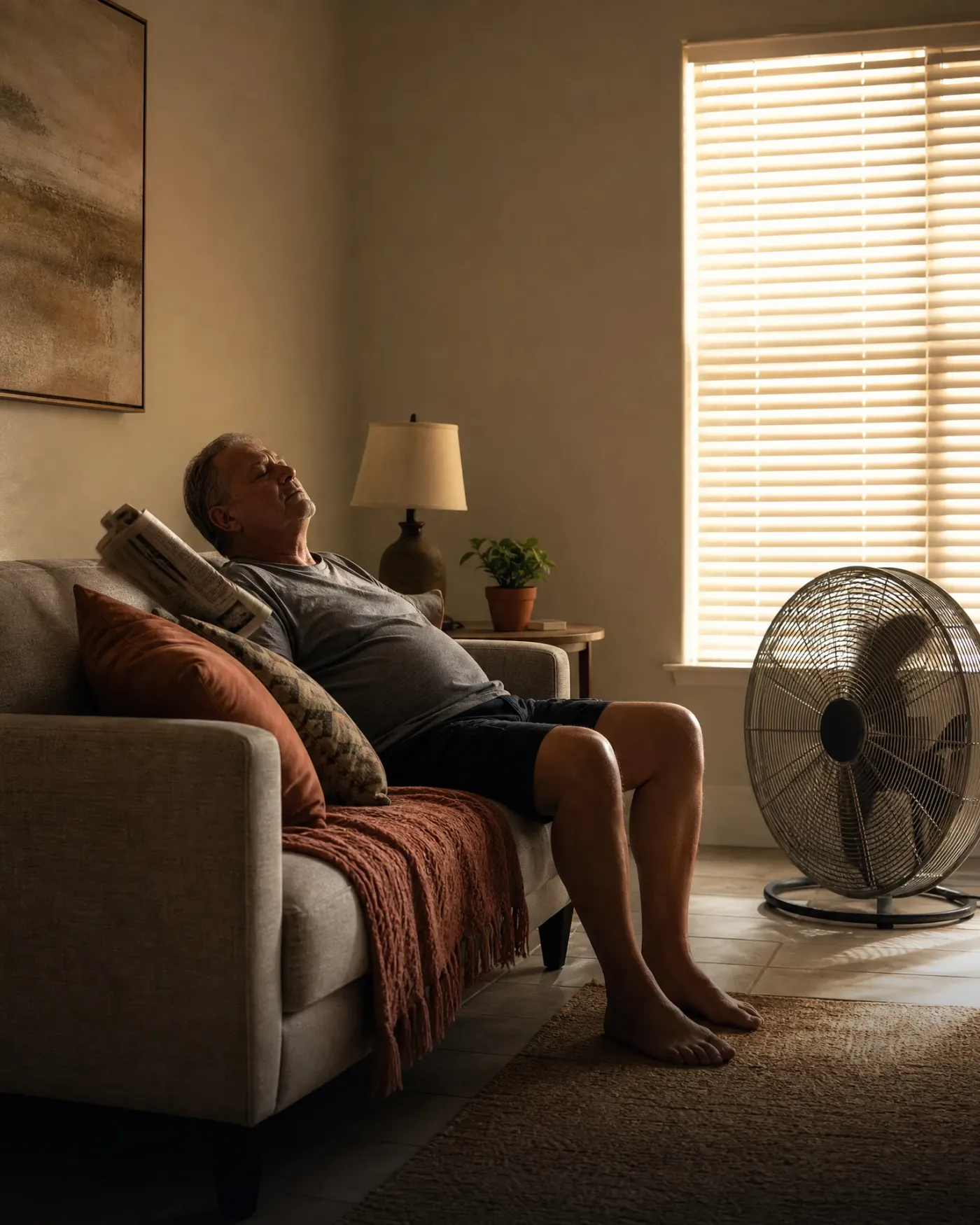
Evenings are when you notice it most. You come upstairs after dinner and the air is thick and still warm, even though the thermostat downstairs says the house is at temperature. It's not your imagination and it's not just South Dakota's dry summer heat working its way in. Something about how the house is cooled is leaving that floor behind.

Your system isn't sized or balanced to cool the upstairs the same as the rest of the house

Heat rises, so the upstairs is already working against that before the air conditioner does anything. But the bigger reason is usually airflow. One thermostat, usually downstairs, tells the whole system when to stop running, so once that floor is comfortable the unit shuts off even if the rooms above it aren't there yet. If the ducts feeding the upstairs are long, narrow, or run through a hot attic, the air reaching those rooms has already picked up heat or lost pressure by the time it arrives. A system that's undersized for the house will show this same pattern, cooling the easiest rooms first and never quite catching up on the rest.

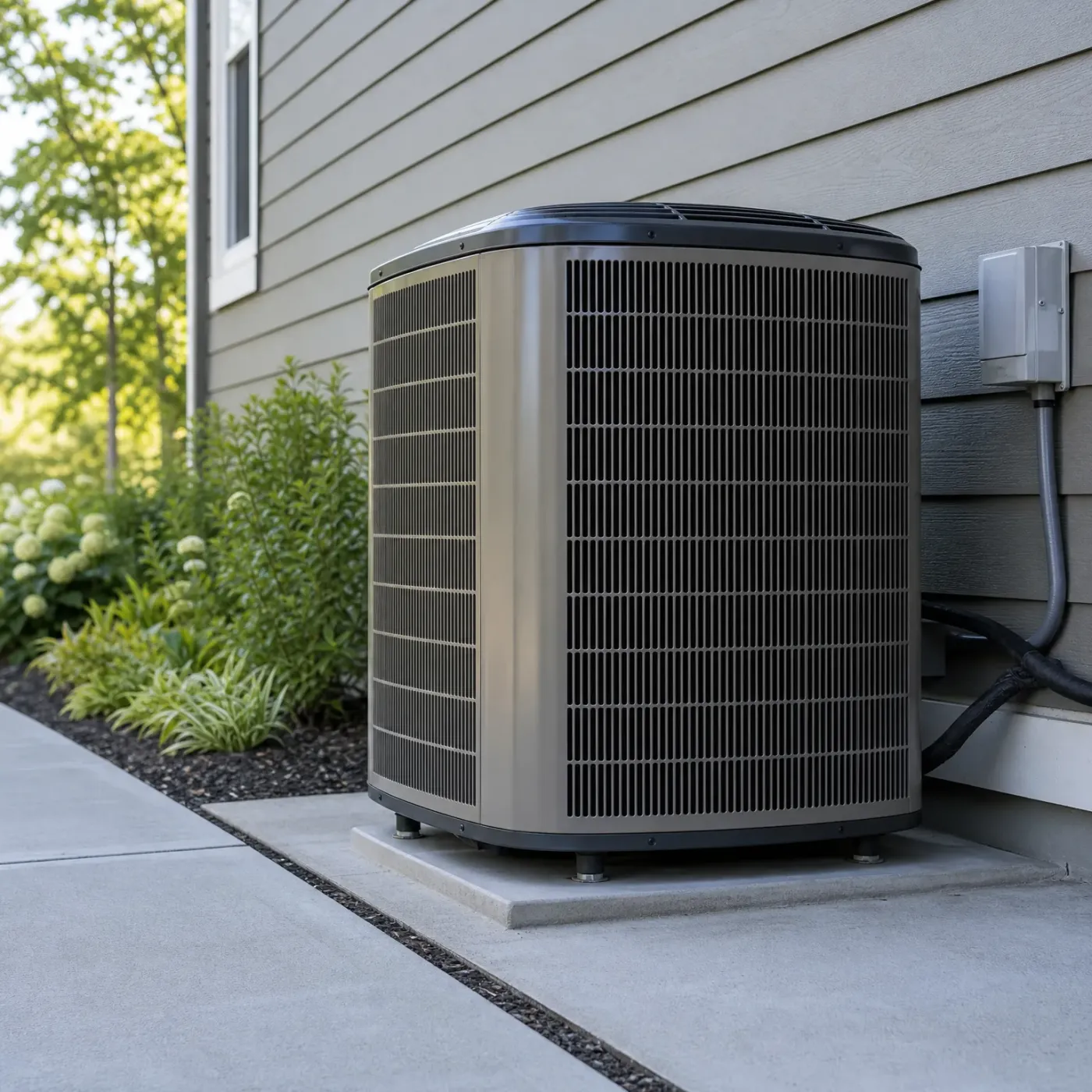
A gray outdoor air conditioner condenser unit on a concrete pad beside a house with white horizontal siding and a brick foundation, with a wall-mounted disconnect box and conduit, and a green shrub with mulch at left.

The unit that's keeping up

A clean condenser outside, running freely, can still only push cool air as far as the ducts and the return system let it go. If the rest of the setup is right, an upstairs room should come close to matching the thermostat downstairs.


An outdoor air conditioning condenser unit on a concrete pad beside a house with white horizontal vinyl siding, with a gray electrical disconnect box and refrigerant lines on the wall behind it.

The unit that's falling behind

Dirt packed into the grille and the top cover chokes off airflow before the air ever gets inside. The condenser has to work harder to move the same amount of heat, and the upstairs is where that shortfall shows up first.

Duct Problem or Equipment Problem

Duct problem

  • The return in a two-story home is almost always downstairs, so the upstairs rooms rely on supply ducts alone to push cool air up against rising heat.
  • A duct run that was sized for the original layout can fall short if a room was finished or an addition was added later.
  • Flex duct that sags or kinks in the attic restricts airflow even when the air handler is working fine.
  • Leaky duct joints in an attic above a South Dakota summer afternoon let warm air mix in before it ever reaches the vent.
  • A damper that was never balanced right sends more air to the first floor and leaves the upstairs short.

Equipment problem

  • A unit that's low on refrigerant or has a failing capacitor won't move enough cool air to reach the far end of the system, upstairs included.
  • A blower motor running slower than it should moves less air through every duct, and the upstairs feels it first.
  • A dirty evaporator coil cuts how much heat the system can pull out of the air before it's blown through the house.
  • An oversized or undersized unit for the square footage it's cooling struggles to condition every room evenly, upstairs most of all.
  • A thermostat reading only the downstairs temperature will shut the system off before the upstairs ever catches up.
An outdoor air conditioner condenser unit on a concrete pad beside a house wall, with a gray electrical disconnect box and conduit above it and grass in the foreground.

Heat rises, cold air doesn't follow

Warm air is lighter and climbs toward the ceiling and the upper floor, where it sits until something moves it back out. Cool air behaves the opposite way, settling low. A single-stage air conditioner pushes a steady supply of cold air through the ducts, but it has no way to pull that trapped heat back downstairs. Upstairs ends up fighting physics as much as it's fighting the thermostat setting.

A gray outdoor air conditioner condenser unit on a concrete pad beside a house with horizontal lap siding, surrounded by white gravel and a lawn, with a white wall at left.

One thermostat, two different rooms

Most two-story homes in South Dakota run on one thermostat, usually mounted downstairs. It reads the air around it and calls for cooling based on that temperature alone. Once it's satisfied, the system shuts off, even if the upstairs rooms haven't caught up yet. Without a second sensor or a separate zone, the equipment has no idea the top floor is still warm. It's doing exactly what it was told, just not where you need it.

Is your upstairs AC even keeping up

You've probably already tried the obvious things. A box fan in the hallway. The vents open all the way, maybe even closed downstairs to push more air up. A ceiling fan running every evening from June through August. If you're still coming upstairs to a room that's five or six degrees warmer than the thermostat reading, that's not a fan problem. It also means the air conditioner is working harder and longer than it should to chase a temperature it can't reach, which shows up as a bigger bill and more wear on equipment you'd rather not replace early. Left alone, a system that runs that hard every summer tends to need repairs sooner, not later.

A gray outdoor air conditioner condenser unit on a concrete pad beside a house with horizontal siding and a stucco foundation, with a disconnect box and conduit on the wall, decorative gravel, mulch, and a shrub nearby.

Running clean

A condenser like this one, set on its pad with clear air around it, can move the heat out of your house the way it's supposed to. Nothing is blocking the coil, so it can shed heat as fast as the compressor needs it to. That's one less reason for the upstairs to stay hot.

An outdoor air conditioning condenser unit on a concrete pad beside a house with horizontal lap siding, with an electrical disconnect box and conduit on the wall, mulch and a green shrub to the right, and a concrete walkway in the foreground.

Choked with debris

Dirt and clippings packed into the coil grilles make the unit work harder to dump heat outside. Less heat leaves, so less cool air gets made, and the upstairs feels it first since it was already the harder room to cool. A dirty coil like this is worth having checked.

A smiling man in a dark navy sweater sits on a light sofa in a living room, with a glass bowl of popcorn on a wooden coffee table and bookshelves behind him.
A smiling man in a dark green sweater sits on a tan leather sofa in a dimly lit living room, with a bowl of popcorn in the foreground and a kitchen area blurred behind him.
A smiling middle-aged man in a dark shirt sits on a gray sofa in a living room, with a bowl of popcorn on a side table and shelves, a window and kitchen area behind him.
A smiling bearded man in a dark gray t-shirt sits on a gray couch in a living room, with a large glass bowl of popcorn on a wooden table in the foreground.
An outdoor air conditioning condenser unit on a concrete pad beside a house with horizontal lap siding, with a gray electrical disconnect box and conduit on the wall and green shrubs and trees to the left.

Hand off the air conditioner problem

Describe what your air conditioner is doing once, in one form.

Send the request today and let an air conditioner pro reach out to you.

I'm done searching

No charge to send it. You decide if you hire them.

A gray outdoor air conditioner condenser unit on a concrete pad beside a house with horizontal lap siding, with a flowering shrub at left and a disconnect box with conduit on the wall at right.
The disconnect box and conduit are intact, the pad is clear, and nothing around the unit is blocking airflow to the coil.
An outdoor air conditioner condenser unit on a concrete pad beside a house with light horizontal vinyl siding, surrounded by bare dirt, gravel and dry leaves, with refrigerant lines and conduit running along the wall.
Leaves and dirt have built up around the base, and lines running along the wall like this are worth a look if your upstairs has been falling behind.

A single-stage air conditioner only runs at one speed, full on or completely off. When the thermostat downstairs is satisfied, the compressor shuts off, even if the upstairs hasn't caught up yet. That thermostat is doing its job for the room it sits in, not for the whole house. Static pressure plays into this too. Every foot of duct, every elbow and every turn adds resistance, and the upstairs runs are almost always the longest path the air has to travel from the furnace or air handler. A blower that's pushing against too much resistance delivers less air out the far registers than the ones close to the equipment, which tends to be downstairs. So the system can be sized right, charged right, and still leave the second floor short, because the limit isn't the compressor's capacity. It's how much of that cooled air actually makes it up there before the thermostat downstairs calls it quits for the cycle.

A woman in a dark gray sweater reclines on a light sofa with eyes closed and a slight smile, under a textured gray blanket with an open book resting on her lap, with a lit table lamp and plant in the background.
A smiling bearded man in a navy crewneck sweater sits at a dinner table with a glass of red wine, plates and glasses in the foreground, in a dimly lit room with a lamp and framed picture behind him.
A single-story house with gray vinyl siding, dark shingled gable roofs, and white-trimmed windows, set behind a partly dry green lawn under a clear blue sky.

South Dakota summers don't carry the heavy, sticky air you'd get further east. Averaged across June, July and August, the dew point here runs about 56°F, which is on the dry side. That matters for your air conditioner because dry air cools faster and the system doesn't have to fight much moisture to bring a room down. Downstairs, where the thermostat sits, that's exactly what happens. Upstairs is a different problem. The dry air coming out of the vents is still cold and capable, but if it's not reaching that room in enough volume, dryness doesn't help. You end up with air that feels thin and warm instead of heavy and warm, but still not at temperature.

NASA POWER T2MDEW county cells weighted by homes

An outdoor air conditioner condenser unit sits on a concrete pad beside a stucco wall, with refrigerant lines and conduit running to the wall and a shrub to the left.
Before you get your air conditioner repair
A gray outdoor air conditioner condenser unit on a concrete pad beside a house with dark horizontal siding and a stone base, surrounded by gravel, with a flowering shrub at left and a concrete walkway in front.
After you get your air conditioner repair

Before

You're still calling around, waiting on callbacks, and explaining the same upstairs heat problem to every contractor who picks up.

Hand it over

After

The form is sent. Finding someone to look at the ducts and airflow upstairs is no longer something you have to manage.

Hand it over

Power costs 13.32 cents per kilowatt-hour statewide

At 13.32 cents per kilowatt-hour, running a box fan upstairs all evening costs you next to nothing. That's not the fix, though. The real cost is an upstairs that still won't cool down, no matter how long the compressor runs trying to satisfy a thermostat that's two floors away from the problem.

EIA-861 2025 statewide residential average

  1. The thermostat downstairs calls for cool air

  2. The compressor runs at one fixed speed until satisfied

  3. Supply ducts push air up while warm air keeps rising

  4. The downstairs thermostat shuts the system off first

A closed silver laptop and a ceramic mug of dark coffee sit on a wooden table in front of two chair backs, with a kitchen counter, tiled backsplash, wooden cutting boards, a vase of greenery and a potted plant by a window behind.

Your upstairs isn't broken, it's outmatched

A single-stage system does one thing: run at full speed until the downstairs thermostat is happy, then shut off. Warm air upstairs keeps rising the whole time, and the ducts that are supposed to push cool air up against it may be sized for a layout that changed since the house was built. None of that shows up by looking at the unit outside. It takes someone checking the ducts, the returns, and how the system is actually sized for a two-story home.

That's the piece you can hand off. Instead of searching for contractors, calling a few, explaining the upstairs problem again on each call, then sitting with quotes trying to compare one against another, you send the form once. From there, finding someone who can look at the ducts and airflow is off your list. What they find and what it takes to fix it still comes after, but getting to that point stops being something you have to manage evening after evening.

A gray upholstered sofa with a matching cushion sits beside a potted plant and a wooden table holding a small green plant in a stone pot, near a curtained window.
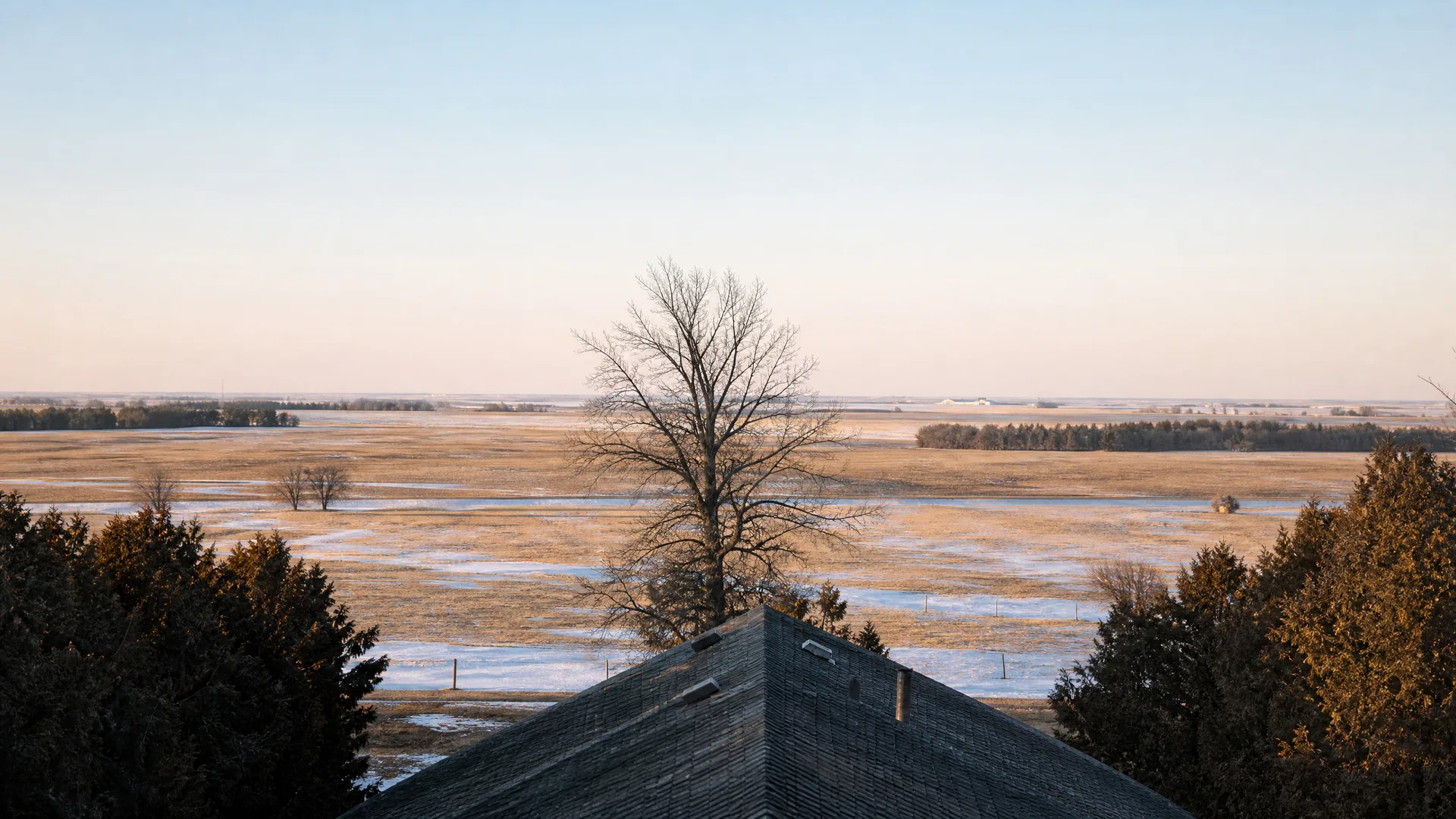
Elevated view over a flat field with patches of snow, a bare deciduous tree at center, evergreen trees at both sides, and the shingled ridge of a roof in the foreground under a pale sky.

One request and it's handed off

Hand off my repair

You only hire the pro if you want to.

You've already tried the box fans and the ceiling fans running every night. Sending the request means someone qualified looks at the ducts and airflow instead of you guessing at it room by room all summer.