




Why your AC outdoor fan isn't spinning in South Dakota

Once you send the form, finding a pro is off your list.

I'm done searching

A few things stop that fan from turning. The capacitor that gives the motor its initial push can weaken and fail, which is the most common reason the fan sits still while the rest of the unit hums or clicks. The fan motor itself can seize up or burn out after enough summers of running hard. Sometimes the problem isn't the fan at all but the contactor, the switch that sends power to the outdoor unit, stuck or burned so the whole system doesn't get the signal to run. Debris wrapped around the blades can also jam it, especially after a storm blows grass clippings or leaves into the cabinet. Whatever the cause, a dead fan means the outdoor unit can't release the heat it's pulling from your house, and the system will struggle to cool or shut itself down to avoid damage. It's worth having someone look at it before you run the system again.

A smiling man with dark curly hair in a dark green henley shirt sits on a light sofa in a living room with large windows, a lamp, shelving, a stone fireplace, and a bowl of popcorn in the foreground.
A smiling man in a dark long-sleeved henley shirt sits on a beige sofa in a living room, with a bowl of popcorn and a remote on the table in the foreground and shelves, a lamp, and a doorway behind him.
A smiling man with graying hair and stubble in a blue henley shirt sits on a gray sofa with cushions in a living room, with a bowl of popcorn on a wooden table in the foreground.
A smiling man in a dark green long-sleeve shirt reclines on a sofa in a dimly lit living room, with a bowl of popcorn on a side table in the foreground and a bookshelf, lamp, and houseplant behind him.

Is your AC running but the outdoor fan won't turn

You step outside and the unit is making noise, maybe a hum or a clicking, but the fan on top sits still. Inside, the air coming through the vents is warm or barely cool. The system is trying to run without the one part that pulls heat off the coil and throws it outside. Left alone, that heat has nowhere to go. The compressor keeps working against it, and compressors are the expensive part to replace. Some units shut themselves down after a while to protect against this, which means no cooling at all on a day you need it. Other units keep trying anyway, and that's worse for the equipment, not better.

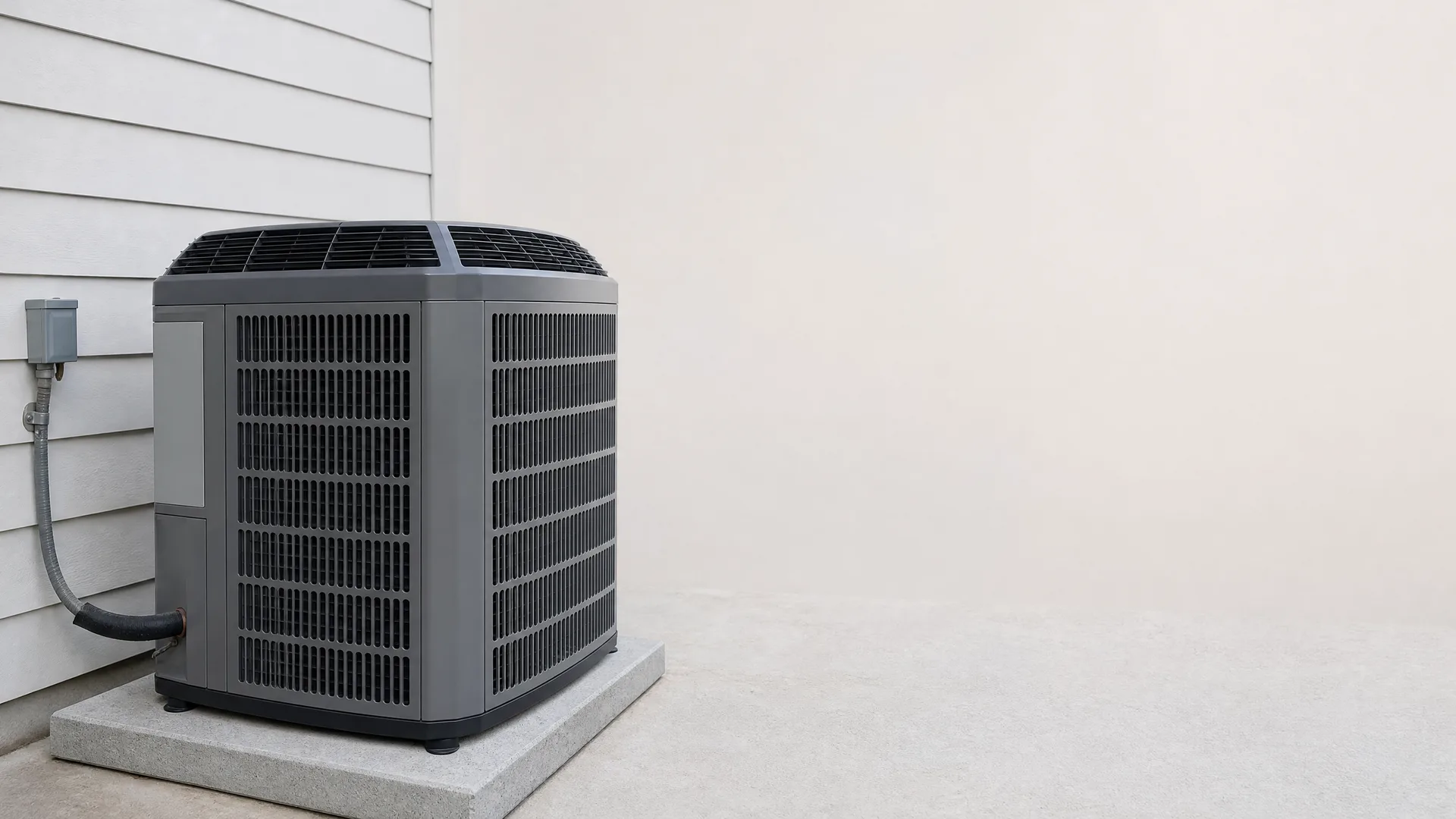
A gray outdoor air conditioner condenser unit on a concrete pad beside a house with horizontal siding, with an electrical disconnect box and conduit on the wall behind it.

What the capacitor does

The capacitor stores a charge and releases it to get the fan motor spinning, then keeps feeding it current while it runs. Heat is hard on it, and a South Dakota summer afternoon on a black compressor cabinet gets plenty hot. A capacitor doesn't usually go partway. It holds the charge or it doesn't, which is why the fan either turns or sits dead still while the compressor still hums.

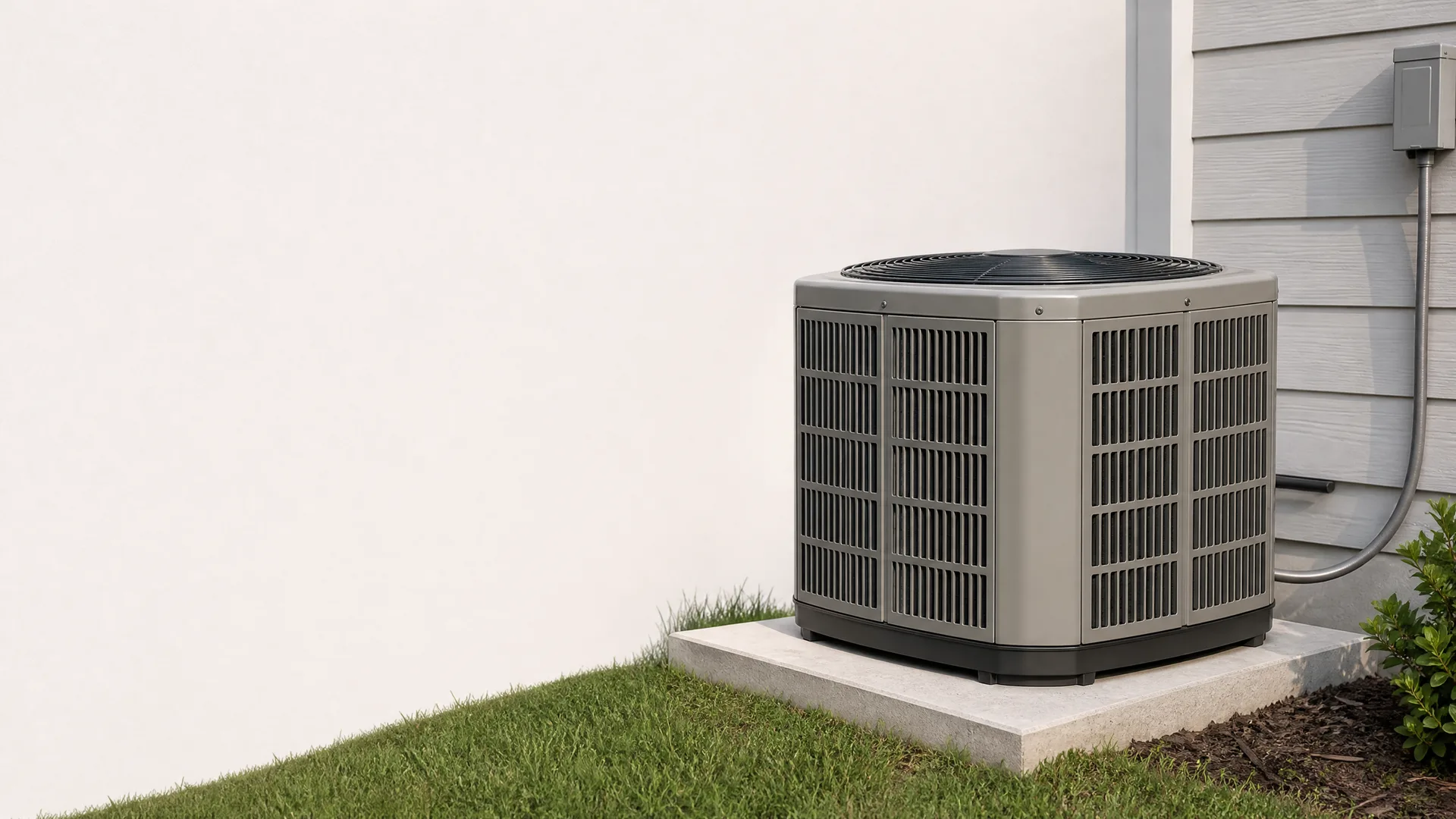
An outdoor air conditioner condenser unit on a concrete pad beside a house with horizontal lap siding, with a gray electrical disconnect box and conduit on the wall, grass in the foreground and a plain light wall at left.

What a seized motor sounds like

A fan motor with worn bearings will hum or click instead of turning because the compressor side of the unit is still trying to run. Check the blades by hand with the power off at the breaker. If they're stiff or won't turn freely, the motor bearings are the likely reason, not the capacitor. A motor in that state usually needs replacing rather than freeing up.

Power costs 13.32 cents per kilowatt-hour statewide

At 13.32 cents per kilowatt-hour, South Dakota power is cheap next to most of the country. That's not the issue here. When the outdoor fan won't spin, the compressor can keep drawing current without actually cooling anything, so you're paying for a system straining to do a job it can't finish.

EIA-861 2025 statewide residential average

Let it keep running like this

The compressor can run for a while with a dead fan, and the breaker may not trip right away. But the compressor needs that airflow to shed heat, and without it the refrigerant gas inside stays hot and the pressure climbs. Run it long enough and you're not looking at a fan motor or a capacitor anymore, you're looking at a compressor. That's the expensive part of the system, and some units aren't worth fixing once it fails. A short wait to get someone out is nothing next to what a few more hot afternoons of this could cost you.


Shut it off and call

Switch the system off at the thermostat or the breaker and the risk stops where it is. No more heat building against a compressor that can't cool itself. You lose the air for however long it takes to get a technician there, which in a South Dakota summer without the heavy humidity is uncomfortable but livable. Once you send the form, you're done hunting for a contractor, calling around, and explaining the same clicking noise three different times. Someone qualified gets the call, and you get your evenings back instead of spending them on the phone.

A woman in a dark knit turtleneck sweater reclines on a couch under a cream knit blanket, looking down at an open book, with a lit table lamp and framed pictures behind her.
A smiling middle-aged man in a dark green sweater sits at a candlelit table with wine glasses and a plate of greens in a dimly lit interior.

Done looking for an air conditioner pro

Explain the job once and skip repeating it on every call.

Sending the form costs nothing.

What's actually stopping the fan

  • A run capacitor failing open or weak is the most common reason the fan blade won't turn on startup.
  • A seized motor bearing will hum and trip the internal overload instead of spinning the blade.
  • The fan motor has its own thermal overload switch that cuts power when the windings get too hot.
  • A contactor stuck or pitted can send power to the compressor while leaving the fan motor circuit dead.
  • A blade jammed by debris or ice from the coil can stall the motor even when the windings are fine.
  • Low voltage reaching the unit from a failing disconnect or loose wire can leave the motor too weak to start.

The fan motor sits on top of the unit with a blade, a capacitor, and a thermal overload switch all tied to it, and any one of them can stop the blade without stopping the rest of the system. Start with the capacitor. It has to deliver a jolt of current to get the blade moving from a dead stop, and a weak or open capacitor leaves the motor humming with no spin at all. If the motor itself has a worn bearing, it binds up the same way, straining until the overload switch built into the motor cuts power to protect the windings from heat damage. That switch doing its job is actually a good sign. It means the motor is trying to protect itself rather than burning out. The problem can also be upstream of the motor entirely. A contactor with pitted or stuck contacts can energize the compressor side of the circuit while leaving the fan motor with no power reaching it, so you get a compressor running with nothing to cool it. Low voltage getting to the unit, whether from a failing disconnect or a loose wire in the whip, can leave the motor with just enough power to hum but not enough to start turning. And sometimes it's nothing electrical at all. Leaves, cottonwood seed, or ice built up on the coil can jam the blade physically, and a motor with good windings will just sit there straining against something it can't push past.

An outdoor air conditioner condenser unit on a concrete pad beside a house with horizontal lap siding, with a conduit running to a gray electrical disconnect box on the wall.
Before you get your air conditioner repair
A gray outdoor air conditioner condenser unit on a concrete pad beside a house with horizontal lap siding, with a wall-mounted disconnect box and conduit at left and a green shrub and mulch bed at right.
After you get your air conditioner repair
A gray outdoor air conditioning condenser unit on a concrete pad beside a house with horizontal lap siding, with a wall-mounted disconnect box and conduit, and shrubs to the left.

Fan spinning, unit clean

This is what it should look like. The condenser sits on its pad, the disconnect box mounted nearby, and the fan on top turns steadily whenever the compressor runs. Warm air moves across the coil and out the top, so the refrigerant inside can actually cool down and head back indoors as cold air.

An outdoor air conditioning condenser unit on a concrete pad beside a house with horizontal siding and a concrete foundation, with dry brown leaves on the ground to either side.

Fan stopped, leaves piling up

Leaves and debris have built up around the base, and the cabinet shows its age. If the fan blade isn't turning here, the compressor is working with nowhere for that heat to go. A unit left like this through a Dakota summer is running hotter than it was built to handle.

A closed silver laptop and a glazed ceramic mug on a wooden table, with a blurred kitchen counter, potted plant, cutting board and window in the background.

A fan that won't spin means a call before you run the system again

The fan on top of your outdoor unit isn't turning, and that's enough to tell you not to keep running the system. A weak capacitor, a seized motor, a tripped overload switch: whatever the cause, the compressor needs that airflow and shouldn't be left to run without it. Someone licensed needs to open the cabinet and find out which one it is.

Finding that someone is the part you can skip. Instead of searching around, calling a few numbers, and going through the same explanation about the hum and the still fan each time, you send one form. From there, matching you with a contractor who can look at the unit is no longer something you have to manage yourself. That's the weight that comes off, not the repair itself, just the work of finding who does it.

Interior corner of a dining room with a round wooden table, a ceramic vase holding olive branches, a dark spindle-back chair near a curtained window, and a sideboard with a lamp against beige walls.
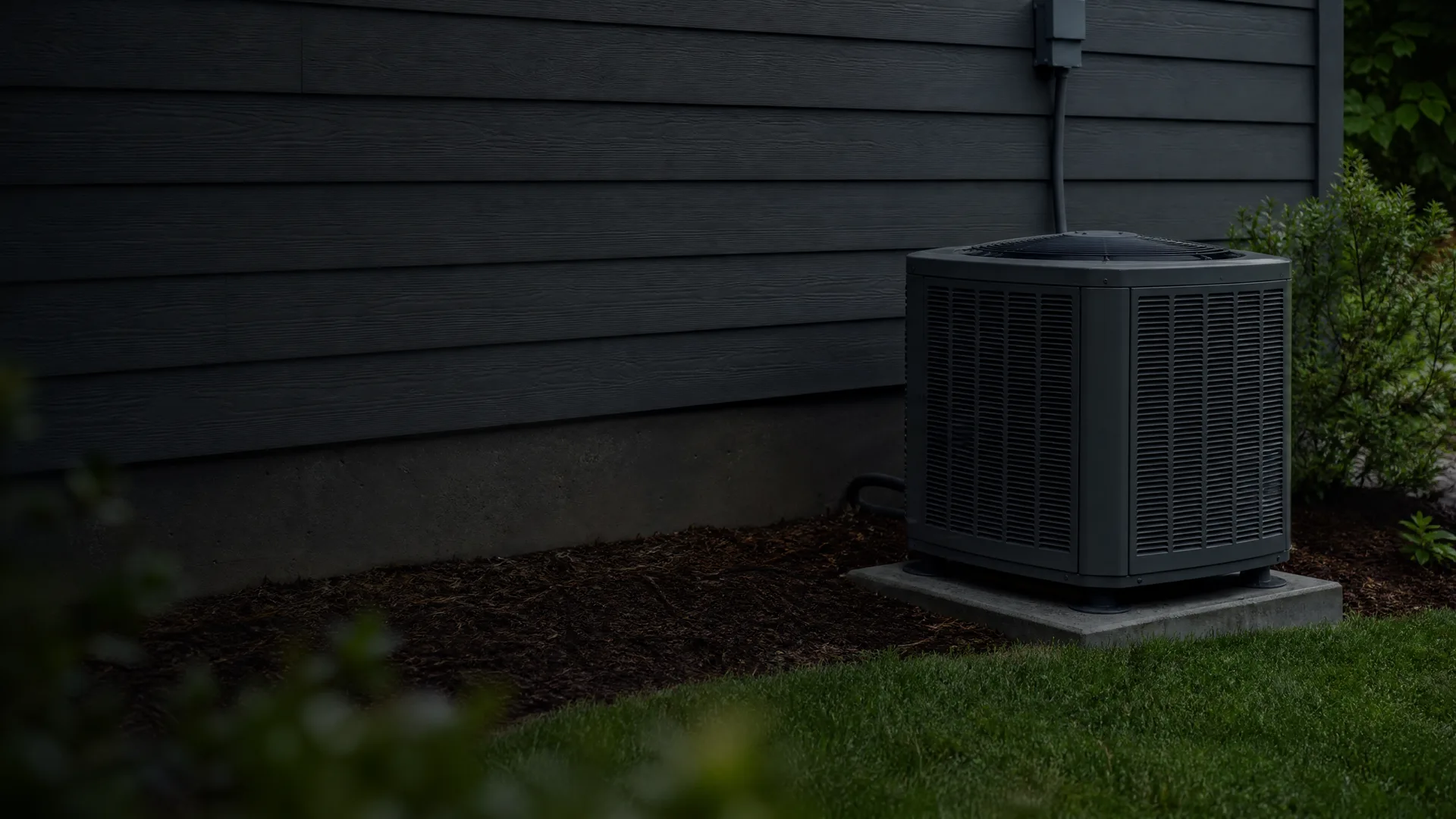
An outdoor air conditioner condenser unit sits on a concrete pad beside a dark horizontal-lap-sided house, with mulch, grass, and shrubs around it.

It's off your list after this

Skip searching for an air conditioner pro and answer a few questions instead.

Step 1 of 3: Equipment