Profile view of a bearded man wearing a black baseball cap and a dark gray T-shirt against a plain light background.

How to lower your AC bill in a South Dakota summer

Step 1 of 3: Equipment

The biggest cut to your summer AC bill comes from keeping the system running the way it was built to run, not from turning the thermostat up and gritting your teeth through August. South Dakota summers put real hours on your air conditioner even without heavy humidity, and a unit with a dirty coil, a clogged filter, or a low refrigerant charge has to run longer to do the same job, which shows up directly on the bill. A yearly check catches those problems while they're still small, before the compressor is straining and before a weak part fails on the one week you need it most. Since most homes here heat with gas, your air conditioner is doing one job all summer and nothing else the rest of the year, so a tune-up before the heat sets in keeps that one job cheap. Power here is relatively inexpensive, so the bigger cost to watch is a system working harder than it needs to, not the rate per kilowatt-hour.

A smiling man in a gray long-sleeved shirt stands in a kitchen looking to the side, with open shelves of dishes, a white mug on the counter, a potted plant, and a view through a doorway into a living room.
A smiling bearded man in a green sweater sits at a white marble kitchen island with a mug, potted plant and bowl of fruit, in a bright white interior with open shelving and an arched doorway.
A smiling man with dark curly hair and a beard, wearing a dark green knit sweater, stands at a white marble kitchen counter with a dark blue mug, with open shelving, pendant lights and a houseplant behind him.
A smiling man in a green ribbed sweater stands behind a wooden table holding a ceramic mug of coffee in a kitchen with white subway tile, shelves of potted plants, and a bowl of fruit.
Single-story house with gray horizontal lap siding, dark shingled gable roof, a small covered front porch with a dark door, and windows, set behind a patchy green and brown lawn under a clear blue sky.

A South Dakota summer runs a 56°F average dew point across June, July and August, based on NWS climate data. That's dry air. It means your air conditioner isn't fighting moisture the way one would in a muggy state, so it doesn't need to run as long to pull the heat down and the house still feels comfortable. The load on the system comes more from heat than from humidity. Less run time sounds like an easy bill, but a unit that's low on refrigerant or has a dirty coil still works harder than it should to hit the thermostat setting, and you'll pay for that difference even with dry air on your side.

NASA POWER T2MDEW county cells weighted by homes

Skip Maintenance or Keep Up With It

Skip it

  • The coil stays dirty, so the system has to run longer to pull the same heat out of your house.
  • A weak capacitor keeps limping along until the day it doesn't, usually on the hottest afternoon of the year.
  • Refrigerant that's crept low all summer makes the compressor work harder for less cooling, and that shows up on your bill.
  • A clogged filter cuts airflow across the coil, so the whole system strains to move the same amount of air.
  • Small electrical wear goes unnoticed until it trips the breaker or stops the unit outright.

Stay on top of it

  • A cleaned coil lets the system pull heat out of your house in less time, with less run time.
  • A contractor checking the capacitor and contactor catches the part that's about to fail before it does.
  • Refrigerant charged to the right level means the compressor isn't working overtime for the same cooling.
  • A clear filter and clean blower keep airflow where it should be, so the system isn't straining.
  • Someone local who services this equipment every South Dakota summer knows which parts tend to go first here and checks those.
A smiling man with dark curly hair in a navy t-shirt sits on a gray couch indoors, with a large-leafed plant and a window in the background.
A bearded man in a plaid flannel shirt stands in a kitchen looking out a window toward snow-covered shrubs, with a steaming mug on the windowsill and potted plants on a shelf behind him.
An outdoor air conditioning condenser unit on a concrete pad beside a house with horizontal lap siding, with a gray electrical disconnect box and conduit on the wall, mulch bed and shrub to the right, and mown grass in the foreground.

Running clean

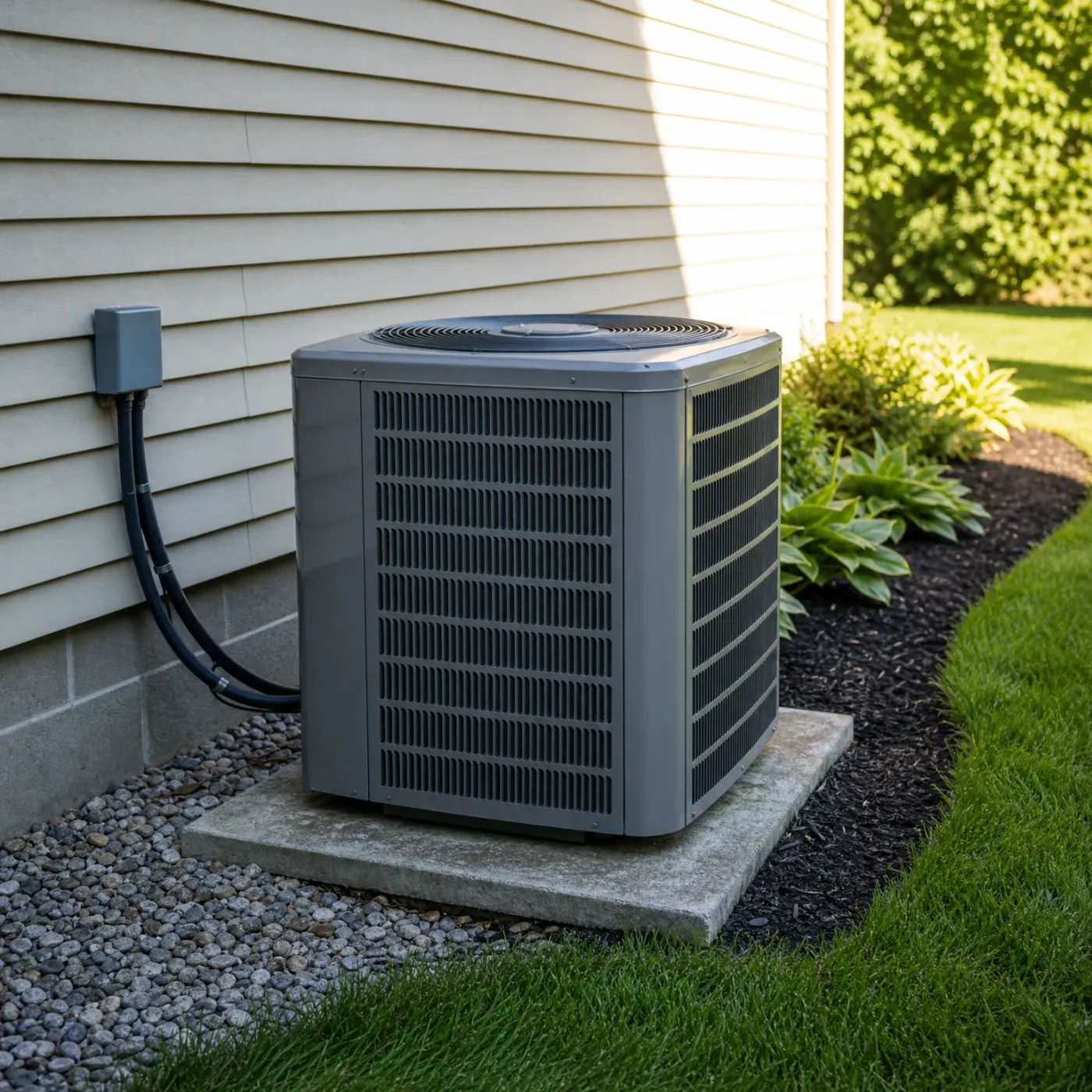
This is what a serviced unit looks like. Coils clear, clearance on both sides, the disconnect box right where a contractor needs it. Air moves through the coil without resistance, so the compressor cycles off instead of running straight through the afternoon.

An outdoor air conditioning condenser unit on a concrete pad beside a house with light blue horizontal siding, with a shrub to the left and a conduit and disconnect box on the wall to the right.

Choking on dust

Dust and grass clippings have packed into the coil guards until the fins underneath barely breathe. The unit still runs, but it's pulling heat through a clogged coil now, and that shows up as longer run times on a July bill before it shows up as a breakdown.

Why does a dirty AC coil make my electric bill go up?

You keep hearing that a dirty coil costs you money, but nobody explains what's actually happening inside the unit. You want to know the mechanism, not just the warning, so it makes sense why a layer of dust and grime on a coil translates into a higher number on your electric bill every month.

A dirty coil makes the compressor run longer to move the same heat

The outdoor coil's job is to dump the heat your air conditioner pulled out of the house into the outside air. That only works if air can move through the coil freely. Dust, grass clippings and cottonwood fluff settle into the fins over the summer and block that airflow. With less air getting through, the coil can't shed heat as fast, so the compressor has to run longer to bring the house down to the same temperature it used to hit in less time. Longer run time means more electricity for the same result. It also means more wear on the compressor itself, since it's working harder on every cycle instead of shutting off and resting.

An outdoor air conditioner condenser unit on a concrete pad beside a house with light gray horizontal siding, with mulch and green shrubs on either side and a concrete walkway in the foreground.
Before you get your air conditioner maintenance
A gray outdoor air conditioning condenser unit on a concrete pad beside a house with horizontal siding and a stone veneer base, with refrigerant line and electrical disconnect box on the wall and flowering shrubs to the left.
After you get your air conditioner maintenance

Send one request and you're done looking

Your request goes to one pro, not a list of companies.

Sending the form costs nothing.

An outdoor air conditioner condenser unit beside a house with horizontal siding and stucco, its coil fins covered in white cottonwood fluff that also collects on the surrounding grass and mulch.

The cottonwoods let go the last week of May, and by Saturday the fluff has drifted against the condenser like dirty snow. You walk past it carrying the hose and stop. The fins on the side facing the tree are gray white, packed solid, and when you crouch down you can't see any metal through them at all. The unit is still running, you can hear it, but it sounds like it's working harder than it should for a seventy degree morning. You touch the fluff and it's damp from last night's sprinkler, matted in tight instead of blowing off like it would dry. You make a note to call someone before the real heat shows up in July.


A gray outdoor air conditioner condenser unit on a concrete pad beside a house with horizontal vinyl siding, surrounded by mulch, flowering shrubs, and lawn.
Clear coils, mowed grass a foot back on every side, and nothing blocking the airflow this unit needs to shed heat.
A weathered outdoor air conditioning condenser unit on a concrete pad beside a house with light horizontal siding, an electrical disconnect box and conduit on the wall, and mulched soil on either side.
Grime packed into the fins forces the compressor to run longer for the same cooling, and the disconnect box is the only clean thing left on it.

Why does the upstairs never quite cool off

You notice it most in the afternoon. The air coming out of the vents feels less cold than it used to, and the unit outside runs longer stretches to get the house where you want it. Maybe you hear it cycling on again just minutes after it shut off. The thermostat says 74 but the room feels warmer than that. Sometimes there's a faint musty smell near the vents, or the outdoor unit hums but the fan barely turns. None of this means the system is finished. It usually means it's working harder than it should to do the same job, and that shows up on your electric bill before it shows up as a real breakdown. Left alone through a full South Dakota summer, that strain is what turns a small fix into a system that quits on the hottest day.

A gray outdoor air conditioner condenser unit on a concrete pad beside a house with horizontal siding and a light stucco wall, with a disconnect box and refrigerant lines on the wall and a shrub and mulch bed at left.

What a tune-up actually checks

A contractor checks refrigerant charge against what the nameplate calls for, tests the capacitor under load instead of just looking at it, and pulls the panel to see the coil instead of guessing from outside. Static pressure gets measured across the filter and the coil both, because a reading out of range tells you airflow is restricted before you ever feel it in a room. None of this shows up by looking at the unit running.

A gray outdoor air conditioning condenser unit on a concrete pad surrounded by gravel, next to a white horizontal-lap-sided house wall with an electrical box and conduit, against a blank white background on the left.

Why a contractor checks twice a year

Spring is for the parts that sat idle all winter: capacitor, contactor, refrigerant level, the start on the compressor. Fall doesn't apply here since your furnace runs on gas, but a spring check is still the one that catches what failed over the months the AC wasn't asked to do anything. A unit that starts clean in May tends to run clean through August, because most of what breaks it was already weak before the heat found it.

Power costs 13.32 cents per kilowatt-hour statewide

At 13.32 cents per kilowatt-hour, your air conditioner isn't the reason South Dakota bills stay manageable. But every extra minute a dirty coil or low charge keeps it running still adds up at that rate, month after month. Keeping the unit tuned is what keeps that cost low.

EIA-861 2025 statewide residential average

Where this leaves your bill

  • A clean coil and a charge that matches the nameplate are what keep your air conditioner cycling off instead of running straight through a hot afternoon.
  • South Dakota's dry air already works in your favor, so a tuned system here doesn't need to run as long as one fighting humidity.
  • At 13.32 cents per kilowatt-hour, the cost of ignoring a dirty coil or a weak capacitor shows up slowly, then all at once on the hottest day.
  • A local contractor who services this equipment all summer knows which part usually fails first on units like yours.
  • Sending one request means one contractor calls, not a handful of companies competing for your afternoon.
  • Catching a capacitor or a low charge before August does more for your bill than any thermostat setting.

Your air conditioner costs you the most not when it's old, but when it's running longer than it has to. A dirty coil, a weak capacitor, a charge that's drifted low all do the same thing: they make the compressor work harder to move the same amount of heat out of your house. South Dakota's dry air was already doing you a favor. A tuned system here doesn't have to fight moisture, so it cycles off the way it was built to instead of running straight through a July afternoon. At 13.32 cents per kilowatt-hour, that extra runtime doesn't hit your bill all at once. It adds a few minutes here, a few more there, until the month closes out higher than it should have, usually right around the hottest stretch of summer.

Catching the problem early is the whole point of maintenance. A contractor who works on this equipment all season has seen which part tends to go first on units like yours, and checking it before August matters more than anything you'd do with the thermostat. When you send a request through this page, it goes to one contractor, local to South Dakota, not a handful of companies calling you back at once. That contractor already knows the climate your system runs in and what usually wears out first in it. You're not explaining your situation from scratch. You're handing it to someone who's seen it before, on a unit not far from yours.

A gray outdoor air conditioning condenser unit on a concrete pad beside a house with light horizontal siding, with gravel, dark mulch, shrubs and lawn nearby and a conduit box on the wall.

Finding a pro stops being your job

Send my request

The pro who reaches out is licensed in South Dakota.

You're not committing to anything by asking.