


Profile view of a bearded man wearing a dark green baseball cap and a dark gray T-shirt against a plain light background.

How to get your AC ready for a South Dakota summer

Step 1 of 3: Equipment

What do I need to do to get my AC ready for summer?

You want your air conditioner to just work once the weather turns warm, without a breakdown on the first hot stretch. South Dakota summers don't bring the heavy, sticky air some places get, but the unit still has to run for months straight, and you'd rather find out now if something's wrong than in July.

Have it serviced before the first warm week, not after

A technician checks the refrigerant charge, cleans the coil, and tests the capacitor and electrical connections before the system has to run every day. Dust and debris build up over winter, even with the unit sitting idle, and a dirty coil makes the compressor work harder to do the same job. Since power is cheap here, that extra strain shows up less on the bill and more in how long the unit lasts. Catching a weak capacitor or a low charge in spring means it gets fixed on your schedule, not during a stretch of 90-degree days when every other AC in the state is also asking for attention. The goal is simple: get ahead of the one small problem before it becomes the reason your house doesn't cool down.

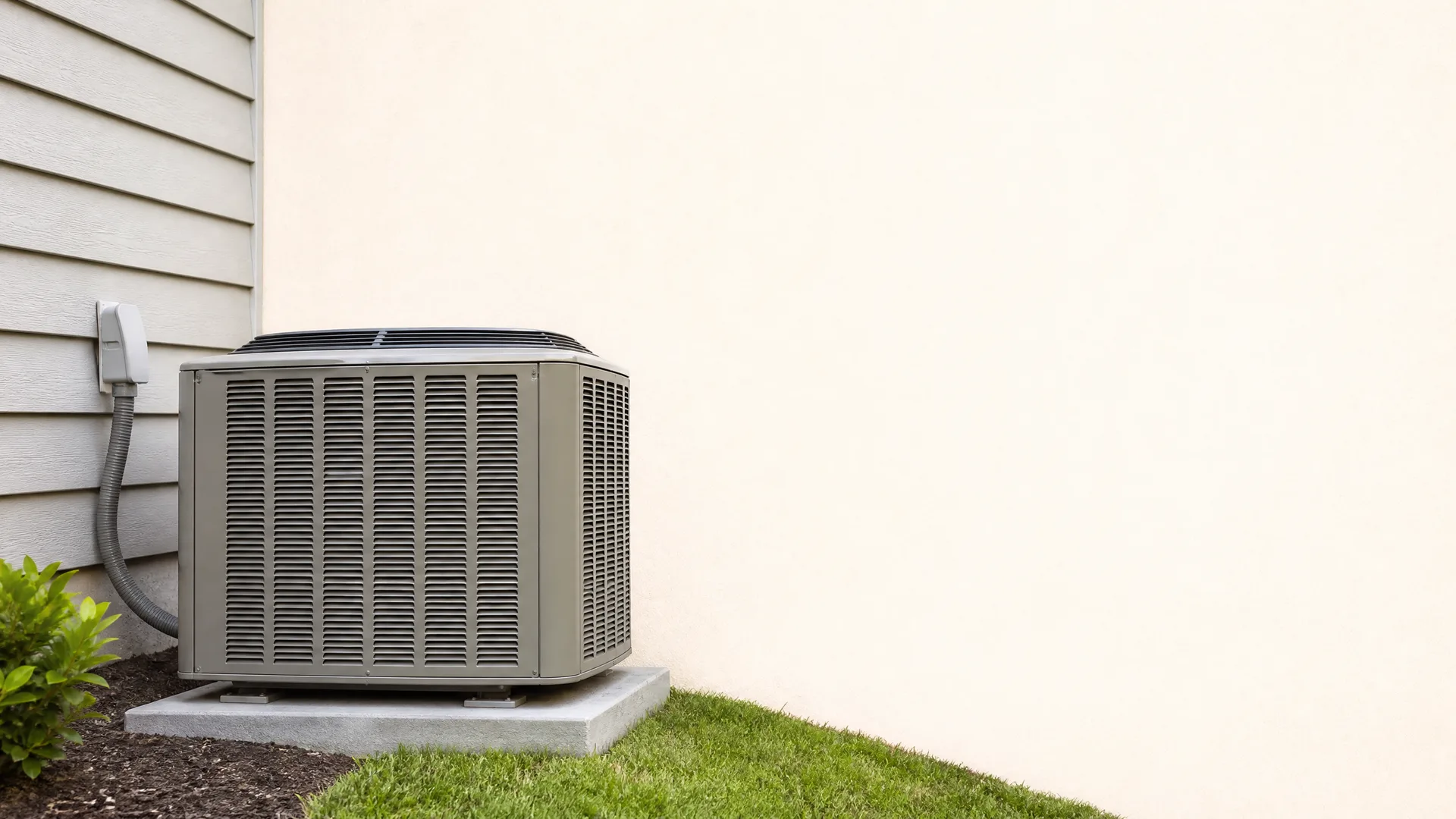
An outdoor air conditioning condenser unit on a concrete pad at the corner of a house, next to vinyl siding and a plain light-colored wall, with grass and a mulch bed in the foreground.

What a dirty coil costs you

The outdoor unit has a coil wrapped around it, and that coil has to shed heat to the air around it. Over a winter it collects cottonwood seed, grass clippings, and dust, and once it's coated, the system can't dump heat the way it should. The compressor runs longer to do the same job. A contractor can hose that coil clean and check the fins for damage before the first warm week hits.

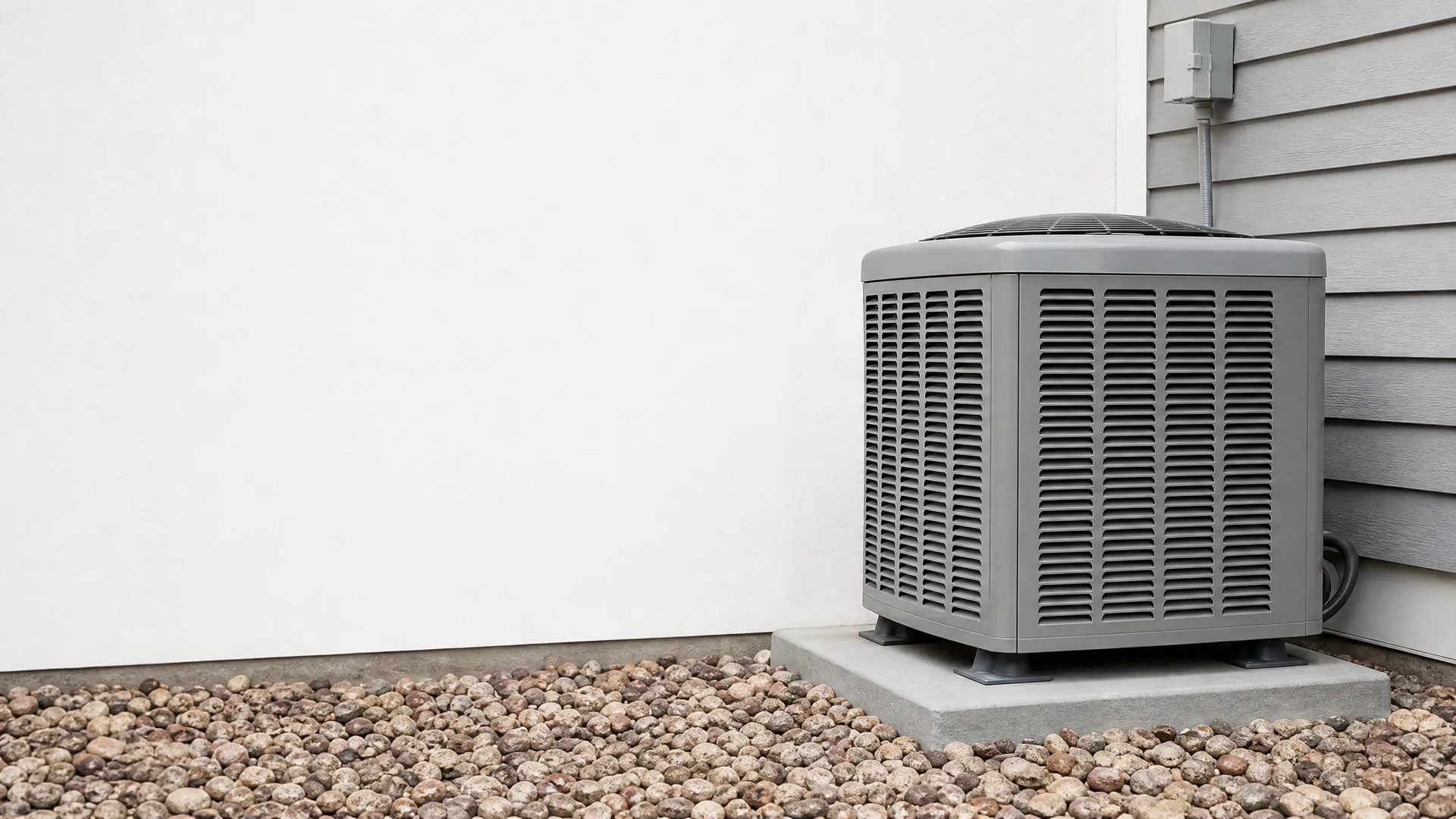
A gray outdoor air conditioning condenser unit sits on a concrete pad beside a white stucco wall and gray horizontal siding, surrounded by rounded landscaping gravel, with an electrical disconnect box mounted on the siding above.

Why the filter matters more here

Most furnaces in South Dakota share the same blower and ductwork the air conditioner uses, so a clogged filter chokes both. A dirty filter forces the blower to work harder to push air through the house, and that strain shows up on the power bill even though power here is cheap. Checking the filter before summer, and swapping it if it's gray and packed, is one of the simpler things that gets checked during a maintenance visit.

A man in a dark blue shirt stands in an open front doorway of a stucco and wood-clad house, facing a blond woman seen from behind in the foreground on a stone walkway.

What a neglected AC puts at risk in your house

A unit that's struggling runs longer to hit the same temperature, and that extra runtime is what pushes a weak part into failing outright. When that happens on a 90 degree day, you're the one calling around for someone who can come out that day instead of next week. With power priced the way it is here, a sluggish system doesn't hit your bill as hard as it would somewhere else, so you may not get a warning from your bill before you get a warning from the house itself.

You also don't want to be the one tracking down a contractor, explaining the same problem three times to three different companies, and trying to tell whose quote actually covers the work. Getting matched with someone who services your area and has your unit's details already means that conversation happens once, with someone who calls you instead of the other way around.

A living room corner with a beige sofa and cushion, a round wooden coffee table holding a pale ceramic vase of eucalyptus stems and a wooden bowl, and a curtained window with a potted plant above a latticed radiator cover in the background.
An outdoor air conditioning condenser unit on a concrete pad beside a house with horizontal lap siding, with an electrical disconnect box and conduit on the wall and a green shrub to the right.

A unit that's ready for it

This condenser is clean and clear, with the disconnect box mounted close by and nothing crowding the cabinet. Air moves through the coil the way it's supposed to, and the shrub next to it is far enough back to stay out of the way.


An outdoor air conditioner condenser unit on a concrete pad beside a house with horizontal siding and a lower concrete foundation wall, with coiled refrigerant lines at right.

A unit that's been put off too long

Dirt has built up across the louvered panels and the fan grille on top, the kind of coating a winter leaves behind. Lines at the back still carry refrigerant, but a coil this caked can't shed heat the way a clean one does.

A gray-haired bearded man in a dark coat and scarf dusted with snow stands smiling in a dimly lit entryway with a white front door, a side table with a lit lamp, an oval mirror, and a patterned rug.
An older bearded man in a dark snow-dusted coat and gray scarf stands just inside a dimly lit home entry, with a framed picture, lit table lamp, and an adjoining room with a fireplace behind him, and snow visible through the open door.
A gray-haired, bearded man in a dark snow-dusted coat stands smiling in a dimly lit entry hall with a staircase, a lit table lamp, a framed picture, and a living room visible through a doorway.
An older man with gray hair and a beard, wearing a dark jacket dusted with snow, stands smiling in a dimly lit hallway with lamps and a living room visible behind him.

Get your air conditioner to the right pro

You've seen what the coil collects over a winter and what a struggling unit risks once it's hot. The fix is a straightforward check: coil cleaned, refrigerant level confirmed, electrical connections tightened, condensate drain cleared. None of it is hard to find a contractor for in July, but by then everyone else in South Dakota is calling too, and you're stuck waiting your turn while the house sits at 80. Getting it looked at now, before the first warm stretch, means you skip that line entirely. You'd otherwise spend an evening searching local contractors, calling a few to see who even picks up, repeating the same description of your unit to each one, then trying to compare quotes that aren't quite for the same work. Handing that off means one contractor who knows your situation reaches out to you instead. Your AC gets checked on your schedule, not during the week it finally fails.

What's actually happening inside the unit

  • The refrigerant in your system runs in a closed loop, and it doesn't get used up, so a low charge always means a leak somewhere in the line.
  • A capacitor stores a jolt that kicks the compressor and fan motor into motion, and a weak one makes the unit hum or click without starting.
  • The thermostat talks to the unit over low voltage wires, and a loose connection there can leave your AC running the fan but never the compressor.
  • Your blower fan pulls warm air from the house across the indoor coil, and if that airflow is restricted the coil can ice over even on a hot day.
  • The outdoor fan motor has its own bearings separate from the compressor, and a motor that's starting to fail will usually sound rough before it quits.
  • Contactors inside the outdoor unit open and close every time the compressor cycles on and off, and the contact points wear down a little with each cycle.

Your AC doesn't work the way most people picture it. Refrigerant doesn't get consumed like gas in a car. It cycles between the outdoor coil and the indoor coil, and if the level is low, that refrigerant went somewhere. A contractor checking the charge is really checking for a leak, not topping off a tank the way you'd fill a tire.

The electrical side wears differently. A capacitor is what gives the compressor and fan motor the push to start spinning. When it weakens, you hear the hum of a motor trying to start and failing, not silence. The contactor, a separate part, is what's switching power to the compressor on and off all summer, and those contact points pit and burn a little each time they close, same as any switch that gets used thousands of times a season.

Airflow problems show up in a place you wouldn't expect: ice, on a 90 degree day. If the blower can't pull enough warm air across the indoor coil, the coil drops below freezing and frost builds on it, which cuts airflow further and makes the problem worse. And the thermostat connection is low voltage, easy to overlook, but a loose wire there can leave you with a fan that runs while the compressor never kicks on at all.

A gray outdoor air conditioning condenser unit on a concrete pad beside a house with horizontal lap siding, with a wall-mounted electrical disconnect box and refrigerant lines, shrubs, mulch and lawn around it.
A clean unit like this one has clear space on every side and nothing blocking the coil, so it pulls heat out of the house without a fight.
An outdoor air conditioner condenser unit on a concrete pad beside a house wall with stucco lower section, horizontal siding above, and a white downspout to the right.
A unit this dirty is working against the grime caked on its fins, and that's what's driving your bill up before it quits outright.

Power costs 13.32 cents per kilowatt-hour statewide

At 13.32 cents per kilowatt-hour, every extra hour your AC runs to make up for a dirty coil or a weak capacitor shows up on your bill. Power here is cheap compared to a lot of the country, but a unit working harder than it needs to still adds up over a summer.

EIA-861 2025 statewide residential average

A woman wrapped in a cream textured blanket sits in an armchair beside a lit lamp and a dark window, with an open book in the foreground.
An older woman with gray hair in a bun and glasses, wearing a beige knit sweater, smiles while looking to the side in a warmly lit kitchen, with a loaf of bread on the counter in the foreground and a snowy scene outside the window.

What are you noticing about your AC right now

Go stand by the outdoor unit and listen. A hum with no air moving, or a rattle that wasn't there last year, means something inside is already struggling. Inside the house, check if the air coming out feels as cold as you remember, or if the thermostat seems to take longer to hit the number you set. A musty smell when it kicks on usually means water sitting somewhere it shouldn't. None of this means the unit is done for. But a system that's already straining before the hot stretches of July and August hits will be the one that quits on you mid-summer, not the one that got checked over first.

A two-story house with light beige horizontal siding, a gabled roof, a small covered front porch with dark door, and shrubs along the foundation, set behind a mown lawn and wet sidewalk with large leafy trees on both sides.

A dew point of 56°F is what the National Weather Service averages out for South Dakota across June, July and August. That's a dry heat, the kind where sweat still does its job cooling you off. Your AC isn't fighting moisture the way a unit in a swampier state would, so it doesn't have to pull as much water out of the air to make the house feel right. But dry air moves through a dirty coil just as poorly as damp air does. If the coil's caked up, the unit still has to run long and hard to drop the temperature, dew point or no dew point.

NASA POWER T2MDEW county cells weighted by homes

A unit that's clean, charged right, and tightened up will get you through a South Dakota summer without drama. That's the whole answer: coil, refrigerant, connections, drain. None of it changes house to house, and none of it needs guessing once someone's looked at the unit. What's left is finding someone to do it, and that's its own chore. Calling a few contractors, explaining the hum or the weak airflow to each one, waiting on callbacks, then lining up quotes side by side to figure out who's worth hiring. That part has nothing to do with your AC and everything to do with your time. You already know what the unit needs. The question now is just getting the right person out to do it before the first real hot stretch hits.

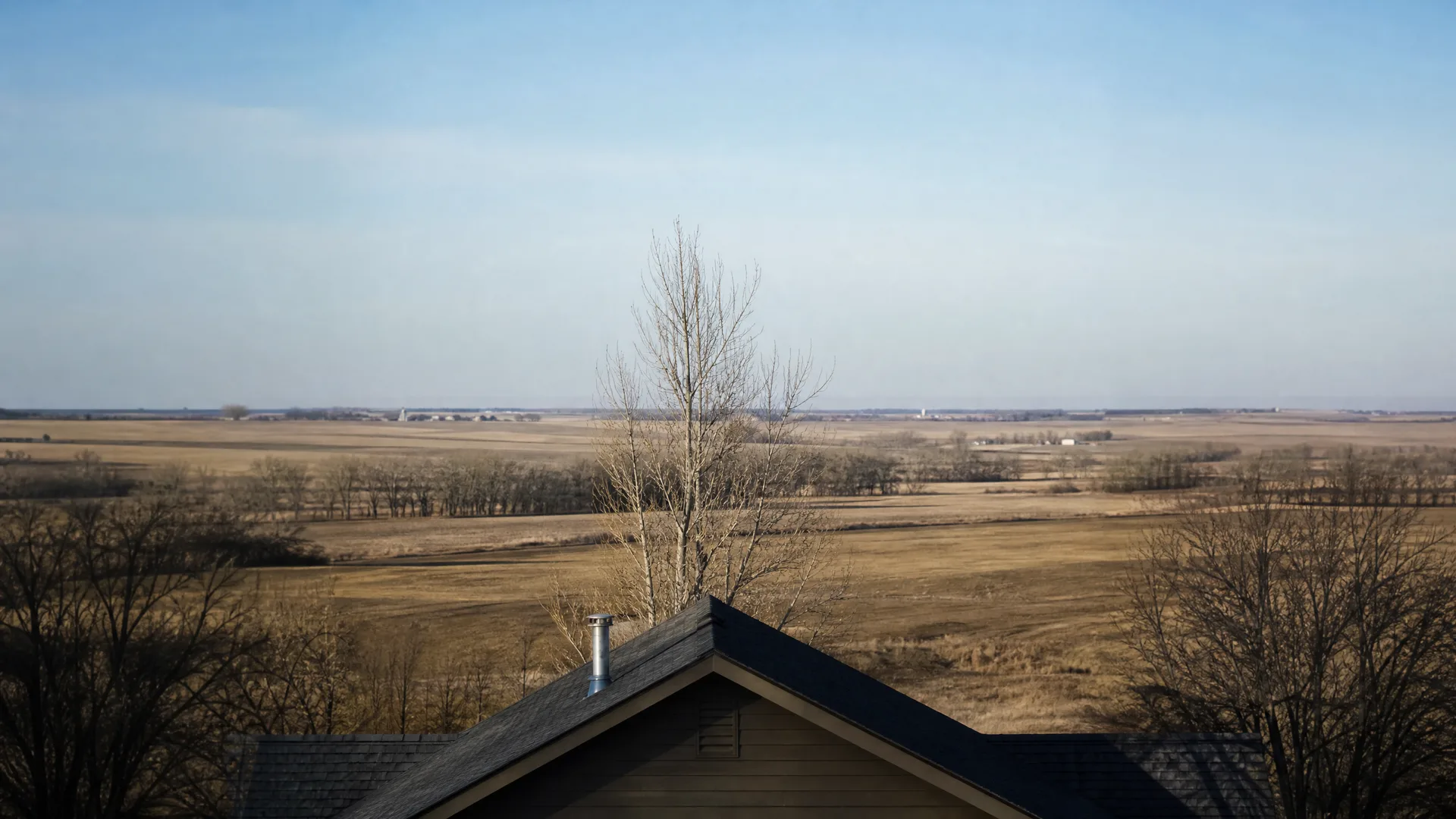
View over a dark shingled gable roof with a metal flue pipe toward flat brown fields, bare trees, and a hazy horizon under a pale blue sky.

The right pro for this job

Fill out one form

Asking costs nothing, and the choice to hire stays yours.

Skip the back and forth of calling shops around town and repeating the same description of your unit to each one. Send one request and a contractor who covers your area reaches out to you directly, ready to look at the coil, the charge, and the connections before the heat sets in.