Running long, cooling fine
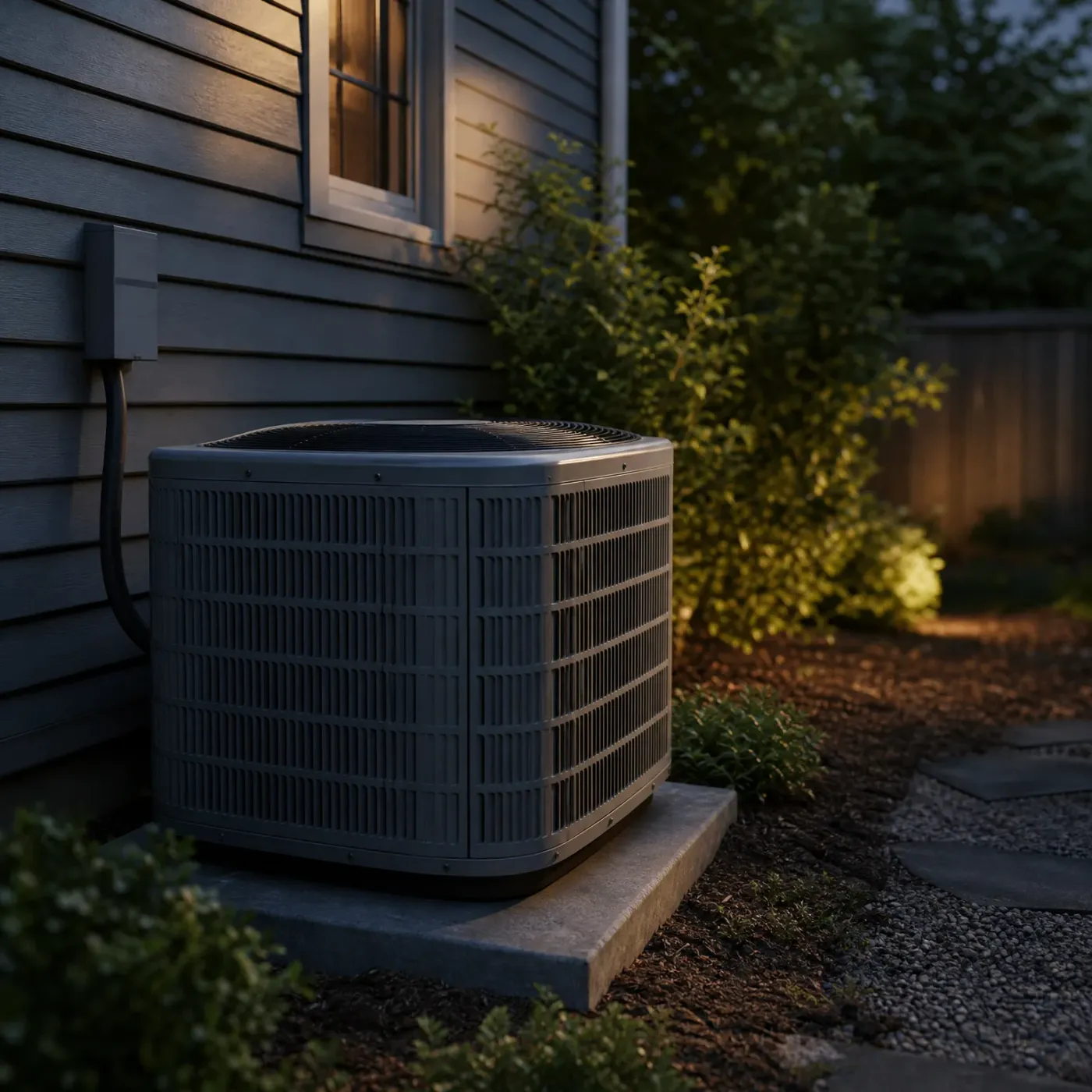
This is the unit outside, sitting on its pad, doing its job. If yours looks like this and the house hits the setpoint even on a 95 degree afternoon, the long run time is normal. Dry heat just takes longer to beat.
Finding a pro stops being your job
On a hot South Dakota day, your AC should run close to nonstop, maybe cycling off for a few minutes once the house cools to the setpoint. If it's running that long and the house still feels warm, or it's shutting off and on every few minutes, something's off. This page gets into what's normal, what's not, and what to do if yours doesn't match. Send the form and the search for someone to look at it is off your plate.
Let a pro reach outOn a hot South Dakota day, your AC running almost nonstop isn't a sign of trouble. South Dakota heat is dry, not muggy, so the system is mostly fighting the outdoor temperature itself rather than wringing moisture out of the air. When it's 90 degrees outside and you've got the thermostat set to 72, that's a big gap for the unit to hold, and it will run long stretches to do it, shutting off for only a few minutes at a time once the house reaches setpoint. What matters isn't how long it runs. It's whether the house actually gets there, and whether the air coming out of the vents feels properly cold the whole time it's running. A unit that runs all afternoon and still leaves the house a few degrees warm than you set it, or one that short cycles every few minutes, is telling you something is off. One that runs long but gets the job done is just doing what a South Dakota summer asks of it.

This is the unit outside, sitting on its pad, doing its job. If yours looks like this and the house hits the setpoint even on a 95 degree afternoon, the long run time is normal. Dry heat just takes longer to beat.

Dirt on the coil guard like this makes the unit work harder for the same result. If yours looks dusty or worn and the house still feels warm after hours of running, that buildup may be part of why. A cleaning can tell you fast.
You watch the clock and the thermostat isn't moving much. The outdoor unit is running, the air coming out of the vents feels cold, but the cycle just keeps going. You're not sure if that's the compressor working the way it should or straining to keep up.
A central AC cools two ways at once: it drops the air temperature and it pulls moisture out through the coil. In a humid climate, a lot of that run time goes to the moisture side. South Dakota air doesn't carry much moisture to begin with, so almost the whole cycle goes toward temperature alone. That takes longer per degree than people expect, especially once it's past 90 outside. The compressor isn't working harder than it should. It's running at one speed, moving heat out at a steady rate, and a bigger gap between outdoor and indoor temperature just means more minutes to close it. Short cycling, not long running, is the pattern worth watching.




Power is cheap here, and that changes the math on a long run time. A compressor built to run for hours is doing what it was built to do, and it isn't drawing extra power to do it. Short cycling costs you more, not less. Every start pulls a jolt of current to get the compressor moving, and a unit that stops and starts every few minutes rather than settling into one long run is working harder per hour of cooling, not easier. The long steady run on a hot afternoon is the cheaper way for your AC to spend its time, not the expensive one.
A tune-up checks the things that turn a normal long run into a strained one. Low refrigerant charge makes the compressor run longer to move the same heat, and it keeps climbing from there. A dirty condenser coil outside does the same thing, since it can't shed heat as fast. A tech who services this equipment all summer knows which of those shows up first in a dry climate like this one, and catching it early is the difference between a long run time and one that never quite reaches the setpoint.


A licensed local pro takes the request for your air conditioner tune-up.
Send the form and the air conditioner tune-up stops being something to remember.
Asking costs nothing, and the choice to hire stays yours.

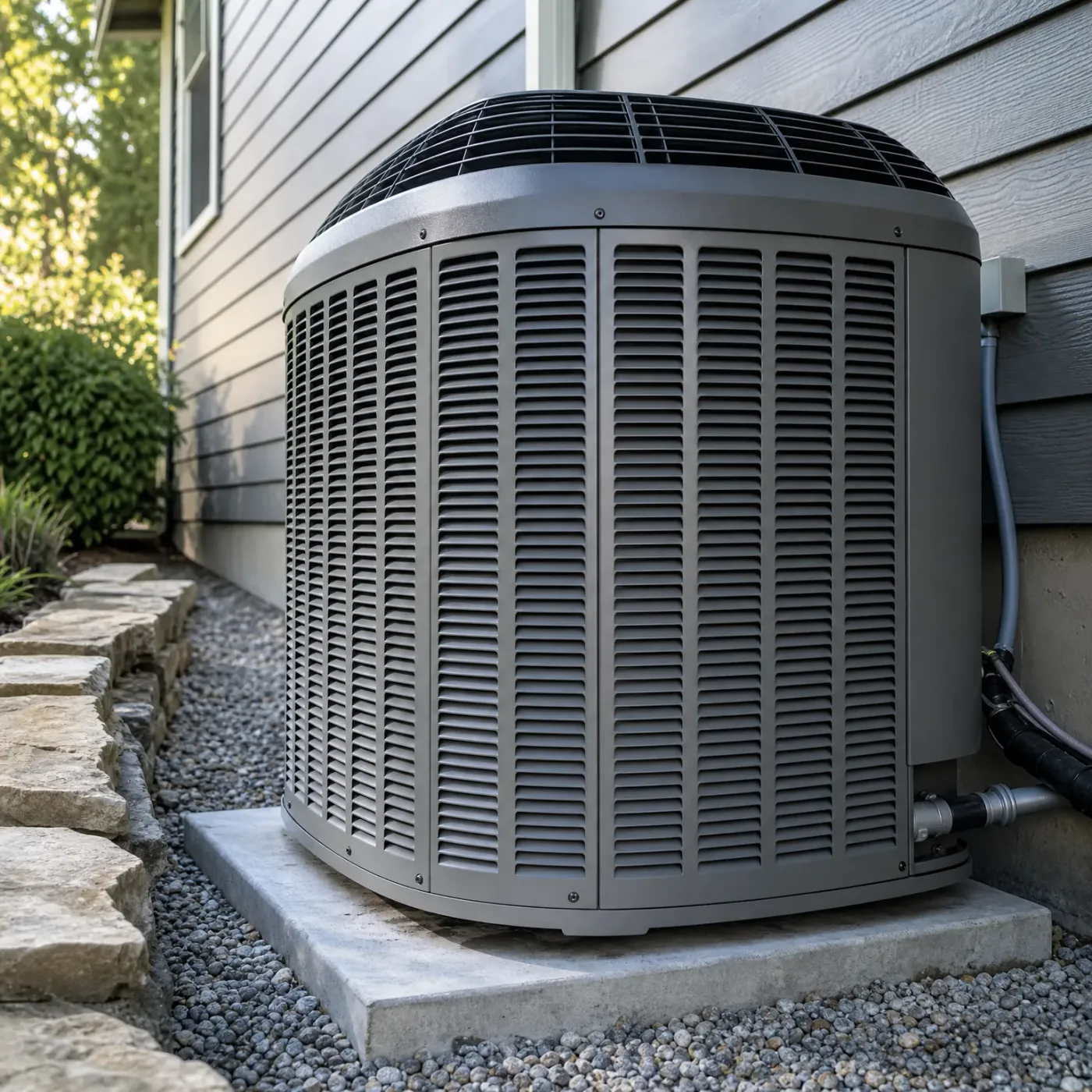
This condenser sits on its pad with clear airflow through the grille. A long run time off a unit like this is doing what it's built for, moving heat out of the house steadily. The line set and disconnect are doing their job, and the compressor isn't straining to get there.

This condenser has debris packed against the grille and dirt caked on the fins. Airflow through that coil is choked, so the same hot day asks the compressor to work harder and run longer to reach the same setpoint. Left alone, it's the kind of thing that ends in a repair call.


Thermostat calls for cooling and signals the outdoor unit.
The compressor starts and pushes refrigerant to the condenser coil.
The condenser fan pulls outside air across the coil to shed heat.
Cooled refrigerant travels inside to the evaporator coil.
At 13.32 cents a kilowatt-hour, a compressor running most of a hot afternoon isn't padding your bill the way you'd expect. That rate is below what a lot of the country pays, so the long run time a dry heat day demands costs less here than it would somewhere else. Short cycling from a dirty coil or a weak capacitor still wastes money, just less of it.
EIA-861 2025 statewide residential average
A long run time on a hot South Dakota day is the system working the way it was built to, not wearing itself out. The question isn't how long it runs. It's whether the house actually gets to the setpoint, and whether it's doing that the same way it did last summer. If the air coming out of the vents is cold and the house cools down even on a 95 degree afternoon, the long run is just dry heat taking its time to lose. If the unit shuts off every few minutes, or runs all afternoon and the house still feels warm, that's a different problem, and it's worth having someone look before it turns into a system that can't keep up at all.
That's where a maintenance visit earns its keep. A contractor who works on South Dakota systems every summer has seen which parts tend to go first in this kind of heat, a condenser coil caked with cottonwood fluff, a capacitor that's been weakening for a season or two. They know what to check and what usually fails before it becomes a no-cool call in August.
Send the request through and one licensed, local contractor takes it. Not a handful of companies competing for the job, just the one who'll actually show up and know your system. From there, it's off your plate.
Only one pro gets your request, so you hear from one company.