AC won't turn on in Watertown, SD
Hand off my repairA dead air conditioner in July is not a problem that waits. In Watertown, the warm stretch is short enough that you don't want to lose days of it to a system sitting quiet in the window or against the house. Whatever stopped it, a thermostat that isn't signaling, a breaker that tripped and won't reset, a capacitor that gave out, is a job for someone who already knows what fails on these units around Codington County and why. Send the request and it goes to one contractor, local to this area, not a batch of companies competing for your callback. That means your information isn't scattered around town, and the person looking at it is someone who works on this equipment all season, not a dispatcher sorting leads. From there, finding help is off your plate. You fill out the form once and the search ends there.
Why won't my AC turn on at all?
A dead air conditioner usually means the system isn't even getting the signal to start, or isn't getting power at all. Before anyone touches the outdoor unit, it helps to know where to look first. Most of the time the cause is small and sits between the thermostat and the breaker panel, not inside the compressor itself.
Usually a tripped breaker, a blown fuse, or a thermostat not calling for cooling
Check the thermostat first. If the display is blank or it's not set below the room temperature, the system has no reason to start. After that, the breaker panel is the next place to look. Outdoor condensers draw a fair amount of current, and a breaker that trips once will often trip again until whatever caused it is found. Some outdoor units also have a disconnect box mounted on the wall next to them, and a pulled or loose disconnect will stop the unit cold with no other sign of trouble. If the thermostat is set right and the breaker is on, the problem is likely further in, in the wiring or a part that controls power to the compressor or fan, and that's worth having a contractor look at before the next warm stretch in Watertown passes by.




Try This First, or Call for Help
Check Yourself
- A tripped breaker is a five minute fix you can do yourself, so check the panel before anything else.
- If the thermostat screen is blank, dead batteries are a common cause and cheap to rule out.
- Some outdoor units have a reset button on the disconnect box, usually a small red switch.
- If the system ran fine yesterday and nothing changed, a breaker or a thermostat setting is more likely than a part failing.
- This costs nothing and takes only a few minutes before you decide to call anyone.
Call a Contractor
- If the breaker holds and the thermostat has power but the unit still won't start, something inside the system has failed.
- A capacitor, a contactor, or a control board problem isn't something you can see or test without the right tools.
- A local contractor who works on these systems all summer knows which of these fail most often in this area and checks them in order.
- Opening the outdoor unit yourself risks a shock from stored capacitor charge even with the power off.
- Sending one request means one contractor calls, not a handful of companies competing for the job.
- If the system is still under warranty, a repair done by someone unlicensed can void it.
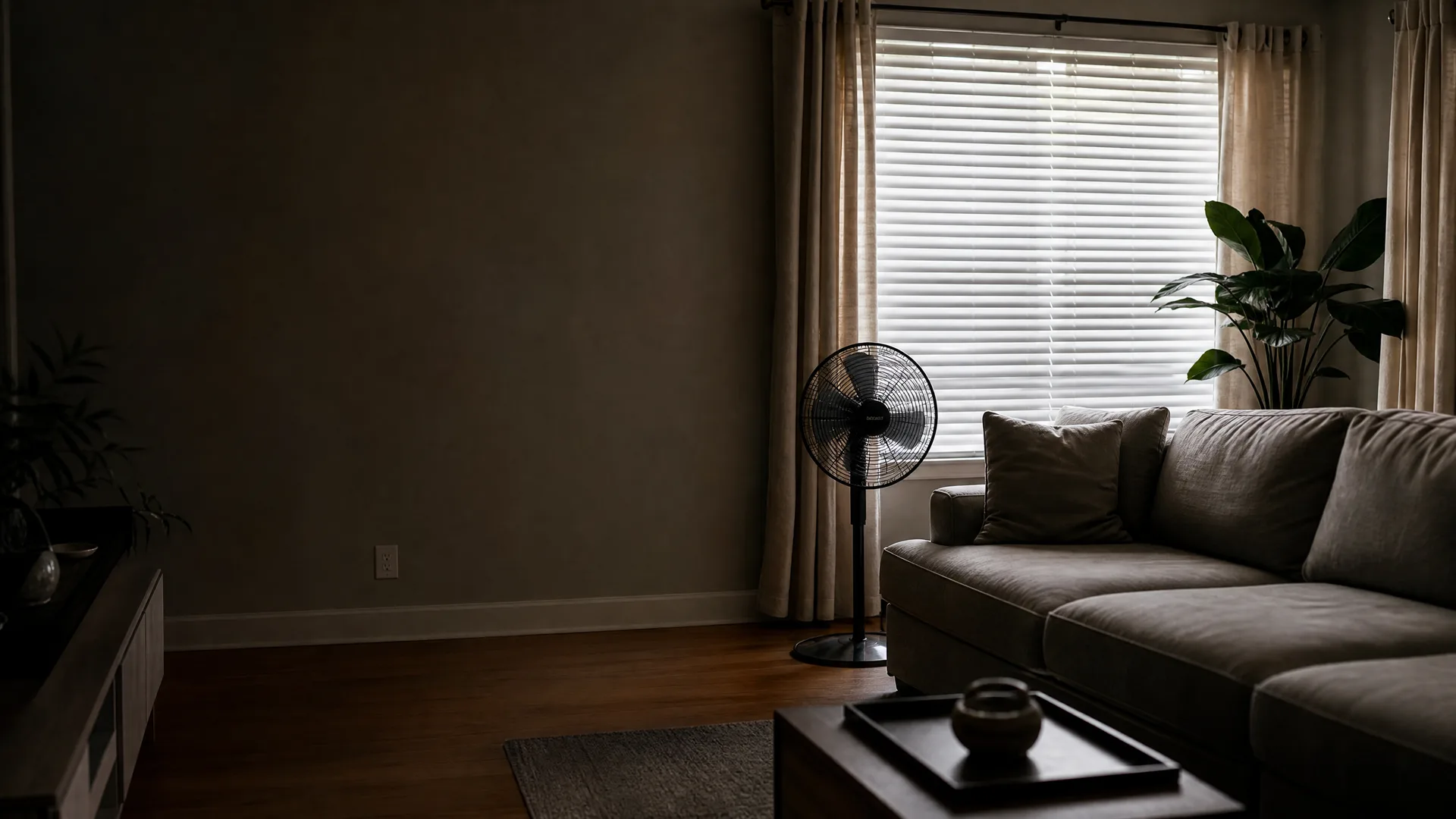
By two in the afternoon the blinds are shut tight against the sun and the living room holds onto whatever cool is left in it. The floor fan next to the couch pushes the same warm air around in a circle. You've already checked the thermostat twice, like the numbers might change if you look again. Outside, the unit sits against the house doing nothing. Codington County summers don't ask for much mercy, but a July afternoon without the AC running makes itself known fast, in the back of your neck, in how the kids keep coming to ask when it'll be fixed. You send the request and for the first time since this started, finding someone to come look isn't something you have to carry.
Hand off the search today

A licensed pro who repairs air conditioners in Codington County gets your request.
It costs nothing to send, and you don't have to hire anyone.
An outdoor condenser that won't start can still hum or click without running. That sound is usually a capacitor trying and failing to kick the compressor and fan over.
A capacitor like that won't fix itself and the unit won't push through it. It needs a contractor to swap the part, so the sooner it's looked at, the sooner the house cools back down.


Where the Signal Breaks Down
- A contactor is the switch that lets 240 volts reach the compressor, and a stuck or burned one leaves the unit silent.
- Low voltage control wires run from the thermostat to a board in the air handler, and a break there stops the start signal before it reaches the outdoor unit.
- A failed run capacitor can leave both the compressor and the condenser fan dead even though the breaker is fine and the thermostat is calling for cool.
- Some systems have a float switch near the indoor coil that cuts power the moment condensate backs up, as a way to stop an overflow before it reaches the floor.
- A transformer on the control board steps power down for the thermostat circuit, and when it fails the thermostat screen can still light up while the system never answers it.
- The outdoor disconnect, a small pull-out block near the condenser, can work its way loose or corrode enough to break the circuit even with the breaker on.
An air conditioner that won't start usually has power going somewhere, just not all the way through. The thermostat sends a low voltage signal down to a board in the air handler, and that board is supposed to pass it along to the outdoor unit. If a control wire has come loose or corroded where it connects, the signal stops there and the condenser never hears from the thermostat at all. Even when that signal gets through, the compressor still needs a contactor to close and let the full 240 volts reach it. A contactor that's stuck open or burned on the contacts will leave the whole outdoor unit dead quiet, no hum, no click. A run capacitor that's failed does something similar from a different angle. It's supposed to give the compressor and condenser fan the push they need to start turning, and without it both can sit still even with good voltage reaching the unit. Some systems add another point of failure indoors. A float switch sits near the coil and watches for condensate backing up, and the moment it senses water where it shouldn't be, it cuts power as a safety measure, no warning on the thermostat. There's also the transformer on the control board, which steps house voltage down for the thermostat circuit. When it goes, the thermostat screen can stay lit and responsive while the system behind it never gets the signal at all. And outside, a disconnect block near the condenser can work its way loose over time, breaking the circuit even with the breaker still on.
Cooling runs June through August
Three months is the whole window for cooling in Codington County, and most of that is June and July. When your system quits in the middle of it, there's no slow season on the other side to make up for the days you lose waiting.
NOAA nClimDiv 1991-2020
An air conditioner that won't turn on comes down to power, signal, or a part that's failed inside the cabinet. A breaker, a set of batteries, a contactor, a capacitor, a broken control wire. Each one stops the system a different way, but the result is the same quiet unit outside. Checking the breaker and the thermostat batteries costs you nothing and rules out the two simplest causes first. Past that, the fix needs someone who can open the panel, test the contactor and capacitor, and trace the low voltage wire if it comes to that. In Codington County, cooling season is short, and a system down for days eats into the only stretch of the year you'll run it. Getting it looked at sooner rather than later is what gets the house cool again before the warm weather's gone. Whatever's wrong with it, the cause is almost always one of a short list, and a licensed local contractor who works on these systems every summer will know which one it is fast.


Air Conditioner Repair
Stop chasing an air conditioner pro
The pro who gets in touch is licensed in South Dakota and works in Codington County.
