Tell us about the job
Takes about a minute. No obligation.
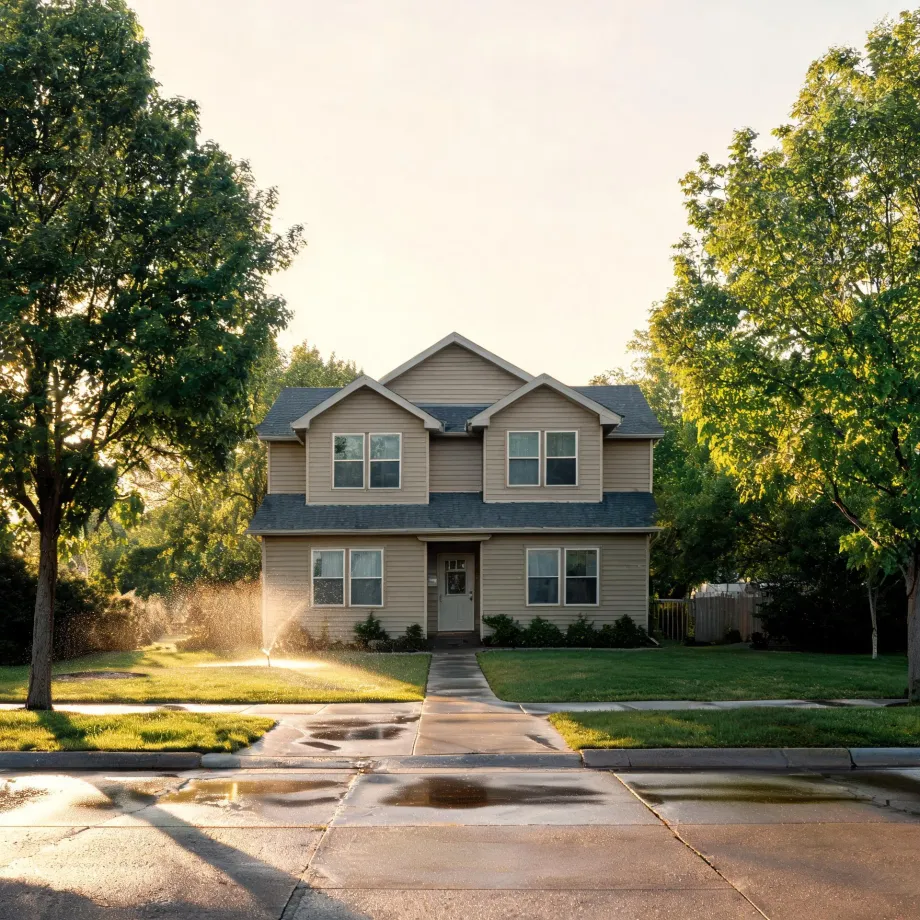
A short cooling season does not protect a compressor from wear; it concentrates the damage into a narrow window of repeated starts and stops. Homes in Custer County, SD run cooling about two months a year, from July through August. The contactor and the capacitor take the hardest hits from that start-stop pattern, and a contractor diagnosing a failed compressor here checks both before pricing the compressor itself. Refrigerant charge and coil condition matter too, because a system sitting idle through most of the year can lose charge slowly and show it only when the first hot week hits. Faults that developed over the off-season surface on the same July day every other homeowner calls.
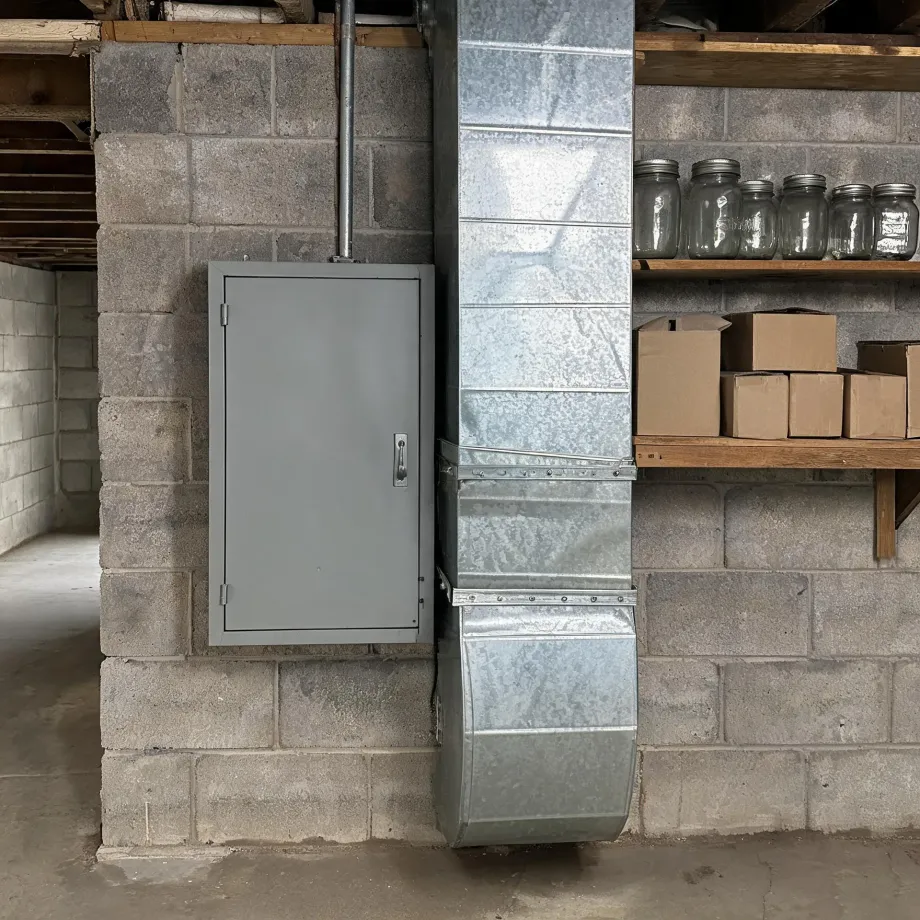
Ductwork in a house carries the whole record of every system that has run through it, and in Custer County that record is long. Half the homes in Custer County, South Dakota were built in 1994 or earlier (2020-2024 ACS 5-year). A contractor who pulls a failed component from a system in stock like this will often find that the part number is discontinued or that what is available is an imperfect substitute, which changes the scope of the repair before the quote is written. That is the variable the age of this housing puts on the table.
The Parts of a Central AC a Contractor Checks First
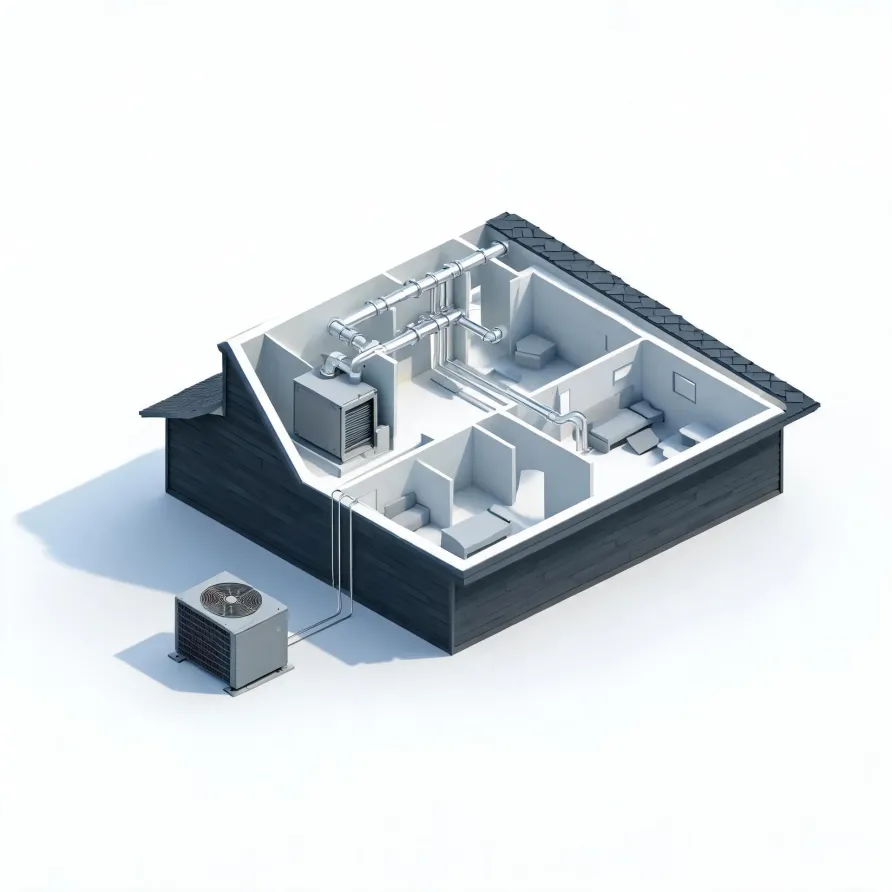
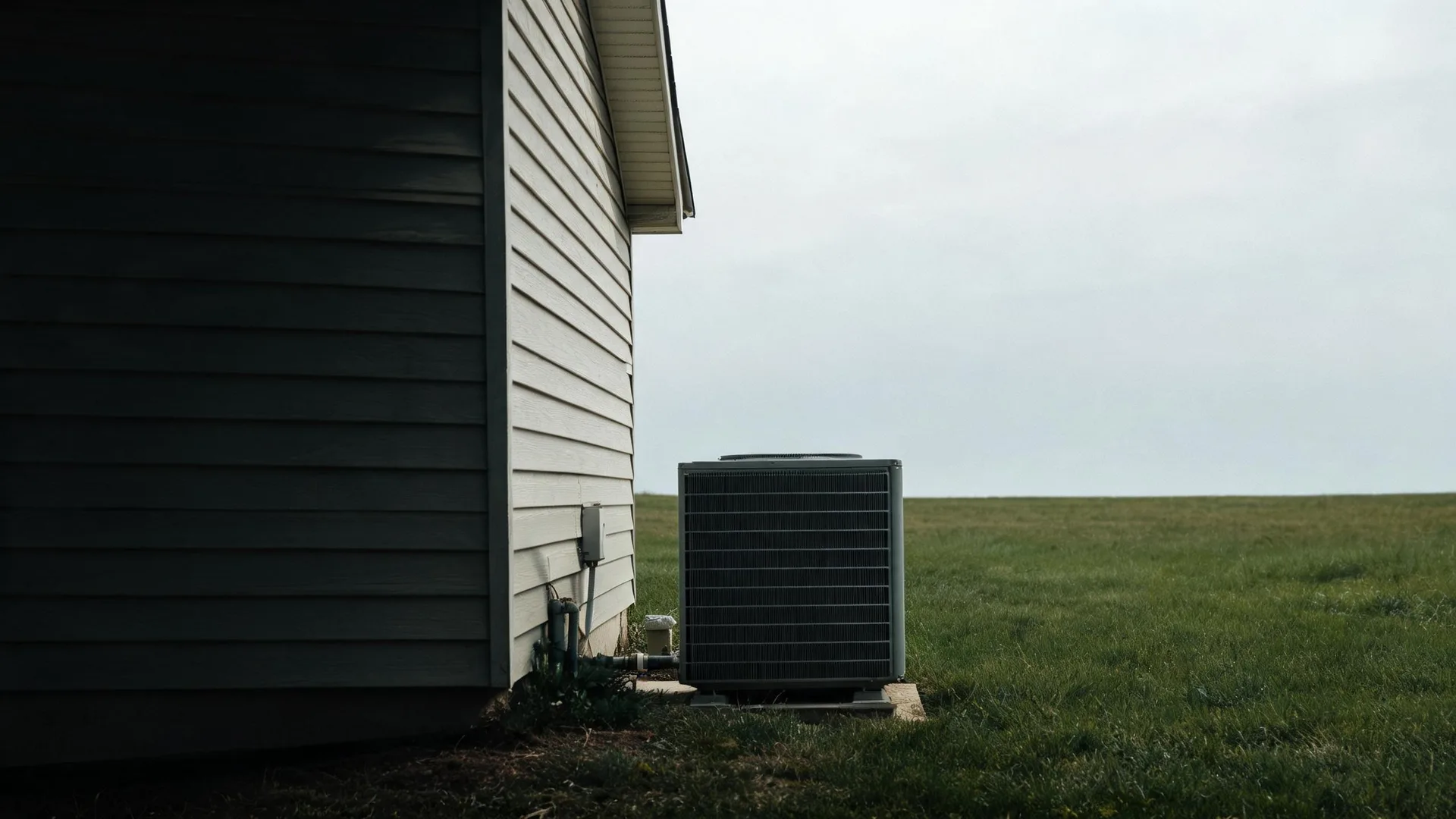
The outdoor condenser unit sits outside the house, usually on a concrete pad at the side or rear, and it is where heat gets pushed out of the building. The indoor air handler or furnace blower sits inside, often in a closet, attic, or basement, and it pulls warm air in and pushes cooled air back through the house. When either one acts up, a contractor starts there.
The evaporator coil mounts directly above the air handler and is where the refrigerant does its work on the air passing over it. The refrigerant lines run between the indoor and outdoor units, and the expansion valve and contactor sit at those units respectively, controlling how refrigerant flows and how power reaches the compressor. A contractor reads the whole circuit, not just the part that failed.
The drawing shows a typical central AC layout, and a licensed contractor assesses what applies to your specific home and equipment.
Find a contractor in Custer CountyCuster County by the numbers
530 severe weather events were recorded in Custer County, South Dakota between 2015 and 2024.
NOAA National Centers for Environmental Information, Storm Events Database, bulk CSV export, events 2015-01-01 through 2024-12-31.Half the homes in Custer County, South Dakota were built in 1994 or earlier (2020-2024 ACS 5-year).
U.S. Census Bureau, 2020-2024 American Community Survey 5-Year EstimatesCuster County, South Dakota holds 5,291 housing units (2020-2024 ACS 5-year).
U.S. Census Bureau, 2020-2024 American Community Survey 5-Year EstimatesOwners occupy 85.6% of the occupied homes in Custer County, South Dakota (2020-2024 ACS 5-year).
U.S. Census Bureau, 2020-2024 American Community Survey 5-Year EstimatesCodes & Standards Covering Central AC Repair in Custer County, South Dakota8 sourced rules and standards
What happens when the contractor arrives
Split-system central air conditioners rated below 45,000 Btu/h manufactured on or after January 1, 2023 must meet a federal minimum of 13.4 SEER2.
Split-system central air conditioners rated at or above 45,000 Btu/h manufactured on or after January 1, 2023 must meet a federal minimum of 13.4 SEER2.
Split-system central air conditioners manufactured between January 1, 2015 and December 31, 2022 had to meet 13 SEER, the metric that preceded SEER2.
Single-package central air conditioners manufactured on or after January 1, 2023 must meet a federal minimum of 13.4 SEER2.
Space-constrained central air conditioners manufactured on or after January 1, 2023 must meet a federal minimum of 11.7 SEER2.
Federal efficiency standards for split-system central air conditioners and heat pumps are set on each certified combination of outdoor unit and indoor coil rather than on the outdoor unit alone.
Residential and light commercial air conditioning and heat pump systems assembled in the field, including mini-splits and unitary systems, may not be installed on or after January 1, 2025 using a refrigerant with a global warming potential above 700.
A field-assembled system whose specified components were all manufactured or imported before January 1, 2025 carries no installation compliance date under the refrigerant restrictions and may still be installed.
Severe Weather Events in Custer County
Weather puts real hours on AC equipment. Storms, heat, and humidity load a system differently than a mild year does, and that wear shows up as repair calls.
530 severe weather events, 2015–2024. Source: NOAA National Centers for Environmental Information, Storm Events Database.