AC leaking water inside in Watertown, SD

Start one form

Water on the floor by your indoor unit usually means a clogged drain line or a coil that's icing up and then melting, and either one is a job for someone who works on these systems and knows where Watertown furnaces and condensers tend to fail. You could start searching, read through reviews, call a few numbers, and explain the same leak three different times while you wait for quotes to come back. Or you could skip that part. Fill out the form here and it goes to one licensed contractor who works in Watertown and Codington County, not a handful of companies competing for your callback. You get a straight answer about your unit without juggling calls or sorting through bids. Tell them what you're seeing, the puddle, the drip, where it's coming from, and let them take it from there.

That water on the floor is almost always the drain line or the coil. Condensate drain lines clog with algae and dust over a season or two, and once the line backs up, the water has nowhere to go but out of the pan and onto your floor. The other common cause is a coil that's iced over, usually from low airflow or a low refrigerant charge, and when it thaws it melts faster than the drain can carry it away. A dirty filter can starve the coil of airflow and start the same cycle. Either way, the fix depends on which one you've got. A clogged line gets cleared and flushed. An icing coil means finding why it froze in the first place, whether that's the filter, the airflow, or the charge, before it happens again. Left alone, either problem can mean water damage to your floor or a bigger repair to the system itself.

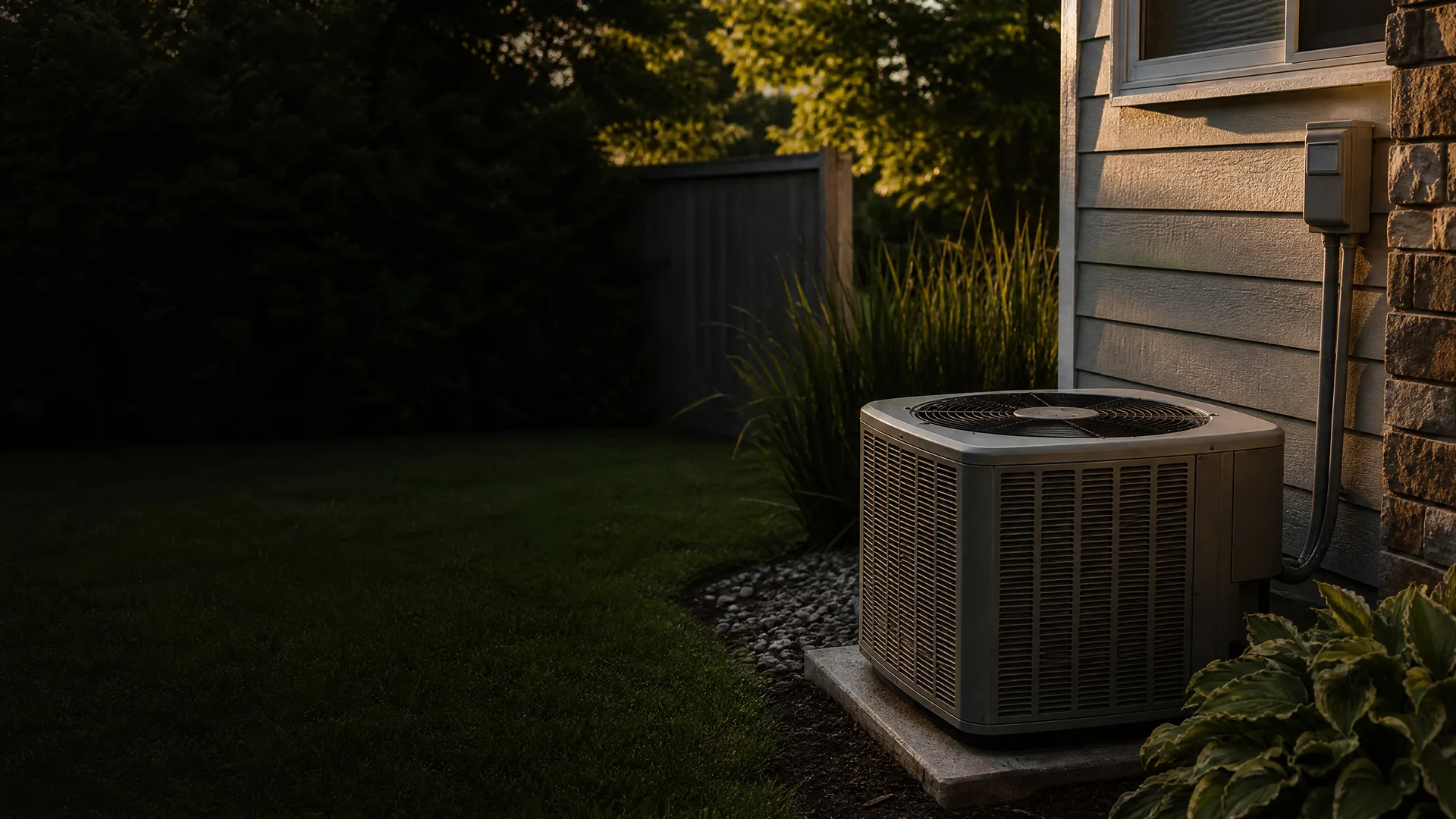
An outdoor air conditioning condenser unit sits on a concrete pad beside a house with horizontal siding and a stone-faced corner, next to a lawn, ornamental grasses and a wooden fence at dusk.

You're out back around seven, grass still warm, and you notice the condenser isn't making its usual sound. No hum, no air moving off it. The fan sits still against the low light. You'd gone out to check on the water you found inside earlier, wondering if the two were connected, and now there's this too. A few feet off, the compressor ticks as it cools. Somewhere down the block a sprinkler runs. You crouch and look at the fan blades, not sure what you're looking for, then stand back up. The evening's warm enough that the quiet from the unit feels wrong. You head back inside to call someone who'd know what you're looking at.

Is this water going to damage my floor?

A puddle by the indoor unit is usually the first thing you see, but check the drywall or baseboard near it too, since standing water travels. If the unit sits on a wood subfloor or near carpet, a slow leak over a few days can stain or warp before you notice the source. You might also hear a hiss or gurgle from the line when the system runs, or notice the pan itself is full and overflowing rather than draining. If the coil is icing over, you may see frost on the refrigerant lines outside even while water collects inside. Left alone, the leak keeps coming back each time the system cycles, so the damage doesn't stop at one puddle.

An outdoor air conditioner condenser unit on a concrete pad beside a house with beige horizontal siding and a stone-veneer base, with refrigerant lines running to a gray wall-mounted electrical box, surrounded by dark mulch, a flowering shrub and an evergreen on the left.

Running the way it should

This is a condenser that's draining fine. No water at the pan, no ice on the lines, fan turning and moving air. The pad underneath stays dry and the disconnect box beside it is just doing its job, not a sign of anything wrong.

An outdoor air conditioning condenser unit on a concrete pad beside a house with light vinyl siding, an electrical disconnect box and conduit on the wall, bare shrubs and mulch to the right, and a concrete walkway in the foreground.

Signs something's off

Here the fan may be silent or the coil iced over, both tied to the same drain or airflow problem causing the water inside. If yours looks like this, a local contractor who works on Watertown systems all summer can tell you in one visit whether it's the line, the coil, or something else.

An outdoor air conditioner condenser unit on a concrete pad beside a house with light horizontal lap siding, with an electrical disconnect box and conduit on the wall behind it.
Before you get your air conditioner repair
An outdoor air conditioning condenser unit on a concrete pad beside a house with white horizontal lap siding, with an electrical disconnect box and insulated refrigerant line on the wall and a shrub over mulch to the right.
After you get your air conditioner repair

No calling every shop in Codington County

The pro who gets in touch is licensed in South Dakota and works in Codington County.

It costs nothing to send, and you don't have to hire anyone.

Why the drain clogs in the first place

Algae grows inside that drain line because it's dark, wet, and sitting there all summer. Dust and shed from your air filter gets pulled into the return air and some of it ends up in the condensate pan too, mixing with the algae into a sludge that narrows the line. Once it narrows enough, water backs up faster than it drains out. A line that cleared fine last July can clog again this August, since whatever grew back over the winter is still in there waiting for warm, wet conditions to return.

Why a frozen coil keeps leaking after it thaws

Ice on the coil doesn't drip while it's frozen. It drips once the system shuts off or the fan runs enough warm air across it to melt that ice, and that meltwater often comes faster than the drain pan and line can handle at once. That's why you can find water on the floor well after the unit stopped making odd noises or blowing warm air. A coil that iced up once from low airflow or low refrigerant will do it again under the same conditions until whatever caused the ice gets fixed.

A gray-haired man in a dark sweater sits on a light gray sofa in a living room, looking toward a sunlit window with trees outside.
A gray-haired man in a dark blue sweater sits on a light gray sofa in a sunlit living room, looking off to the side, with a potted plant, shelving unit, and large glass doors behind him.
A bearded man with graying hair in a dark green sweater sits on a sofa in a living room, looking off to the side, with a sliding glass door and a dim kitchen doorway behind him.
A gray-haired man in a dark knit sweater sits on a light gray sofa in a living room, looking toward a sunlit window, with houseplants, a lamp, and framed art in the background.

Keep running it

Ignoring the leak doesn't stop the cooling, but the water keeps finding the same path out of the pan, and whatever is under your unit keeps taking it.

Skip calling around

Get it looked at

A contractor who works on Watertown systems all summer can clear the line or deal with the ice, and tell you which one you've actually got.

Skip calling around
A middle-aged woman with shoulder-length dark hair, wearing a gray cardigan over a cream top, sits in an upholstered armchair and looks toward a sunlit window, with a shelf holding framed pictures and a plant behind her.
A woman and a child wrapped together in a knitted gray blanket on a couch, with the child's head resting on her shoulder and a lit table lamp and houseplant in the background.

Cooling runs June through August

Three months of real cooling a year means your drain line and coil don't get much chance to dry out between runs. Once algae or ice gets a foothold in June, it tends to sit there through July and August, leaking the whole time you need the thing working.

NOAA nClimDiv 1991-2020

A gray outdoor air conditioner condenser unit on a concrete pad beside a house with white horizontal siding and a brick foundation, with a wall-mounted disconnect box and conduit, and a green shrub with mulch at left.
A clean grille, a dry pad, refrigerant lines running straight up to the disconnect with nothing dripping below.
An outdoor air conditioning condenser unit on a concrete pad beside a house with white horizontal vinyl siding, with a gray electrical disconnect box and refrigerant lines on the wall behind it.
Dirt packed into the grille and top cover like this holds moisture against the coil, which is how icing and drain clogs start.

Why does the drain line clog in the first place, mechanically?

You already know algae and dust build up in the line, but you want to understand the actual mechanics of how a clog forms and why it happens where it does. Knowing that helps you understand why this keeps coming back once it starts, and why clearing it is more than just pulling out a wet-vac for a few seconds.

The clog forms at the trap and the low points, not evenly along the line

The condensate line runs from the drain pan, usually through a trap, then out to where it empties, often through PVC pipe with a slight pitch to let gravity do the work. Algae and sediment settle wherever the pitch flattens or the trap holds standing water, since that's where flow slows down enough for buildup to stick to the pipe wall instead of washing through. Over a season, that buildup narrows the inside of the pipe until the pan fills faster than the line can drain it. Once water backs up past the pan's edge, it runs down the outside of your unit instead of through the pipe, which is the puddle you're finding on the floor.

A single-story house with light gray horizontal siding, dark gray shingled gables, black shutters and a dark front door, fronted by a mulched bed of small shrubs and a large lawn under a clear blue sky.

That mugginess you feel in July isn't just about the air outside. In Codington County the dew point averages 57°F across June, July and August, according to NOAA climate data, which is on the lower end for summer. Your air conditioner still has to pull moisture out of the air along with cooling it, and the coil stays wetter longer than it would in a drier climate on the same hot day. That's more condensate running down the drain line all summer, and more water sitting in the pan if that line is slow to clear. It's one more reason a clog shows up as a puddle instead of just a damp pan.

NASA POWER T2MDEW

A wooden table in the foreground holds a closed laptop and a ceramic mug of coffee, with a spindle-back wooden chair behind it, a beige wall with paneled wainscoting, a window at left, and a kitchen counter with a cutting board, bowl of fruit and greenery at right.

Water on the floor has one of two causes

A clogged drain line or an icing coil put that water on your floor, and both are fixable once someone gets eyes on the unit. Guessing which one it is from the pan or the puddle only gets you so far. Someone who works on these systems in Watertown all summer can tell inside a few minutes, clear the line or find what's starving the coil of airflow, and have it draining the right way again.

You don't need to call around to find that person, explain the leak twice, and then sort through a stack of quotes to figure out who's worth hiring. One contractor, local to Codington County, licensed and already familiar with how these systems fail here, takes the call and takes it from there. The puddle stops being something you mop up and starts being something that's getting fixed.

A dark ceramic mug on a round wooden table beside a light grey sofa with a woven cushion and knit throw, with a window, potted plant, floor lamp and wooden cabinet blurred in the background.
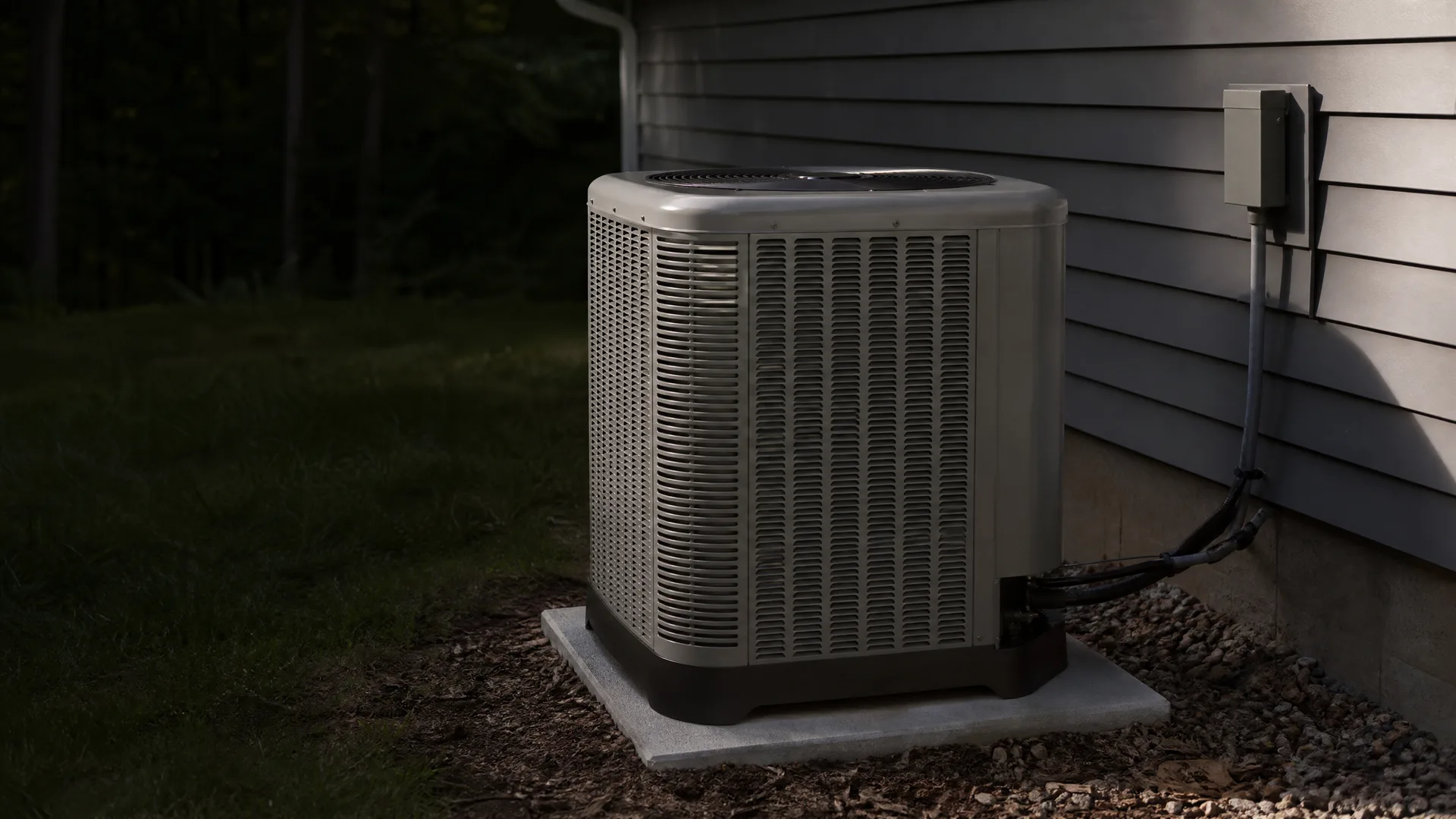
An outdoor air conditioning condenser unit sits on a concrete pad beside a house with horizontal lap siding, with a wall-mounted disconnect box and refrigerant lines entering the wall, gravel and grass around it and dark trees behind.

Skip the calls to every shop

Step 1 of 3: Equipment