Tell us about the job
Takes about a minute. No obligation.
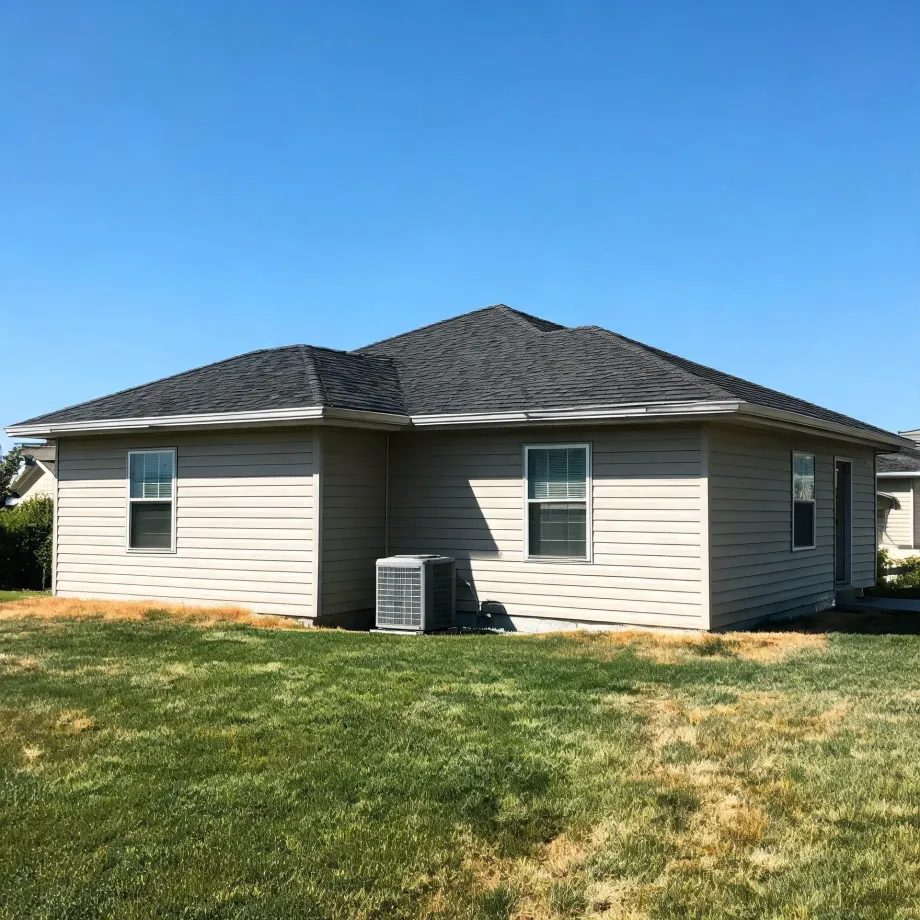
Sizing a central AC system for a Grant County home requires a contractor to account for what a compressor is asked to do across a concentrated cooling demand. Homes in Grant County, SD run cooling about two months a year, from July through August. The compressor, condenser fan, and contactor sit idle for most of the calendar, then take the full load of summer heat in a short, hard burst. Faults that might surface gradually under sustained use can stay quiet through a long off-season and announce themselves on the first call of July, when every other system in the county is starting up too. A contractor who cuts corners on load calculation or refrigerant charge leaves the homeowner no margin to catch it early.
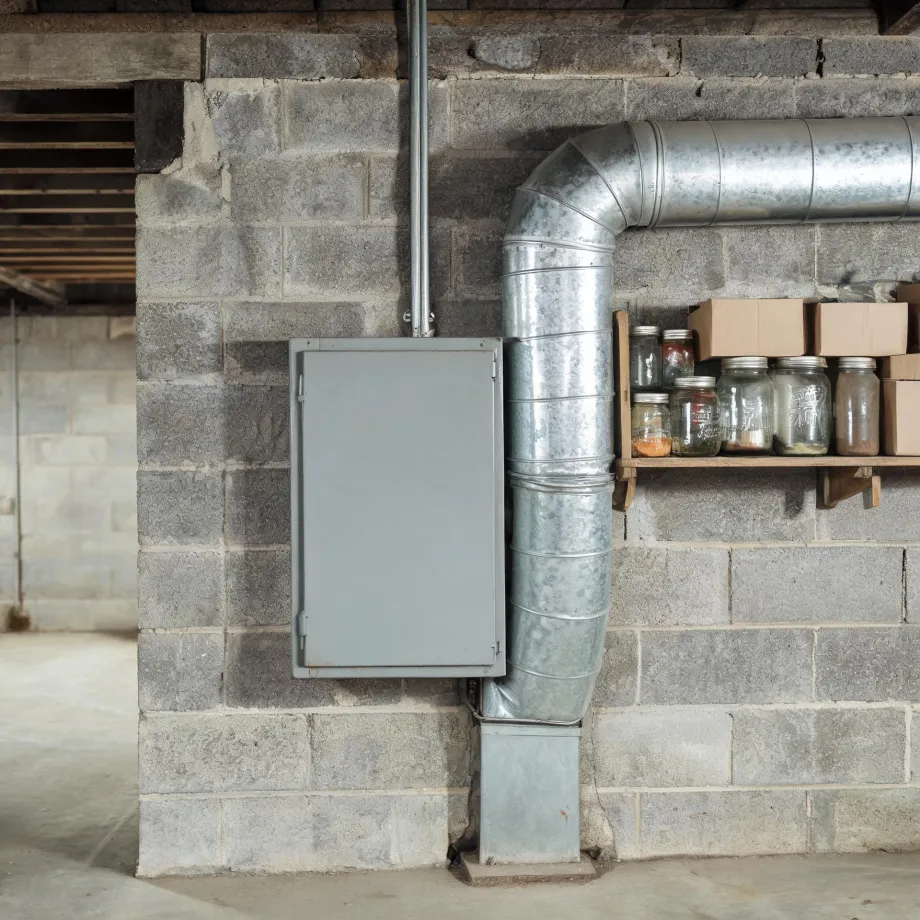
Ductwork in much of this county's housing was designed around a different generation of equipment entirely, and a new central AC system has to run through whatever those original runs allow. Half the homes in Grant County, South Dakota were built in 1972 or earlier (2020-2024 ACS 5-year). That gap between the house as built and the system being installed is where a contractor's site work concentrates: measuring static pressure, checking trunk sizing, and confirming the electrical service can carry the new load. A house that has been updated over the decades may present few obstacles. One that has not can push an installation in directions a quote drawn up remotely would not anticipate.
The Parts of a Central AC System and What Gets Installed
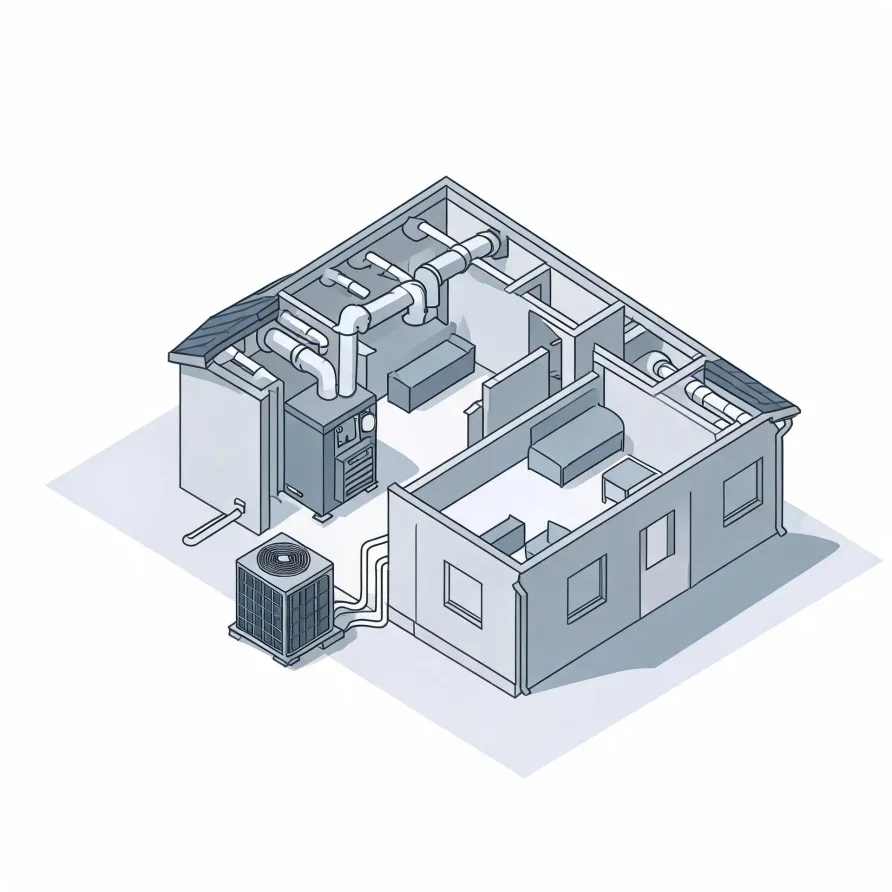
The outdoor condenser unit sits outside the house, usually on a concrete pad along an exterior wall, and it holds the compressor and condenser coil. Inside, the air handler or furnace-coil combination occupies a closet, basement, or attic space and circulates air through the home. These two units are the core of what a contractor installs.
A copper refrigerant line set runs between the outdoor and indoor units, connecting them through an exterior wall. The thermostat mounts on an interior wall and gives the homeowner control over the whole system. An electrical disconnect box is placed near the outdoor unit as part of that installation.
The drawing shows a representative layout, and a licensed contractor determines exactly how each piece fits the conditions of your house.
Find a contractor in Grant CountyGrant County by the numbers
132 severe weather events were recorded in Grant County, South Dakota between 2015 and 2024.
NOAA National Centers for Environmental Information, Storm Events Database, bulk CSV export, events 2015-01-01 through 2024-12-31.Half the homes in Grant County, South Dakota were built in 1972 or earlier (2020-2024 ACS 5-year).
U.S. Census Bureau, 2020-2024 American Community Survey 5-Year EstimatesGrant County, South Dakota holds 3,456 housing units (2020-2024 ACS 5-year).
U.S. Census Bureau, 2020-2024 American Community Survey 5-Year EstimatesOwners occupy 75.6% of the occupied homes in Grant County, South Dakota (2020-2024 ACS 5-year).
U.S. Census Bureau, 2020-2024 American Community Survey 5-Year EstimatesRules & Standards Behind Central AC Installation in Grant County, South Dakota8 sourced rules and standards
What the installation looks like in Grant County
Split-system central air conditioners rated below 45,000 Btu/h manufactured on or after January 1, 2023 must meet a federal minimum of 13.4 SEER2.
Split-system central air conditioners rated at or above 45,000 Btu/h manufactured on or after January 1, 2023 must meet a federal minimum of 13.4 SEER2.
Split-system central air conditioners manufactured between January 1, 2015 and December 31, 2022 had to meet 13 SEER, the metric that preceded SEER2.
Single-package central air conditioners manufactured on or after January 1, 2023 must meet a federal minimum of 13.4 SEER2.
Space-constrained central air conditioners manufactured on or after January 1, 2023 must meet a federal minimum of 11.7 SEER2.
Federal efficiency standards for split-system central air conditioners and heat pumps are set on each certified combination of outdoor unit and indoor coil rather than on the outdoor unit alone.
Residential and light commercial air conditioning and heat pump systems assembled in the field, including mini-splits and unitary systems, may not be installed on or after January 1, 2025 using a refrigerant with a global warming potential above 700.
A field-assembled system whose specified components were all manufactured or imported before January 1, 2025 carries no installation compliance date under the refrigerant restrictions and may still be installed.
Severe Weather Events in Grant County
Weather in Grant County puts a real load on central AC systems, and that load shapes what a unit needs to handle over its life. Equipment sized and installed for local conditions holds up differently than equipment that was not, which makes weather history a practical factor in any installation decision here.
132 severe weather events, 2015–2024. Source: NOAA National Centers for Environmental Information, Storm Events Database.