Tell us about the job
Takes about a minute. No obligation.
A contractor quoting central AC in Bennett County has to size the system for a short, concentrated demand rather than a load spread across most of the year. Homes in Bennett County, SD run cooling about two months a year, from July through August. The compressor starts and stops through those weeks, and then sits idle the rest of the year. Long idle periods let small installation faults hide until the first hot day, when the system runs hard and the flaw shows. A duct connection that leaks, a refrigerant charge that is slightly off, or a condenser placed where airflow is restricted will surface under that pressure. The contractor's load calculation and the care taken during the install carry more weight here than accumulated runtime ever could.
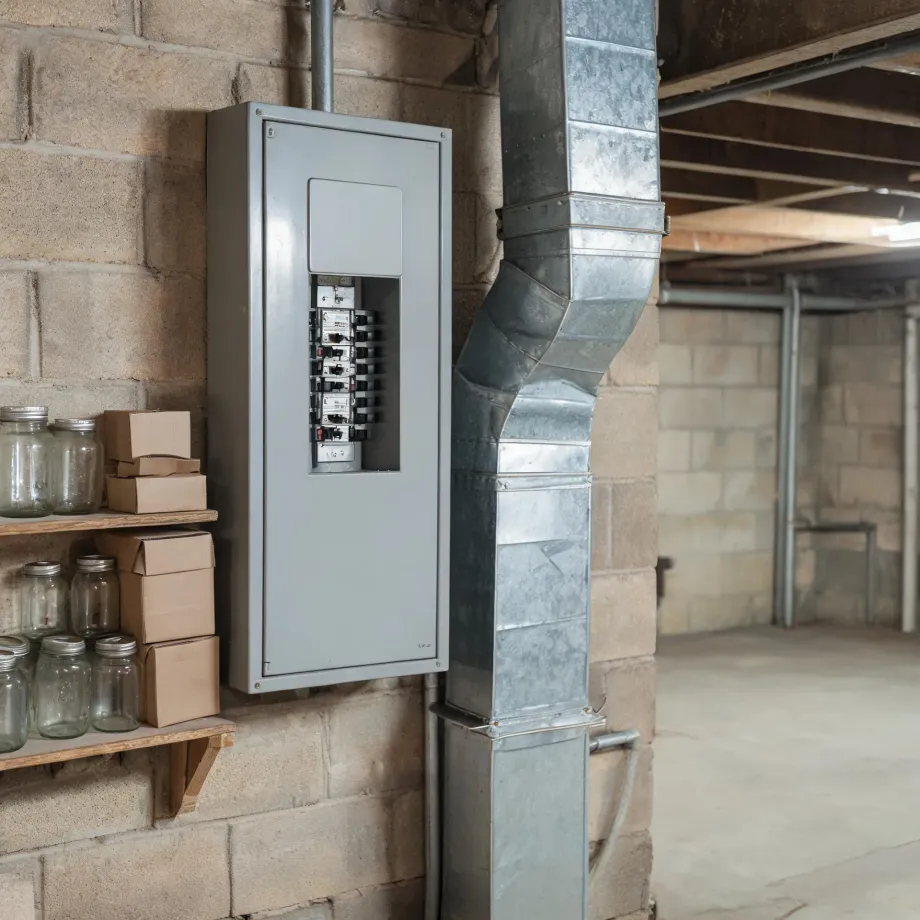
Ductwork is where a central AC installation either stays on budget or doesn't. Half the homes in Bennett County, South Dakota were built in 1973 or earlier (2020-2024 ACS 5-year). A house built that long before modern central AC was common may have ducts that were sized for a different system entirely, or retrofitted at some point since, and neither case is obvious from the outside. A contractor has to assess what the existing duct runs can actually carry before any unit gets priced. If the electrical service was also sized for the original load, that gets checked too.
The Parts of a Central AC System and What Gets Installed
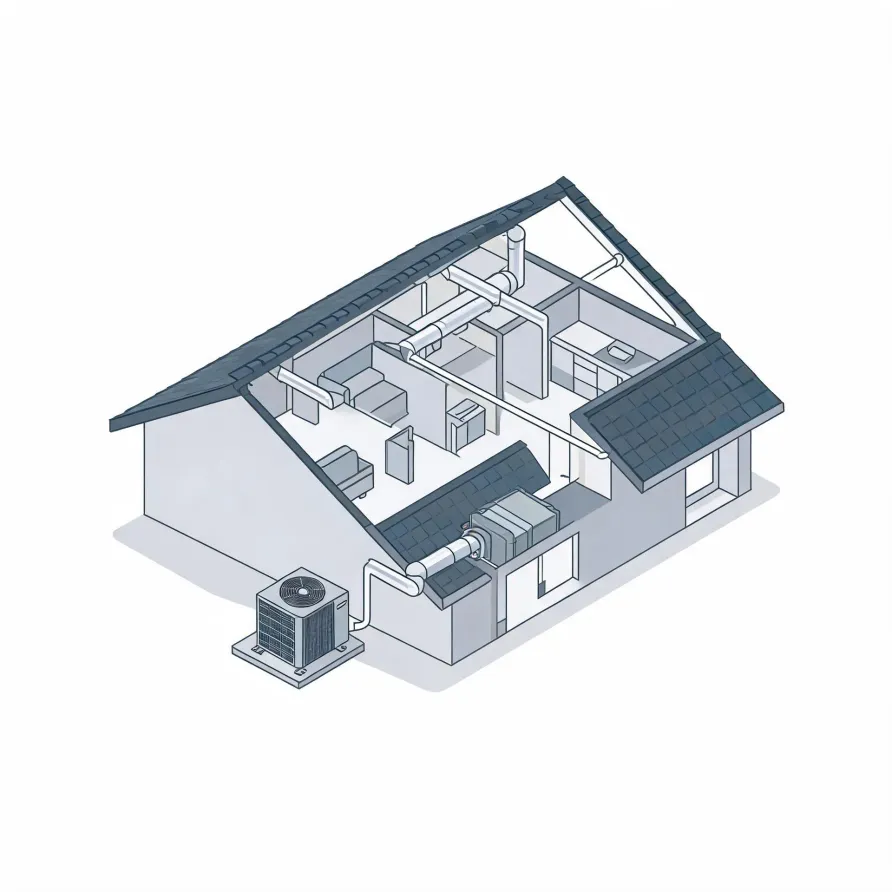
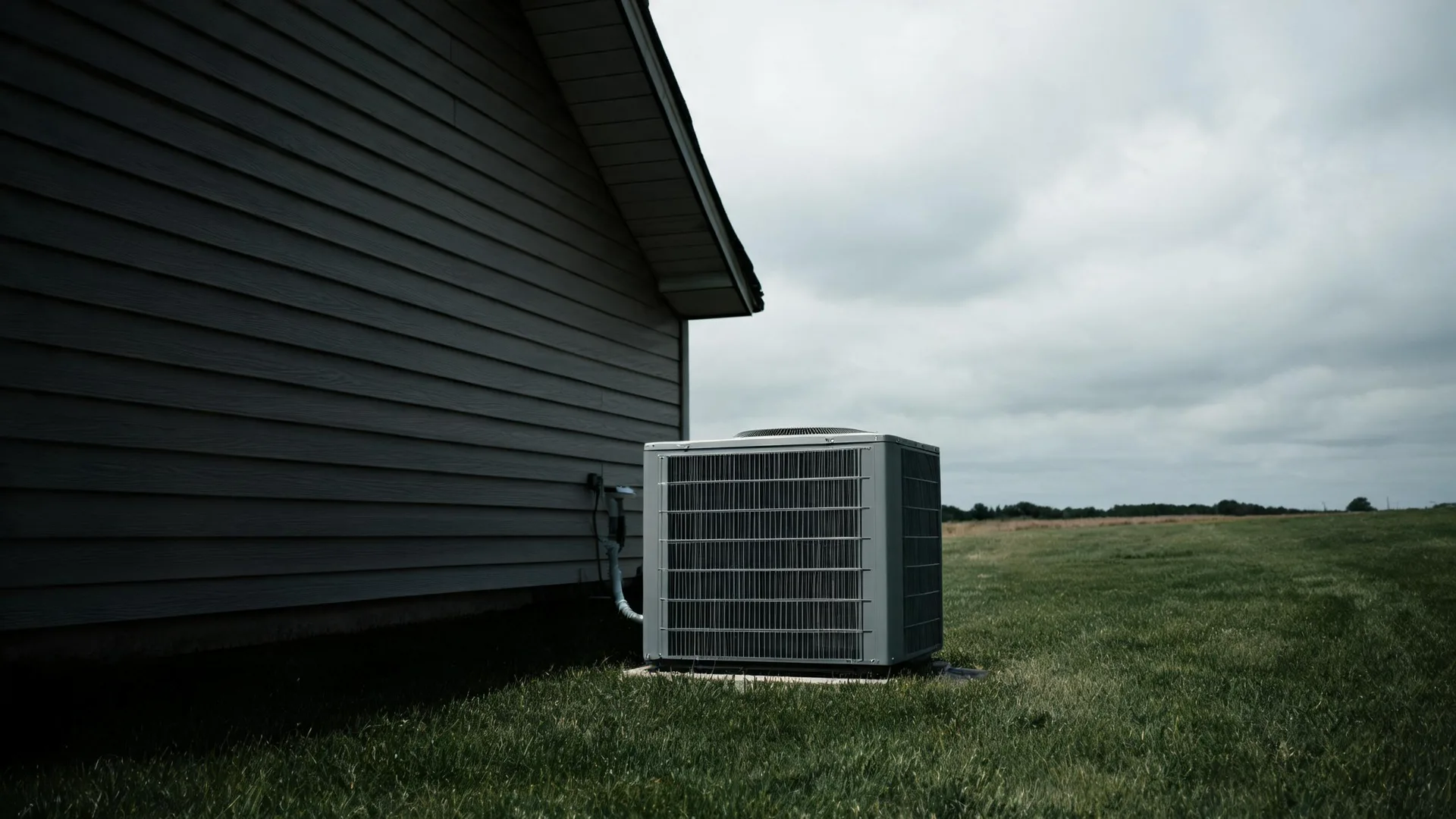
The outdoor condenser unit sits outside the house, usually on a concrete pad beside the foundation, and houses the compressor and condenser coil. Inside, the air handler or furnace cabinet holds the evaporator coil and the blower that moves air through the house. These are the two main cabinets a contractor installs.
A refrigerant line set runs between the two cabinets, carrying refrigerant through copper tubing that passes through the wall or floor. A thermostat mounts on an interior wall and gives the homeowner control over the system. The condensate drain line runs from the indoor cabinet to a floor drain or outside, clearing the moisture the coil pulls from the air.
The drawing shows a typical layout, and a licensed contractor determines what applies to this particular house.
Find a contractor in Bennett CountyBennett County by the numbers
161 severe weather events were recorded in Bennett County, South Dakota between 2015 and 2024.
NOAA National Centers for Environmental Information, Storm Events Database, bulk CSV export, events 2015-01-01 through 2024-12-31.Half the homes in Bennett County, South Dakota were built in 1973 or earlier (2020-2024 ACS 5-year).
U.S. Census Bureau, 2020-2024 American Community Survey 5-Year EstimatesBennett County, South Dakota holds 1,151 housing units (2020-2024 ACS 5-year).
U.S. Census Bureau, 2020-2024 American Community Survey 5-Year EstimatesOwners occupy 61.2% of the occupied homes in Bennett County, South Dakota (2020-2024 ACS 5-year).
U.S. Census Bureau, 2020-2024 American Community Survey 5-Year EstimatesCodes & Standards Governing Central AC Installation in Bennett County, South Dakota8 sourced rules and standards
What happens when a contractor comes out to do the work
Split-system central air conditioners rated below 45,000 Btu/h manufactured on or after January 1, 2023 must meet a federal minimum of 13.4 SEER2.
Split-system central air conditioners rated at or above 45,000 Btu/h manufactured on or after January 1, 2023 must meet a federal minimum of 13.4 SEER2.
Split-system central air conditioners manufactured between January 1, 2015 and December 31, 2022 had to meet 13 SEER, the metric that preceded SEER2.
Single-package central air conditioners manufactured on or after January 1, 2023 must meet a federal minimum of 13.4 SEER2.
Space-constrained central air conditioners manufactured on or after January 1, 2023 must meet a federal minimum of 11.7 SEER2.
Federal efficiency standards for split-system central air conditioners and heat pumps are set on each certified combination of outdoor unit and indoor coil rather than on the outdoor unit alone.
Residential and light commercial air conditioning and heat pump systems assembled in the field, including mini-splits and unitary systems, may not be installed on or after January 1, 2025 using a refrigerant with a global warming potential above 700.
A field-assembled system whose specified components were all manufactured or imported before January 1, 2025 carries no installation compliance date under the refrigerant restrictions and may still be installed.
Severe Weather History in Bennett County
Weather puts real demands on cooling equipment, and those demands vary by location. How hard a system has to work over its lifetime is shaped by what the local climate actually does, which is why weather records matter when sizing and installing central AC.
161 severe weather events, 2015–2024. Source: NOAA National Centers for Environmental Information, Storm Events Database.