Tell us about the job
Takes about a minute. No obligation.
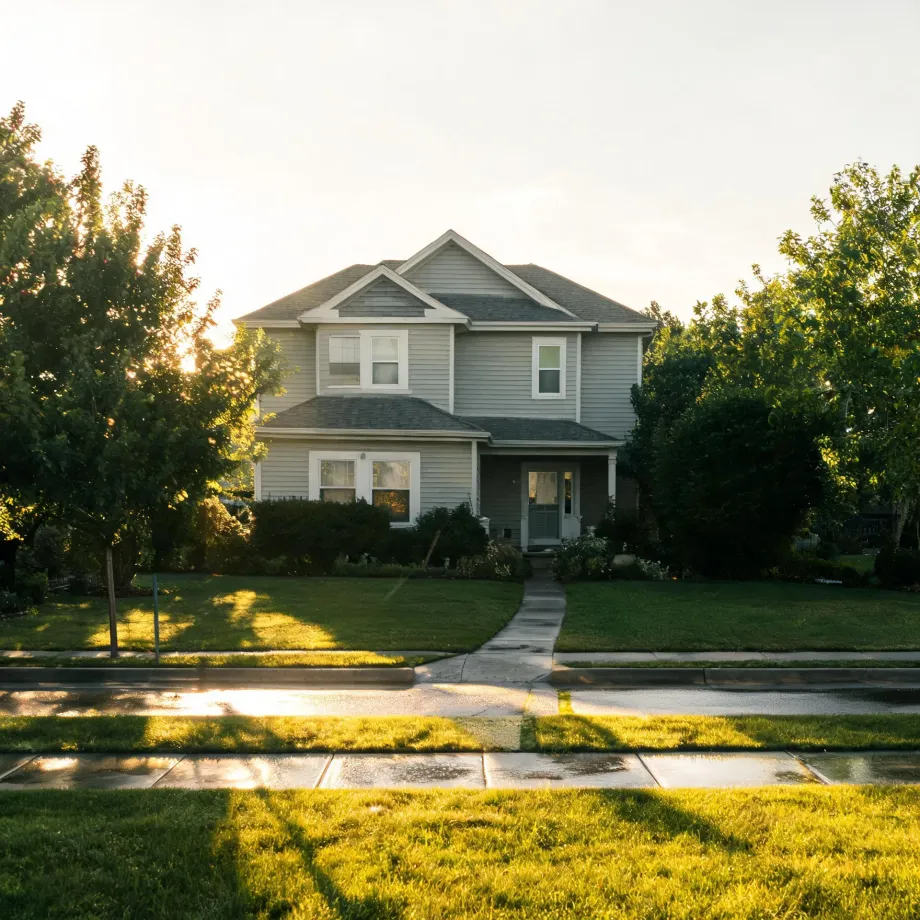
Sizing a central AC system for this county starts with understanding what the compressor is actually asked to do here. Homes in Miner County, SD run cooling about three months a year, from June through August. The compressor, the condenser fan, and the contactor all sit dormant through fall, winter, and spring. Long idle periods let refrigerant migrate, contactors corrode, and capacitors weaken without any symptom showing up until the system starts under load. A contractor quoting an installation here has to account for that pattern: a system that is undersized or poorly matched to the house will show its first real failure on a June afternoon, not during a gradual season of increasing stress.
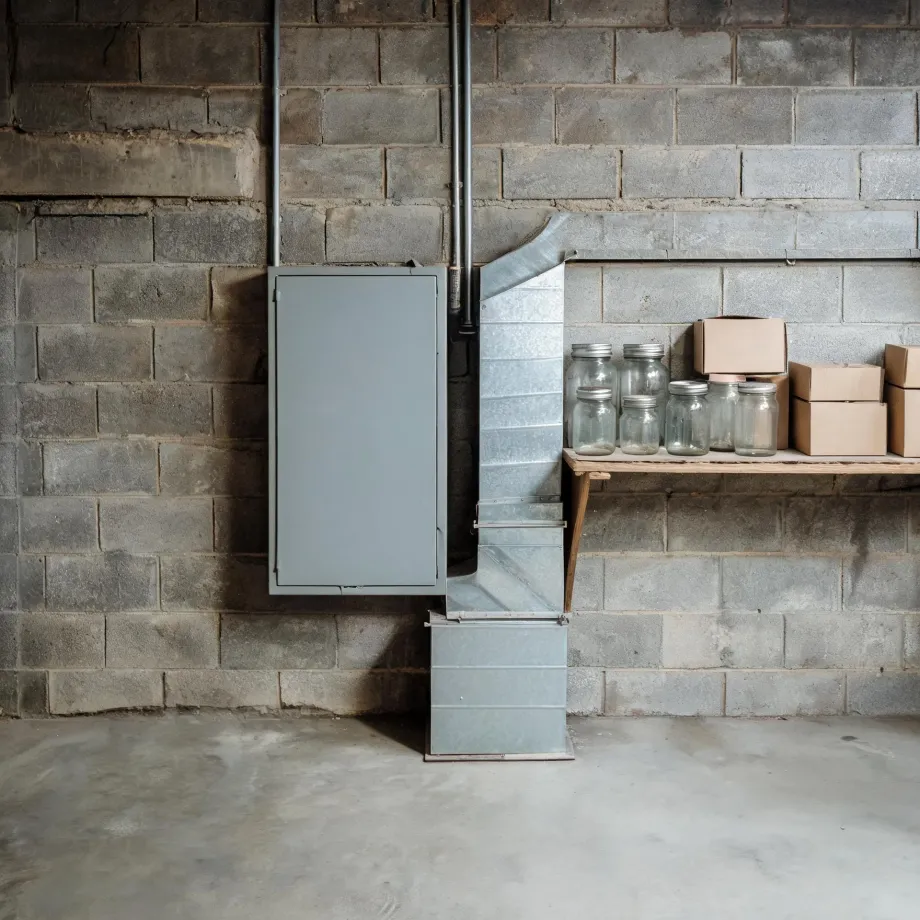
Ductwork laid out for an older system is not automatically the right ductwork for a new one. The routing, the sizing, and what the runs connect to were decisions made for equipment that is long gone, and a contractor installing central AC has to find out whether what is in the walls now will carry what the new unit demands before anything else gets priced. Half the homes in Miner County, South Dakota were built in 1954 or earlier (2020-2024 ACS 5-year). That history sits behind the walls of a typical house here, and it is what a contractor opens up and measures before the equipment selection means anything.
The Central AC Equipment a Contractor Works With
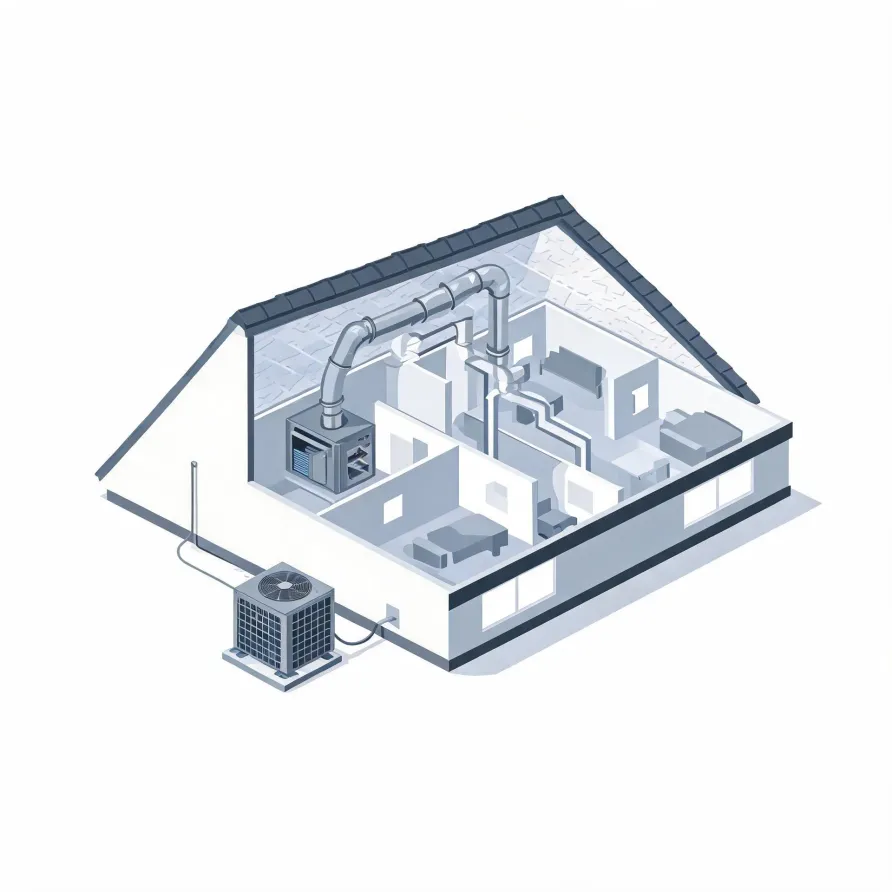
The outdoor condenser unit sits outside the house, usually on a concrete pad at the side or rear, and houses the compressor and condenser coil. Inside, the air handler or furnace holds the evaporator coil and the blower that moves air through the home. These are the two main pieces a contractor brings together during an installation.
A refrigerant line set runs between the outdoor and indoor units, carrying refrigerant from one coil to the other. A thermostat on an interior wall ties the whole system together, giving the homeowner control over when and how the equipment runs.
The drawing shows a typical layout, and a licensed contractor determines what applies to your specific house and existing setup.
Find a contractor in Miner CountyMiner County by the numbers
70 severe weather events were recorded in Miner County, South Dakota between 2015 and 2024.
NOAA National Centers for Environmental Information, Storm Events Database, bulk CSV export, events 2015-01-01 through 2024-12-31.Half the homes in Miner County, South Dakota were built in 1954 or earlier (2020-2024 ACS 5-year).
U.S. Census Bureau, 2020-2024 American Community Survey 5-Year EstimatesMiner County, South Dakota holds 1,180 housing units (2020-2024 ACS 5-year).
U.S. Census Bureau, 2020-2024 American Community Survey 5-Year EstimatesOwners occupy 84.8% of the occupied homes in Miner County, South Dakota (2020-2024 ACS 5-year).
U.S. Census Bureau, 2020-2024 American Community Survey 5-Year EstimatesRules and Standards Behind Central AC Installation in Miner County, South Dakota8 codes, laws, and standards
What HVAC Installation Looks Like in Miner County
Split-system central air conditioners rated below 45,000 Btu/h manufactured on or after January 1, 2023 must meet a federal minimum of 13.4 SEER2.
Split-system central air conditioners rated at or above 45,000 Btu/h manufactured on or after January 1, 2023 must meet a federal minimum of 13.4 SEER2.
Split-system central air conditioners manufactured between January 1, 2015 and December 31, 2022 had to meet 13 SEER, the metric that preceded SEER2.
Single-package central air conditioners manufactured on or after January 1, 2023 must meet a federal minimum of 13.4 SEER2.
Space-constrained central air conditioners manufactured on or after January 1, 2023 must meet a federal minimum of 11.7 SEER2.
Federal efficiency standards for split-system central air conditioners and heat pumps are set on each certified combination of outdoor unit and indoor coil rather than on the outdoor unit alone.
Residential and light commercial air conditioning and heat pump systems assembled in the field, including mini-splits and unitary systems, may not be installed on or after January 1, 2025 using a refrigerant with a global warming potential above 700.
A field-assembled system whose specified components were all manufactured or imported before January 1, 2025 carries no installation compliance date under the refrigerant restrictions and may still be installed.
Severe Weather Events in Miner County
Weather stress is one of the real workload drivers for central AC equipment, and Miner County's climate is part of what shapes how hard a system has to work over its service life. That load profile is a local fact, and it belongs in the conversation when sizing and installing equipment for a home here.
70 severe weather events, 2015–2024. Source: NOAA National Centers for Environmental Information, Storm Events Database.