
AC blowing warm air in Aberdeen, SD

Step 1 of 3: Equipment

Why is my AC blowing warm air?

It's the middle of a warm Aberdeen summer, the air is on, and instead of cool air coming through the vents you're getting air that feels room temperature or warm. That's unsettling when you've got people at home counting on the house staying comfortable, and it usually means something specific has gone wrong rather than the system just struggling to keep up with the heat outside.

A few things cause it, and most point to a repair, not the weather

Warm air from the vents usually means the system isn't actually cooling the air anymore, even though the blower is still running. A dirty air filter can choke airflow across the indoor coil until it ices over, so the air coming out loses its chill. A low refrigerant charge from a leak does the same thing. A failing compressor means the outdoor unit isn't doing its job at all, even if the fan inside sounds normal. None of these clear up on their own, and running the system while it's low on refrigerant or iced over can cause more damage. In Brown County summers, when the air finally does warm up outside, you'll want this fixed rather than waiting it out.

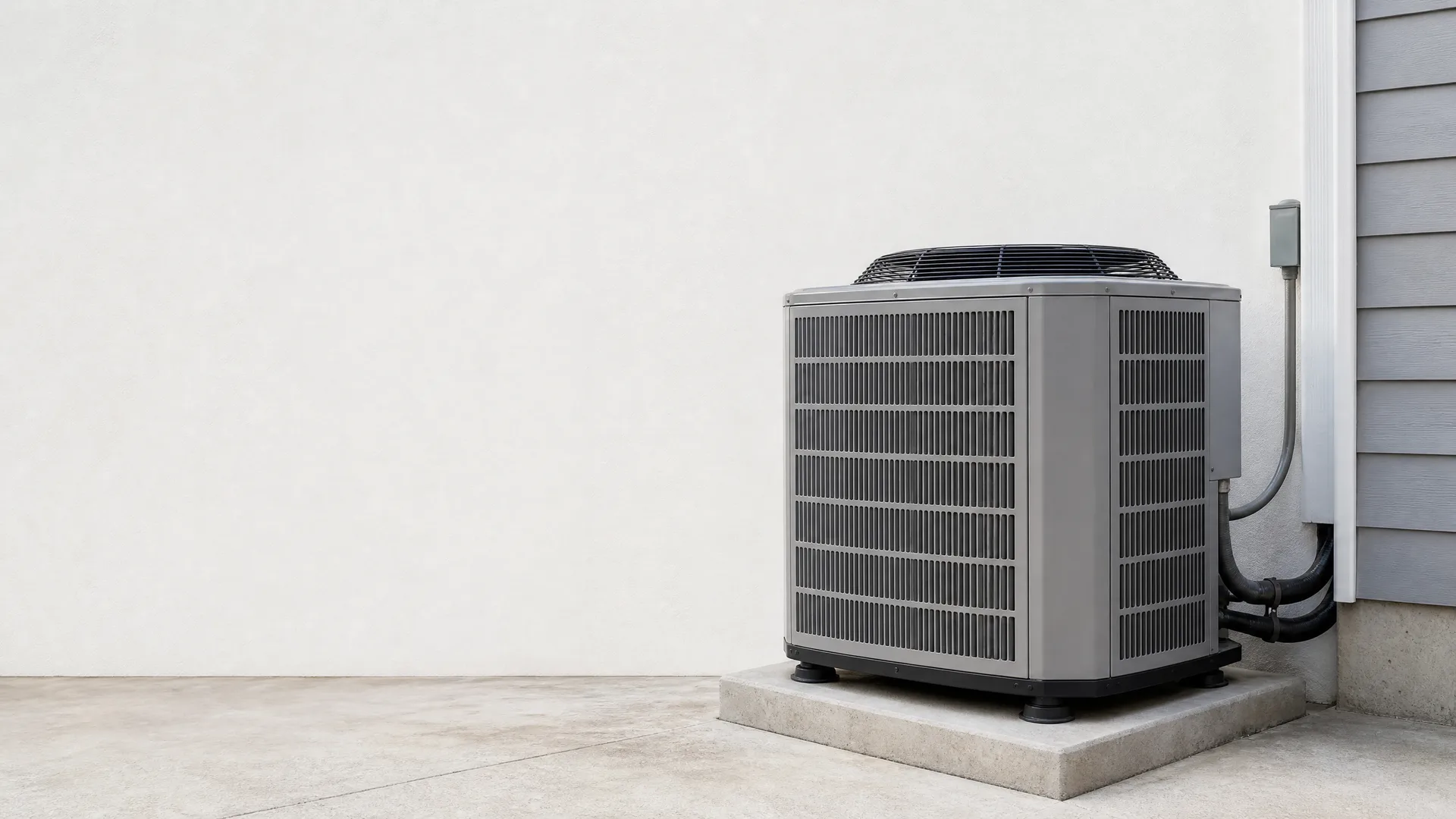
A gray outdoor air conditioner condenser unit on a concrete pad beside a house with horizontal siding and a stucco foundation, with a disconnect box and conduit on the wall, decorative gravel, mulch, and a shrub nearby.

The unit when it's running right

A healthy condenser sits on its pad and does its job quietly. Air moves freely through the coil, the fan spins clean, and the disconnect box on the wall stays untouched unless someone needs to shut it off. Nothing about it should draw your attention.

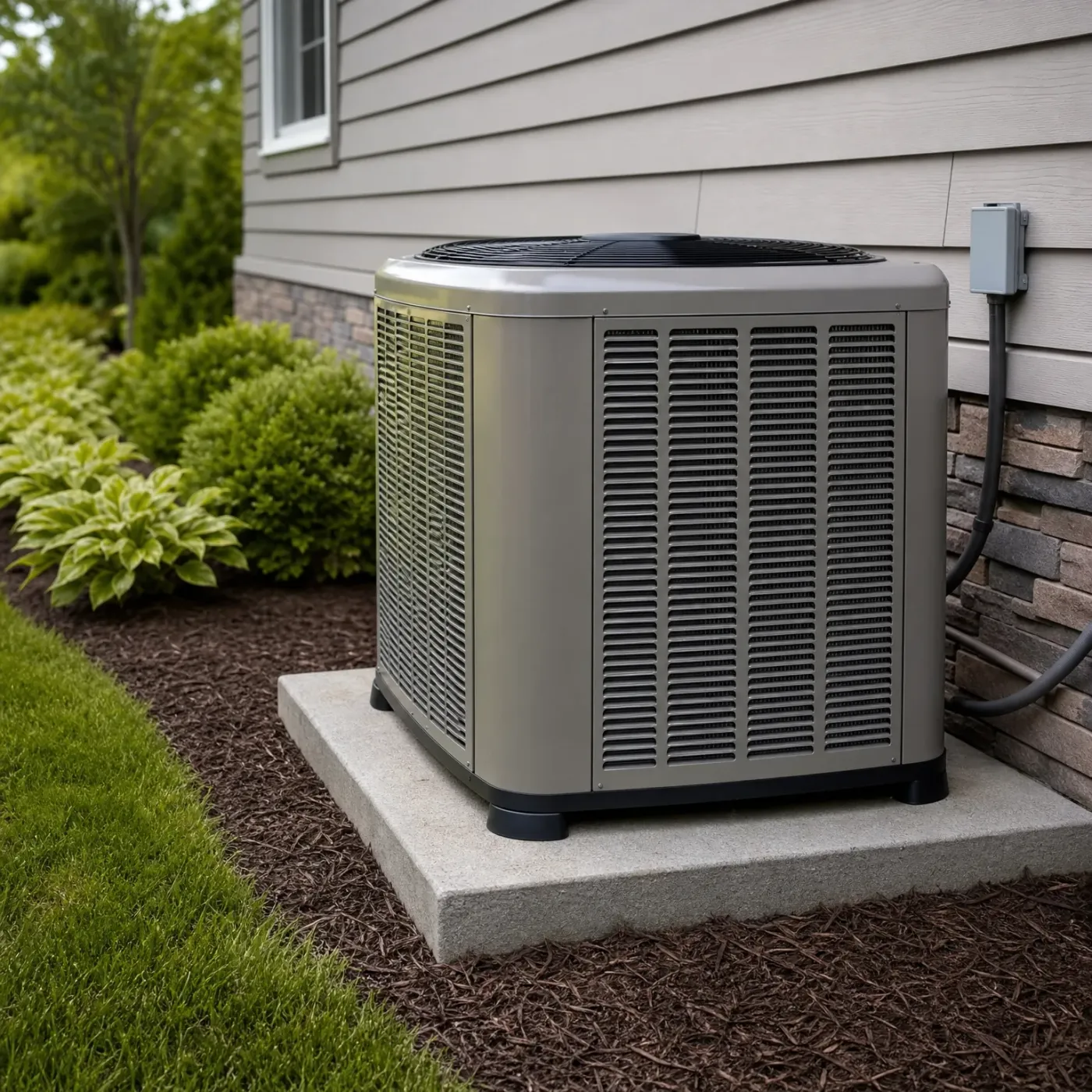
An outdoor air conditioning condenser unit on a concrete pad beside a house with horizontal lap siding, with an electrical disconnect box and conduit on the wall, mulch and a green shrub to the right, and a concrete walkway in the foreground.

The unit that's losing the fight

Dirt and debris packed into the coil grilles block the airflow the system needs to dump heat outside. When the coil can't breathe, the refrigerant inside stays hotter than it should, and the air coming through your vents loses its chill. A coil this dirty rarely clears on its own.

Repair It or Replace It

Still worth fixing

  • A capacitor or contactor replacement is a quick repair and gets the compressor running the way it was built to.
  • If the system is cooling your house fine most days and this is a new problem, the fix is likely isolated to one failed part.
  • Refrigerant leaks can be found and sealed, and the charge topped back off to where the system needs it.
  • A dirty condenser coil outside can be cleaned so air moves through it again, which is far less work than replacing the unit.
  • If the compressor itself still runs and only the cooling output has dropped, a contractor can often repair around it rather than replace it.

Signs it's done

  • A compressor that's seized or grounded out usually costs close to what a new system would, since it's the most expensive part in the cabinet.
  • If the system has needed a service call every summer for the last few years, another repair just buys a few more months.
  • An old refrigerant type that's being phased out can make topping off a leak expensive or impossible to source.
  • A condenser coil that's corroded through, not just dirty, won't hold refrigerant even after a repair.
  • If the unit is undersized or mismatched for your house and has never kept up well, replacing it fixes a problem repair never will.
An outdoor air conditioner condenser unit on a concrete pad beside a house with horizontal lap siding and a light stucco wall, surrounded by dark mulch and an ornamental grass.

What a low charge does to the coil

When refrigerant is low, the coil gets too cold and ice forms on it instead of cooling air. That ice blocks airflow, so the air coming through your vents loses what cooling power it had left. A contractor checks the charge with gauges and looks for where it's leaking out, because refrigerant doesn't just run low on its own. Something let it escape, and that has to get found and closed up before adding more does any good.

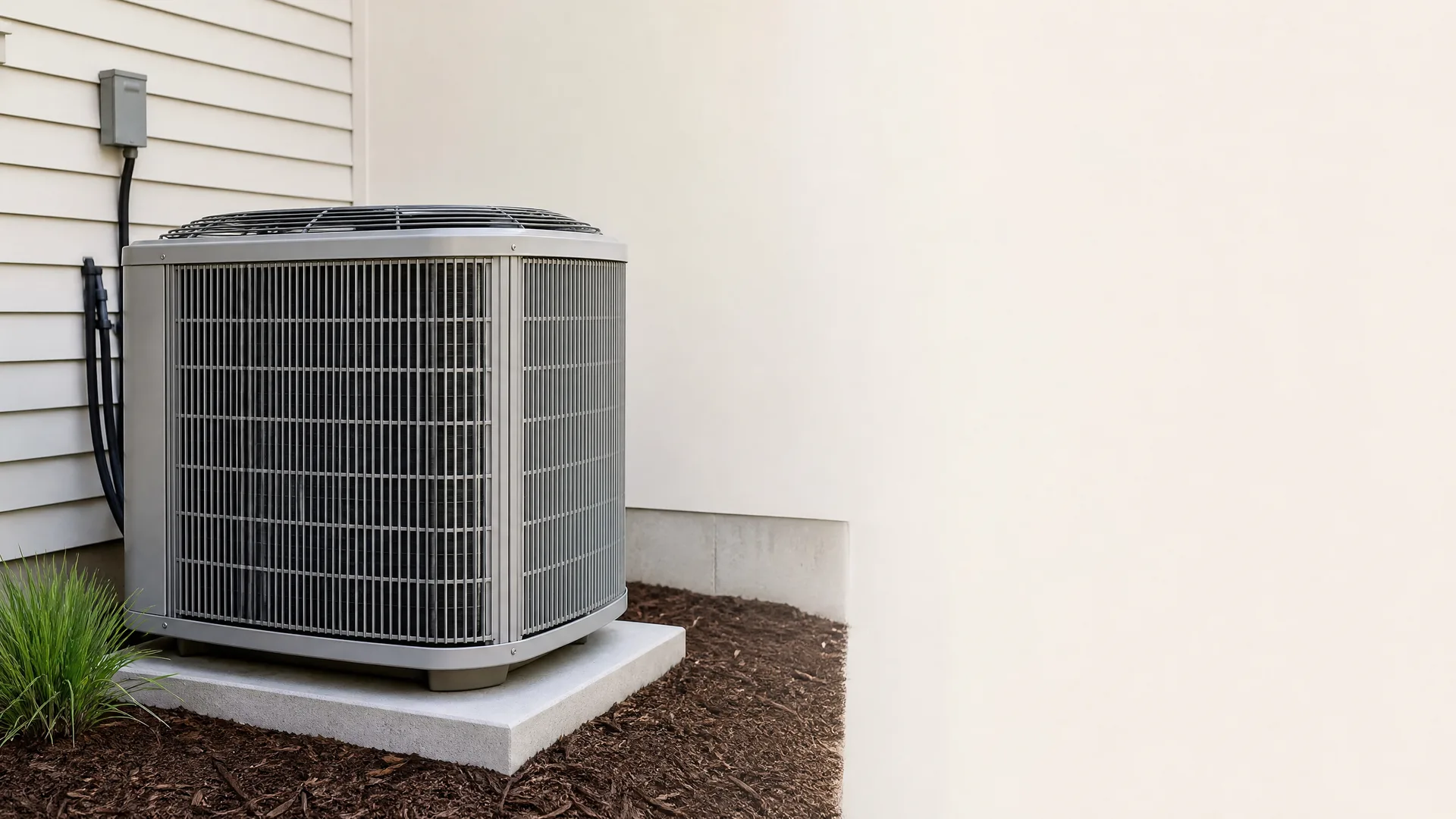
An outdoor air conditioning condenser unit on a concrete pad beside a light stucco wall, with a disconnect box and refrigerant lines running to adjacent lap siding.

Why the compressor matters most

The compressor is what moves refrigerant through the system and makes the cooling happen at all. If it's not running, nothing downstream works no matter how clean the coil is or how strong the fan blows. A failed capacitor or contactor is often why a compressor won't start, and replacing that one part gets it going again. If the compressor itself has failed, that's a bigger repair, and a contractor will tell you which one you're dealing with.

What am I going to notice if I just let this ride

The vents keep blowing but the air isn't cold, so the thermostat number never gets touched and the house slowly drifts warmer. You might hear the outdoor unit running longer than it used to, or cycling on and off more than normal. Some rooms upstairs or at the end of the duct run stop cooling at all while others still get a little relief. If there's ice on the line running to the outdoor unit, that's a sign the problem is getting worse, not better, and running the system in that state can put more strain on the compressor itself. The longer warm air keeps coming through, the harder the unit works for a result it isn't giving you, on a day when the people in the house are counting on it to work.

A gray outdoor air conditioner condenser unit on a concrete pad beside a house with horizontal lap siding, with a flowering shrub at left and a disconnect box with conduit on the wall at right.

Clean and clear

This condenser sits clear of debris, with open ground around the pad and the conduit running down to a disconnect box nobody's had to touch. Air can pull through the coil without resistance, which is what lets the unit pull heat out of your house instead of just running without result.

An outdoor air conditioner condenser unit on a concrete pad beside a house with light horizontal vinyl siding, surrounded by bare dirt, gravel and dry leaves, with refrigerant lines and conduit running along the wall.

Dirty and worn

Leaves and dirt have piled up against the base here, and the refrigerant lines along the wall show their age. A coil choked with debris can't shed heat the way it needs to, and a unit left like this for a few summers is the kind that starts blowing warm air on a hot afternoon.

A woman with dark hair in a bun wearing a cream knit sweater sits on a gray sofa in a bright living room, looking off to the side.
A woman wrapped in a knit blanket sits on a gray sofa in a living room, looking toward a bright window with houseplants and an armchair in the background.
A woman in a gray cowl-neck sweater sits on a light sofa with cushions, smiling and looking to the side, with a kitchen and window visible behind her.
A woman with dark hair in a bun, wearing a light linen shirt, sits on a sofa and looks to the side, with a window, houseplants and a kitchen with pendant lights blurred behind her.
An outdoor air conditioning condenser unit on a concrete pad beside a house with horizontal siding and stone veneer, with a gray electrical disconnect box and conduit on the wall and shrubs and mulch nearby.

Get matched with an air conditioner pro in Brown County

Explain the air conditioner problem once instead of to every shop in Brown County.

A Brown County pro who repairs air conditioners gets your request.

Get my match

You only hire the pro if you want to.

A gray outdoor air conditioner condenser unit on a concrete pad beside a house with dark horizontal siding and a stone base, surrounded by gravel, with a flowering shrub at left and a concrete walkway in front.
Working the way it should, this one sits clean on its pad with open air on every side and a clear path to the disconnect.
An outdoor air conditioner condenser unit sits on a concrete pad beside a stucco wall, with refrigerant lines and conduit running to the wall and a shrub to the left.
Grime like this blocks airflow through the fins, and a coil that can't breathe can't pull heat out of your house.

Most of the time this comes down to airflow, refrigerant, or a part that's quit outside. The filter is the easy one to check first. Once it's clogged, air can't move across the indoor coil the way it needs to, the coil gets too cold, and ice builds up where cooling used to happen. From there the system is just moving air around a block of ice, and nothing coming through your vents is going to feel cold. Outside, the contactor is what actually tells the compressor to start. If its contacts have burned or pitted, the thermostat can call for cooling all day and the compressor just won't answer, even while the indoor fan keeps running like everything's fine. Refrigerant loss works differently. It's not a one-time event. A leak keeps leaking, so what starts as slightly weaker cooling turns into warm air over days or weeks. And sometimes the problem never leaves the thermostat at all, a bad sensor or a setting bumped to fan-only will push air through the house without the compressor turning on.

How warm air starts upstream

  • Warm air from the vents almost always traces back to one of three things: a dirty filter choking airflow, low refrigerant, or a failed part in the outdoor unit.
  • The indoor blower and the outdoor condenser have to work together, and if the compressor outside isn't running, the fan inside will still push air, just not cold air.
  • A dirty filter restricts airflow across the indoor coil until the coil gets so cold it ices over, and once that happens the system can't pull heat out of the air anymore.
  • The contactor is the switch that sends power to the compressor and fan, and when its contacts burn or pit, the outdoor unit may not start even though the thermostat calls for cooling.
  • A refrigerant leak doesn't just run the system low once; it keeps leaking, so the cooling gets worse over days or weeks rather than failing all at once.
  • The thermostat can be the whole problem, since a miscalibrated sensor or a setting switched to fan-only will move air through the house without the compressor ever turning on.
An older woman with short gray hair in a cream cable-knit turtleneck sweater smiles while looking to the side in a wooden kitchen, with a round loaf of bread on a board in the foreground and a lit candle by a dark window.
A woman and a child wrapped together in a thick knitted blanket on a sofa, both with eyes closed, with a lit table lamp and houseplant in the dim background.
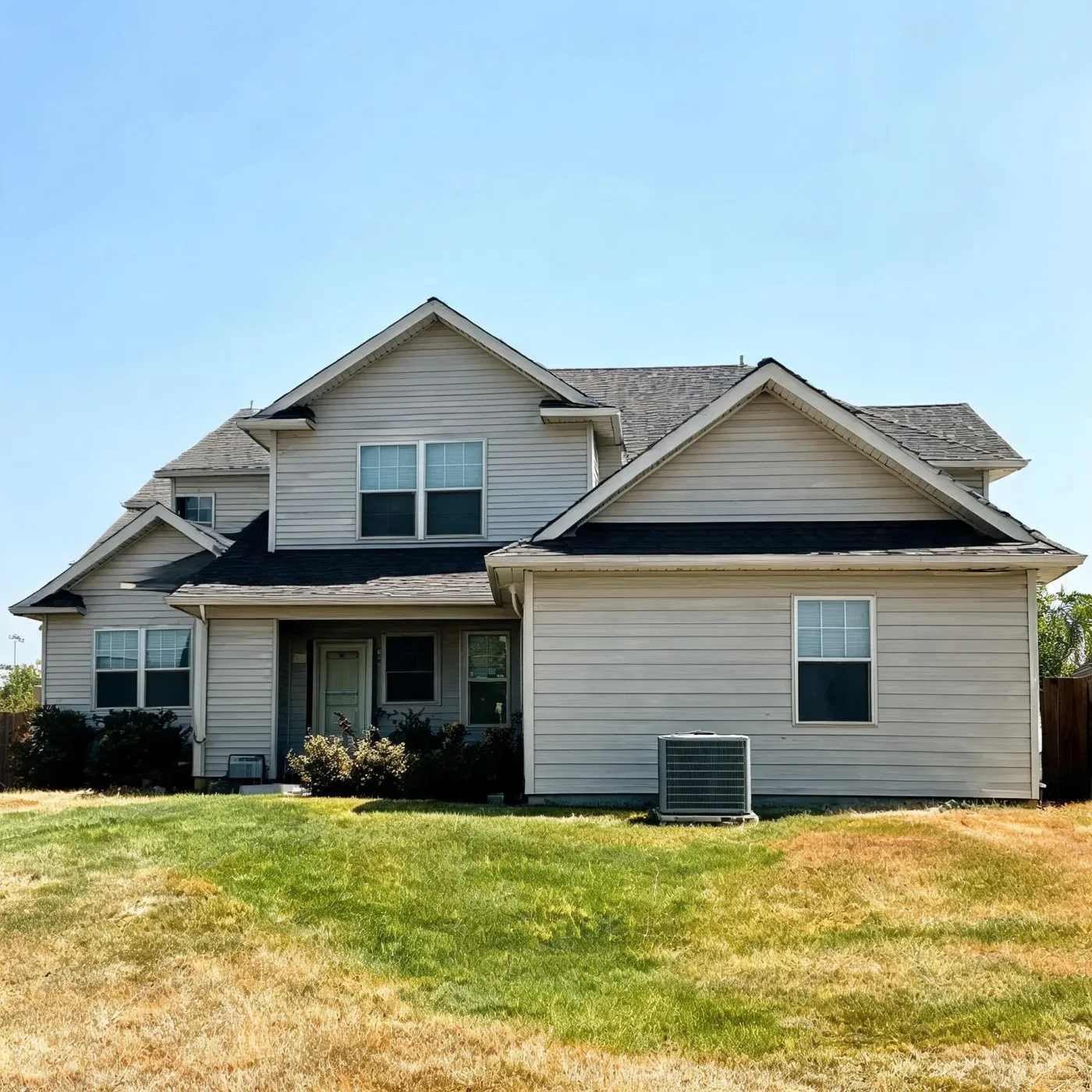
Two-story house with beige horizontal siding, gray shingled gable roofs and a covered front entry, with an outdoor air conditioning unit beside it and a partly dry grass lawn in front under a clear blue sky.

Brown County summers average a dew point of 56°F through June, July and August, which is why the air outside never feels as heavy as it does further south. That works in your favor, but it also means your condenser isn't fighting constant moisture load the way units in muggier states do. So when yours starts blowing warm air here, humidity usually isn't the cause. Look instead at the filter, the refrigerant charge, or a failed part in the outdoor unit. A dry summer just means one less thing to blame.

NASA POWER T2MDEW

An outdoor air conditioner condenser unit sits on a gray pad beside a light vinyl-sided wall, on a concrete slab next to a gravel bed.
Before you get your air conditioner repair
A gray outdoor air conditioner condenser unit on a concrete pad beside a house with horizontal lap siding, with a wall-mounted disconnect box and conduit, mulch bed, shrub, and lawn nearby.
After you get your air conditioner repair

One part failed

A capacitor, contactor, or fan motor can quit on its own while the rest of the system is sound. The compressor and coil still work once that one part is swapped out.

Request a pro

Low on refrigerant

A system losing charge points to a leak somewhere in the lines or coil. That needs finding and sealing before adding refrigerant does any good.

Request a pro
A woman stands in the open doorway of a white stucco house holding the dark door, facing a man in a black cap and shirt seen from behind in the blurred foreground, with a potted flowering plant beside the entry.

What this means for your house right now

If the air has turned warm, whoever's home is already feeling it, especially if that's an older parent or a baby who can't just go sit somewhere cooler. A house with warm air moving through the vents heats up slowly at first, then faster once the walls and furniture have soaked up the heat too. By evening it's a different house than it was at noon.

Running the system while it blows warm doesn't rest anything. The compressor keeps trying to do its job, and if the problem is a failed part or a refrigerant leak, that strain can turn a one-part repair into a bigger one. Instead of calling around Aberdeen for someone who can look at it today, get matched with a contractor who takes it from there, so you're not the one tracking down who's available and explaining the problem twice.

A wooden table holding a stone vase with a bare branch, two stacked books and a small dark bowl, beside a window with green foliage outside and a sofa in the dim background.

Cooling runs June through August

Three months a year is all your AC owes you here, but June through August in Aberdeen is when it has to work and work right. A system that quits in week two of a warm stretch doesn't get a break to recover before the next one hits.

NOAA nClimDiv 1991-2020

Warm air from the vents comes down to a dirty filter, a low charge, or a part in the outdoor unit that quit while the rest of the system stayed sound. A contractor can tell you which one by checking the coil, the charge, and the capacitor and contactor, and that same visit tells you what it takes to get cold air back through your vents. You don't have to figure out which of those it is yourself, or spend a warm afternoon calling around Brown County for someone who can come look. No explaining the problem twice, no sorting through quotes to guess who's worth trusting. You get matched with a contractor who handles this kind of repair, and they reach out to you. Until then, the house keeps drifting warmer and whoever's home keeps feeling it. The unit either needs one part replaced or it needs refrigerant found and fixed where it's leaking out. Either way, the system was built to cool your house, and getting it checked is how it gets back to doing that.

Sunlight falls across a beige upholstered sofa with a textured woven cushion and a chunky knit throw, beside a dark wood cabinet holding a ceramic vase with green leafy branches, near a white-framed window.
A sunlit corner of a room with a wooden side table holding a ceramic vase of green foliage and a wooden bowl, beside a light upholstered sofa with a knit throw and rust-colored pillow, with window shadows cast on a beige wall.
A sunlit room corner with beige walls, a white-framed window with sheer cream curtain, wood floor with a light rug, and a woven basket holding a knit blanket.
A beige ceramic vase holding a leafy green branch sits on a wooden cabinet in a corner, with sunlight through a sheer curtain casting leaf shadows on the wall.
A grey upholstered sofa with a rust-orange velvet cushion and a textured throw sits beside a window with linen curtains, next to a wooden side table holding a pale ceramic vase of olive branches.

A pro who works on air conditioners

Describe your air conditioner job once, to one pro.

Skip the search

No fee to send it, and nothing to sign.